Bees may be relying on your lawn for their next meal, according to a new study from the University of Georgia.
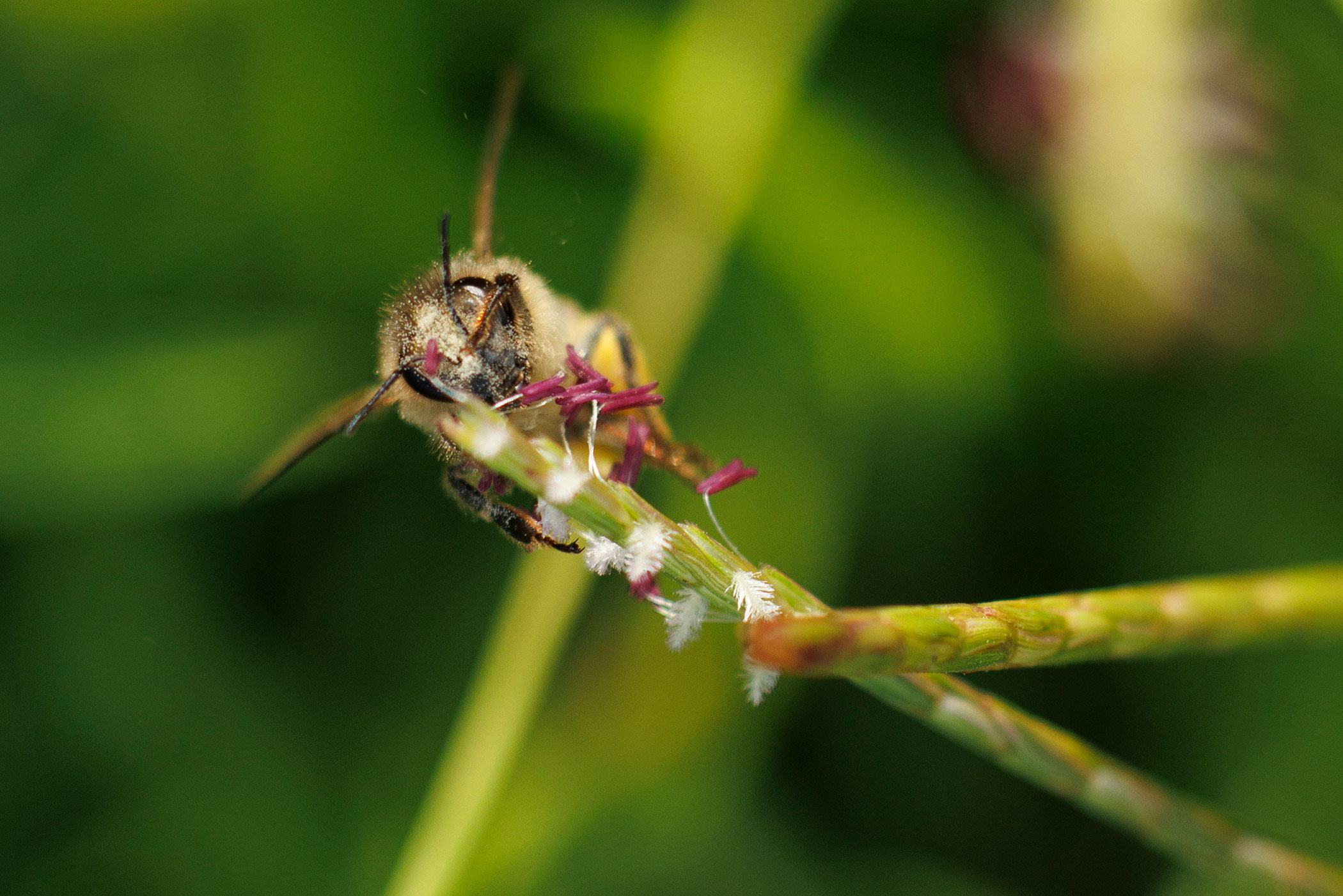
The researchers found that centipedegrass, a common turfgrass found in the Southeast, actually functions as a food source for bees.
Although bees typically pollinate more with flowers in the springtime, growing urbanization, pesticide use and other habitat loss have limited their food options.
"Pollination is one aspect of what bees do, but their role in biodiversity and ecology has so much value," said Shimat Joseph, corresponding author of the study and an associate professor in the UGA College of Agricultural and Environmental Sciences. "Urbanization is reducing both nesting habitat and food resources for them, so anything we can provide in addition helps."
Centipedegrass provides healthy hub for bee babies beyond springtime
The researchers gathered more than 150 foraging bees of 28 different species (including bumblebees, honeybees and sweat bees) from yards across Georgia to evaluate the insects' pollination mannerisms.
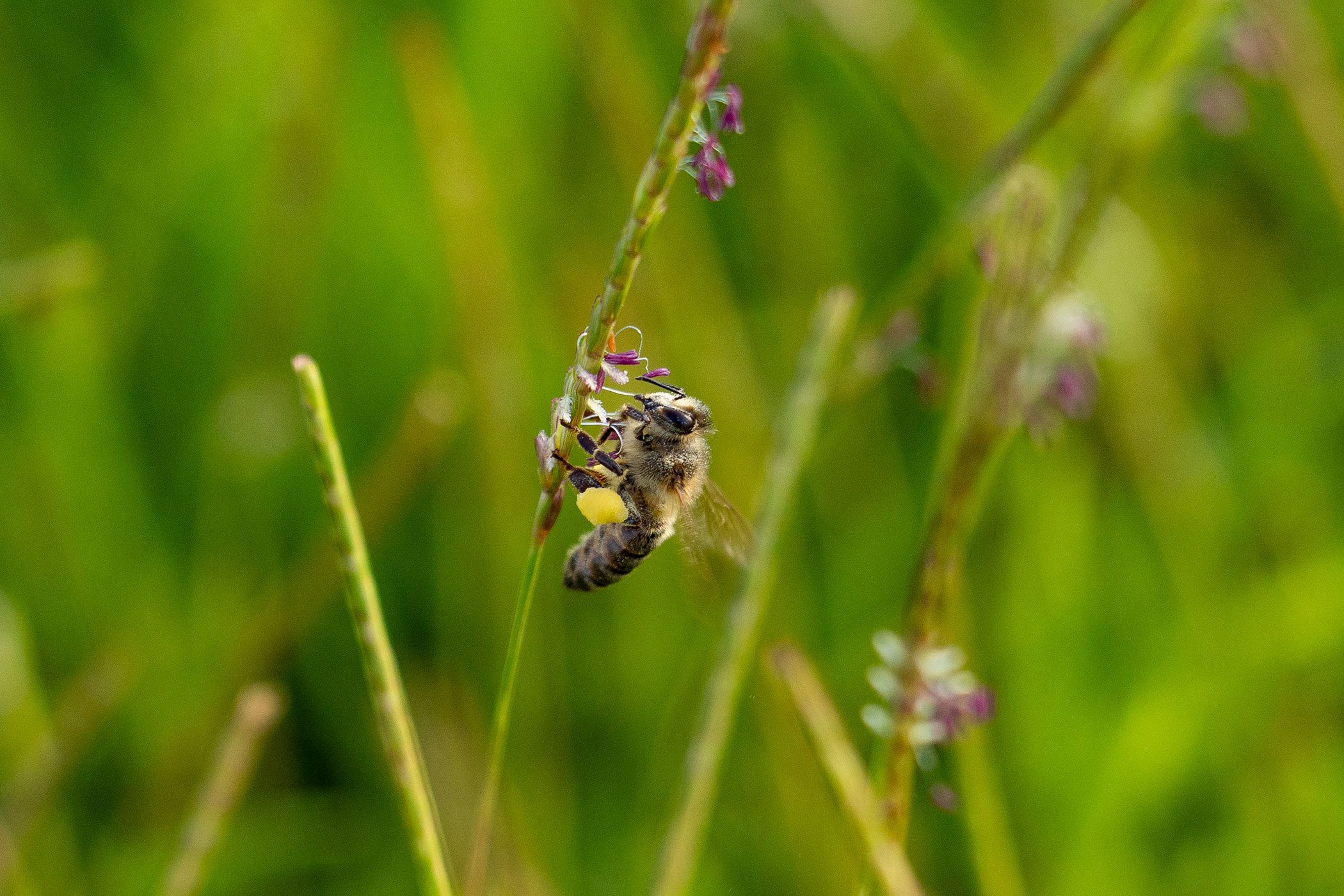
They found that adult bees not only collect grass pollen to supply food for themselves but also to bring back to the hive for their offspring.
The researchers found similar numbers of bee larvae developed thanks to centipedegrass pollen as they did in more traditional bee nursery sources like butterfly bushes. This suggests that centipedegrass could sustain at least the beginnings of a new colony, the researchers said.
Grass is already an integral part of our landscape. Our job is to find ways to make those landscapes more helpful for pollinators.
Shimat Joseph, College of Agricultural & Environmental Sciences
"What we know is that bees are foraging on these grasses. The question now is what that means for bee colonies over the long term," Joseph said. "For social bees like bumblebees, having a continuous supply of pollen throughout the spring and summer seasons is very important for our world."
Although they foraged extensively on centipedegrass pollen, the bees also kept an eye on nearby flowers, often seeking out grass with nearby flowering plants.
Bumblebees were among the most flexible when it came to sourcing their pollen. They foraged in ivy, crape myrtles and vegetable gardens, among other places.
"Bees are dependent on all kinds of flower or plant types - pollen for protein and nectar for sugar to help them keep flying," Joseph said. "Grass is already an integral part of our landscape. Our job is to find ways to make those landscapes more helpful for pollinators."
Mowing less may encourage bee pollination hubs
Pollen collection was highest for bees 10 to 12 days post lawn mowing. Centipedegrass had the chance to flower and become properly accessible and nutritious for bees at that point.
By delaying mowing slightly and keeping a schedule of 10 to 14 days between mows, people can balance lawn care and bee conservation, the researchers said.
"If you skip just one mowing, you create an opportunity for the grass to flower, and bees can use that resource," Joseph said. "The goal isn't to stop mowing. It's to manage lawns in a way that gives bees an extra food source."
This alternative food source is key because of how much longer it lasts than traditional flowers, the researchers said. Bees have access to centipedegrass pollen well into September, a late-season period where other floral meals are scarce.
"By July and August, many trees have stopped flowering," Joseph said. "That's when these grass flowers may become another opportunity for bees. They may not be showy, but we know that bees are definitely using them."
This study was co-authored by Oluwatomi Ibiyemi, a graduate research assistant in the UGA department of entomology; Karen Harris-Shultz, of the crop genetics and breeding research unit; David Jespersen, associate professor in crop and soil sciences; Michael Ulyshen, a doctoral student in the department of entomology; and Brian Schwartz, a professor in crop and soil sciences. It was published in the Journal of Insect Conservation.