
Shinsuke Tanaka, assistant professor of agricultural and resource economics, weighs in on the environmental and health implications of data center construction across America
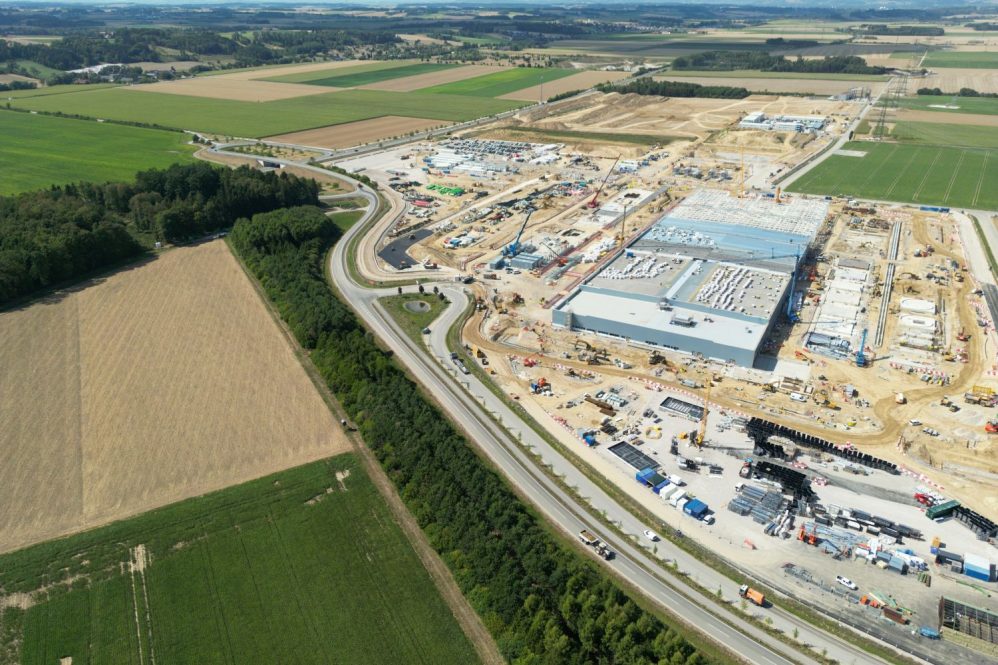
Photo by Florian Haider on Unsplash
Data centers have become a contentious issue across the country.
Owing in large part to the increased use of artificial intelligence, more and more data centers are being constructed in the U.S.
This has come with significant costs. Data centers gobble up a tremendous amount of energy, most of which still comes from fossil fuels. This has also increased energy prices for consumers. Data centers use up to millions of gallons of water a day, threatening the availability and affordability of local supplies.
In light of these concerns, Shinsuke Tanaka, assistant professor of agricultural and resource economics in the College of Agriculture, Health and Natural Resources (CAHNR), an expert on health and environmental economics, weighs in on how these issues are impacting human and environmental health.
Connecticut began offering tax incentives for developers to build data centers in the state starting in 2021. Since then, local opposition to data center projects has grown. Groton, West Haven, and Morris have instituted moratoriums on data center construction in their communities. Many others are weighing implementing their own bans.
"This is really not just a local issue," Tanaka says.
One of the largest issues when it comes to data centers and health, Tanaka says, is that data centers are contributing to increased air pollution.
"The biggest issue is that data centers use a lot of energy," Tanaka says. "Currently, fossil fuels are still used as a major energy source, and they emit pollution as electricity is generated."
Tanaka has previously demonstrated that downwind pollution from power plants led to higher COVID-19 mortality rates. According to the World Health Organization, air pollution has also been linked to a host of other health conditions.
Because energy is generated regionally, the impact of data centers extends beyond the area immediately surrounding a center.
"Air pollution has a huge impact on human health," Tanaka says. "There are a lot of studies on this topic. The data centers are just increasing and expanding and the trajectory is skyrocketing, and the concern about air pollution is not just local, but it's regional."
On a local level, data centers are equipped with diesel generators for backup power, creating air pollution there as well.
Because the data center boom is so new, there has not yet been a comprehensive study analyzing how much more electricity and hence pollution is being generated to power them. But a Cornell University study projects data centers will put an additional 24 to 44 million metric tons of carbon dioxide into the atmosphere by 2030.
While the exact numbers may be unclear, researchers already know a lot about the health impacts of air pollution.
"The concerns that come from increased energy consumption and increased pollution in terms of how that affects local health and the environment - it is known," Tanaka says. "We can extrapolate evidence from different contexts to data centers."
Another consideration is that data centers are built where land is cheap. This means that these areas are generally already under-resourced communities, and often communities of color. This can exacerbate existing health disparities.
"They're the ones that are affected by the existence of data centers," Tanaka says.
Data centers also produce 24/7 noise pollution which, based on studies looking at noise pollution from wind turbines and airports, has been linked to increased rates of depression and suicide. Noise pollution also leads to lower home values.
Further, data centers' water usage has become an even more serious concern as many regions face hotter, drier climates. This could also lead to higher water utility prices for consumers.
"They're consuming a lot of water," Tanaka says. "Especially now, we've seen a lot of hot air and a lack of rain, and this year a lot of regions faced drought. So, that has been another concern."
There are ways that data centers can be run more sustainably, Tanaka explains. For example, there is a push to require data centers to use battery storage for backup power instead of diesel generators, which can use energy more efficiently and do not directly produce air pollution. Data centers can also draw more of their electricity from renewable forms of energy.
"I think we can achieve both economic prosperity along with environmental sustainability and protection," says Tanaka. "The key isn't just prohibiting data centers. So, we need to think about how to generate electricity."
This work relates to CAHNR's Strategic Vision area focused on Enhancing Health and Well-Being Locally, Nationally, and Globally.


