What the research is about
Lake Victoria, Lake Malawi, and Lake Tanganyika in East Africa are home to a remarkable group of tropical fish known as cichlids. Each lake is home to many cichlid species that have evolved independently.
Among these fish are species with unusually thick lips. These lips are thought to act as cushions, helping the fish search for food in rocky habitats by protecting their mouths when they press against rough surfaces.
What makes this especially fascinating is that cichlids in all three lakes evolved thick lips independently, yet ended up with very similar features. This phenomenon, in which similar traits evolve repeatedly in separate evolutionary lineages, is known as parallel evolution.
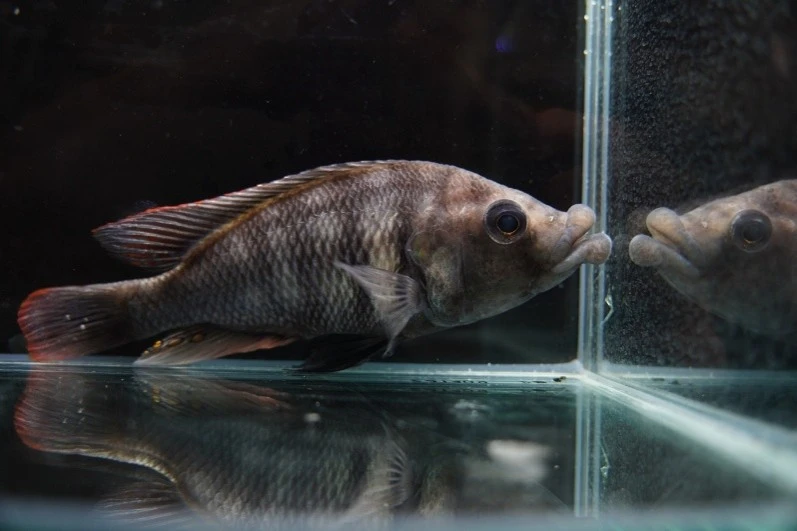
Previous studies had identified several genes that might be associated with lip enlargement. However, the key biological mechanism responsible for forming thick lips remained unknown.
To address this question, a research team led by Professor Masato Nikaido of Institute of Science Tokyo (Science Tokyo) conducted a comprehensive comparison of cichlids from all three lakes. By examining tissue structure, proteins, and gene activity, the team set out to determine whether fish from different lakes share a common mechanism for developing thick lips. Demonstrating such a shared mechanism across independently evolved species was one of the study's greatest challenges.
Why this matters
The researchers discovered that thick lips in cichlids from all three lakes share several common features, despite their different evolutionary histories.
First, the thick lips were found to have a similar two-layer structure. The inner layer is rich in collagen, while the outer layer contains large amounts of proteoglycans, molecules known for their ability to retain water. In thick-lipped cichlids, this proteoglycan-rich layer was greatly expanded.
The team also found that thick lips contain high levels of proteins called versican and periostin, both of which are closely associated with proteoglycan-rich tissue.
In addition, the researchers discovered that a molecular pathway known as Wnt signaling is activated in thick-lipped cichlids across all three lakes. Their findings suggest that Wnt signaling promotes the accumulation of proteoglycans, leading to lip enlargement. This is the first study to identify a shared molecular mechanism underlying thick-lip formation across independently evolved cichlid species.
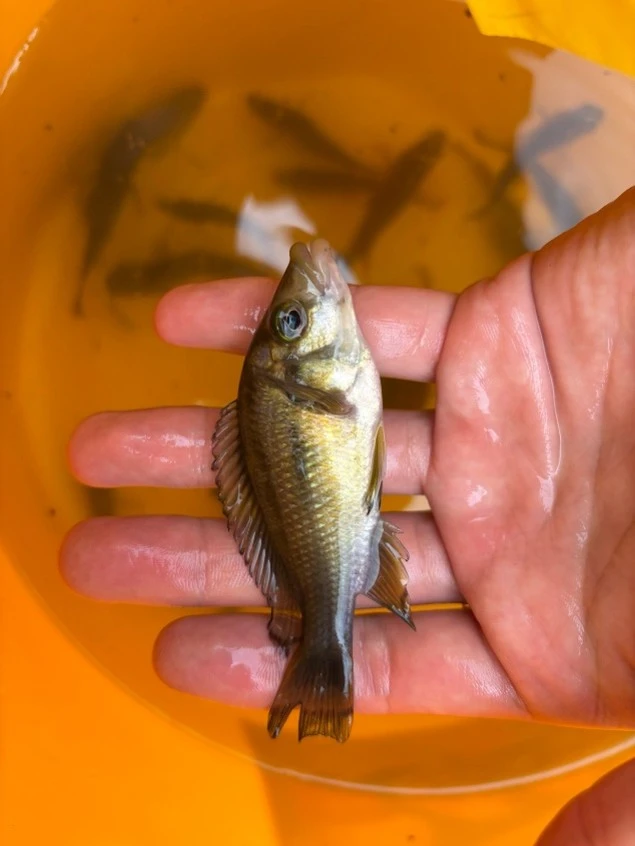
The study also revealed that the process begins earlier than adulthood. Changes associated with thick-lip development are already present in juvenile fish, long before they reach adulthood.
What's next
Versican and periostin are not only important in fish lips. They are also known to play roles in the formation of keloids, a human skin disorder in which excessive collagen and other tissue components accumulate during wound healing, causing scars to grow beyond the boundaries of the original injury.
Although thick lips in cichlids are not a disease, they share one important feature with keloids: the accumulation of proteoglycan-rich tissue. By understanding how these tissues form in fish, researchers may gain new insights into the biological processes involved in keloids and related disorders.
The findings also contribute to a broader question in evolutionary biology: how complex traits controlled by many genes evolve repeatedly. Understanding why fish with different evolutionary histories repeatedly acquired the same thick-lipped form may help reveal general principles that shape biological diversity.
Comment from the researcher
Many things we think we know about living organisms are actually still full of mysteries. Throughout my career, I have been fascinated by the evolutionary mechanisms that create the incredible diversity of biological forms. At the same time, I am equally interested in parallel evolution-the process by which different organisms independently arrive at surprisingly similar solutions.
In cichlids, parallel evolution can be seen not only in their lips but also in traits such as body coloration and tooth shape. I feel incredibly fortunate to study these fish using specimens I collected myself from the lakes of East Africa.
At the Nikaido Laboratory, we study the evolution of many kinds of fish, not just cichlids. If this story has sparked your interest in fish evolution, I encourage you to explore our other research, including work by Assistant Professor Tatsuki Nagasawa.
(Masato Nikaido, Professor, School of Life Science and Technology, Institute of Science Tokyo)

Dive deeper
Explore more research in Science for All
Science for All showcases cutting-edge research at Science Tokyo and highlights the ideas, people, and possibilities shaping the future.