
Many tests can show whether a potential new medicine binds to a protein involved in a disease. But whether it actually switches that protein off often remains unclear. The technology developed by 4ces B.V., a spin-off from Leiden University, reveals how effective these potential medicines are at an early stage of drug development. To further develop the technology, the company has received an NWO Take-off grant.
Imagine a protein in the body that allows a tumour to keep growing. Researchers would then aim to develop a medicine that targets and disables that specific protein. To do this, the drug first has to bind to its target. But binding alone does not mean it works.
Many promising drug candidates successfully bind to their target but are later abandoned because they fail to produce the desired effect. This costs the pharmaceutical industry billions of euros and often leads to unnecessary animal testing.
Identifying the drugs that actually work
Startup company 4ces focuses on identifying the drug candidates that do more than just bind - the ones that actually work. Leiden biophysicist Professor John van Noort, who founded 4ces together with CEO Hidde-Jan Lemstra, explains: 'Our technology measures how proteins bind to DNA, while also tracking changes in the structure of the DNA itself. Some proteins repair DNA, for example, while others cut or join it together.'
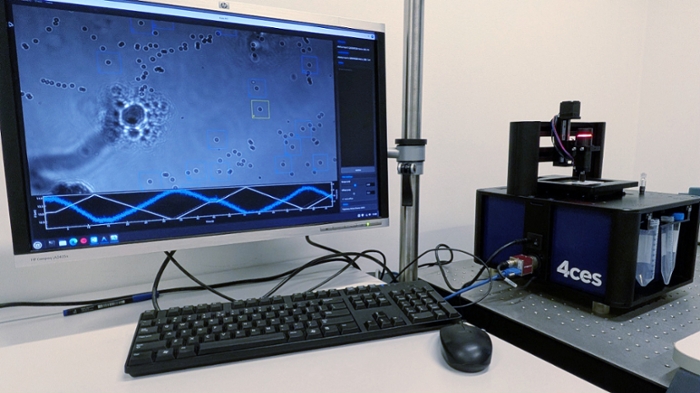
Using their Mech-Seq™ technology, Van Noort and Lemstra can analyse as many as 10,000 molecules every hour, making large-scale screening possible. Van Noort says: 'We can observe the effect of potential medicines in real time and see whether a drug actually prevents a protein from doing its job.'
From cancer research to antibiotic resistance
The technology has applications across many areas of medicine, including cancer research, infectious diseases and antibiotic resistance.
'Many processes in the body depend on the way DNA is processed,' says Van Noort. 'Our technology can analyse medicines that target these DNA-related processes. That means Mech-Seq™ has a wide range of potential applications.'
Lower development costs and better insight
By measuring how a potential medicine functions at an early stage of development, even before clinical trials begin, pharmaceutical companies can identify unsuccessful candidates much sooner. This could significantly reduce development costs.
The technology also provides a better understanding of how medicines work. That knowledge may help researchers improve promising drug candidates before they reach later stages of development.
About the NWO Take-off grant phase 2
Under the Take-off Phase 2 programme, startups receive a loan to help bring a business based on research from Dutch knowledge institutions to market. The funding enables companies to develop and validate a proof of concept. The aim is that, by the end of the programme, entrepreneurs will have demonstrated sufficient commercial potential to attract investment from both public and private partners.


