
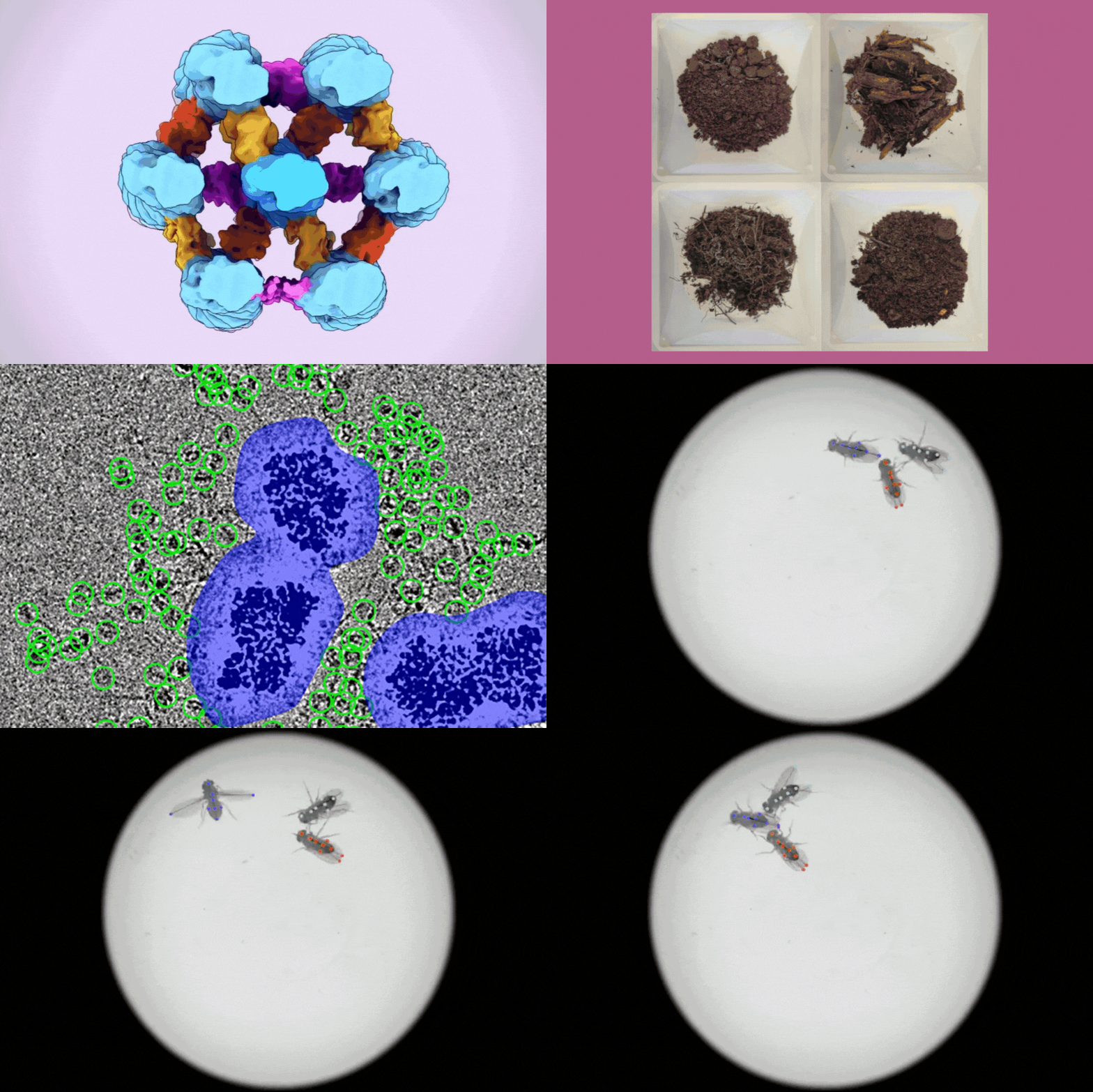
This year, our scientists offered new hope for treating neurodegeneration and obesity and dramatically improved the odds that a once-promising immunotherapy could still prove to be a game-changer for cancer patients. They gained new insight into the mechanics of hearing, the emergence of spoken language, and how brand new genes can arise out of noncoding DNA. Across fields as diverse as evolution, mechanobiology, and antibiotic discovery, these groundbreaking advances added up to another impressive year for advancement in the biomedical sciences. Here are some of the intriguing discoveries that came out of Rockefeller in 2025.
Upending conventional wisdom on mosquito mating
Female mosquitoes mate only once in their short lives, and work from Leslie Vosshall's lab has now clarified that females are in control of that mating process. The team used high-speed imaging and fluorescently labeled sperm to show that successful mating hinges on a subtle female action: a rapid elongation of her genital tip. If she performs this movement, mating proceeds; if she does not, no amount of male effort can change the outcome.
The work challenges assumptions about insect reproduction, but also sheds light on a mating program shared by at least two major disease-spreading mosquito species, Aedes aegypti and Aedes albopictus. Going forward, the researchers will explore the finer details of the mating mechanism for each species. "We want to understand the neuronal code the female is using to sense male stimulation and then make her decision," Vosshall says. "The question it comes down to is, how does she choose between different suitors given that it's a once-in-a-lifetime choice?"
Unearthing soil's antibiotic arsenal
Most soil bacteria cannot be grown in the lab-and that's been bad news for medicine, given that many antibiotics were originally discovered in soil microbes. With multidrug resistance surging, this blind spot has left researchers cut off from a vast reservoir of potential antibiotics. This year, however, Sean F. Brady's lab unveiled a new method for extracting large DNA fragments directly from soil, which will allow scientists to assemble the genomes of previously inaccessible microbes and convert that into natural products, such as antibiotics. In a proof-of-concept, the team used the new method to generate hundreds of complete bacterial genomes and turn genomic blueprints into two promising antibiotic leads.
The work opens a scalable route to mining the uncultured majority of microbes for human benefit. "We finally have the technology to see the microbial world that has been previously inaccessible to humans," Brady says. "And we're not just seeing this information; we're already turning it into potentially useful antibiotics. This is just the tip of the spear."
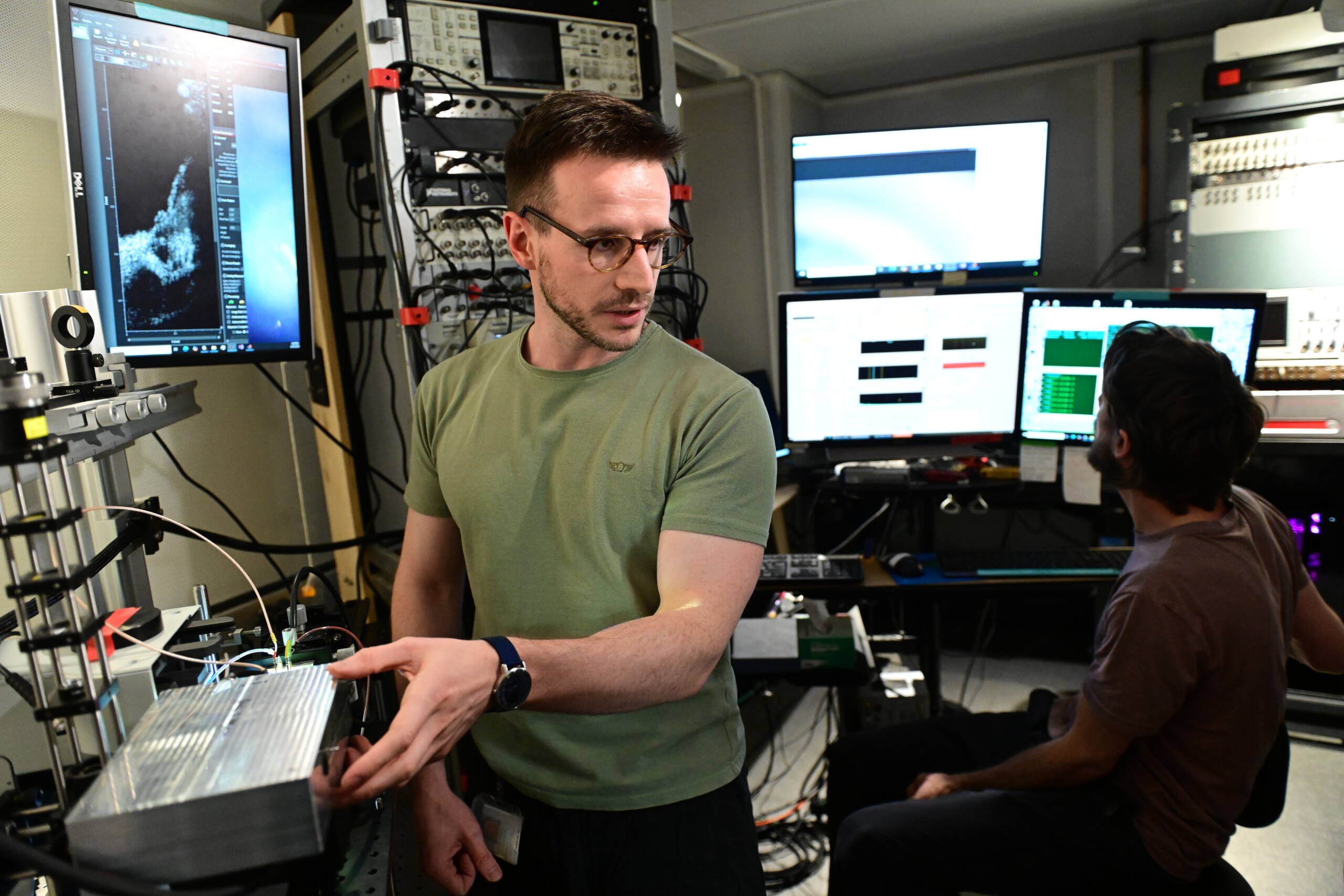
Francesco Gianoli from the Hudspeth lab.
Devising a new aid for studying hearing loss
The fragility and inaccessibility of mammalian cochlea have long kept its core biomechanics out of reach, limiting efforts to understand and ultimately treat hearing loss. In one of his final achievements, A. James Hudspeth, who died in August 2025, engineered a device that keeps a tiny, functional sliver of the gerbil cochlea alive outside the body, allowing researchers to watch the organ's sound-amplifying machinery in real time. The paper reveals how hair bundles add energy to incoming vibrations and how outer hair cells change shape to sharpen sound. The team also provided evidence that a Hopf bifurcation-a mechanical tipping point long known to underlie hearing in insects and amphibians-governs mammalian hearing as well, unifying auditory biology across the animal kingdom.
By opening this once-sealed system to direct experimentation, the work offers a powerful platform for probing how hearing works, why it fails, and how it might be restored. "Jim had been working on this for more than 20 years, and it's a crowning achievement for a remarkable career," says Marcelo Magnasco, head of the Laboratory of Integrative Neuroscience at Rockefeller, who often collaborated with Hudspeth.
Identifying antioxidants that can trigger cancer metastasis
Mitochondria are best known for powering cells, but Kivanç Birsoy's lab is revealing their role in cancer spread. In a new study, his team dissected the metabolic profiles of breast cancer cells that leave the primary tumor and colonize the lung, and pinpointed the mitochondrial metabolite glutathione as a key driver of disease. They found that metastatic cells dramatically elevate mitochondrial glutathione and rely on its import through the transporter SLC25A39, where the metabolite helps cancer cells survive as they colonize new tissue. When Birsoy's team blocked glutathione entry into mitochondria, metastatic colonization faltered.
Because SLC25A39 also correlates with poor survival, the work raises the possibility of targeting this transporter to prevent cancer spread. "We hope that our work will bring more attention to how organelles and their metabolites are relevant to cancer biology," Birsoy says.
CD40 agonist antibodies have long shown promise as cancer-fighting powerhouses in mice. But in humans the therapy fails-provoking dangerous inflammation with little therapeutic benefit. So Jeffrey V. Ravetch's lab re-engineered a next-generation CD40 antibody that binds more effectively to human receptors.
This year, they reported encouraging results from Phase I clinical trials on their antibodies: among 12 patients with metastatic cancers, half saw systemic tumor shrinkage and two experienced complete remission. Moreover, by delivering the antibodies directly into tumors, the researchers dramatically boosted antitumor activity while avoiding the toxic side effects that had derailed earlier trials. Numerous other trials are now underway. "This effect-where you inject locally but see a systemic response-that's not something seen very often in any clinical treatment," says Ravetch. "It's another very dramatic and unexpected result from our trial."
Regulating evolution's newest genes
Unlike most genes, which have ancient roots, so-called de novo genes arose recently, emerging from DNA that once encoded nothing at all. This year, Li Zhao's lab uncovered how these genetic newcomers are switched on and woven into cellular circuitry. In two complementary studies, the team identified a small set of transcription factors that act as master regulators for de novo genes, and showed that many of these evolutionarily young genes share regulatory elements with their genomic neighbors.
The work provides the first mechanistic clues to how new genes become functional-and hints at how such genes may originate in the first place. "The more we know about de novo regulation, the more information we have about gene expression and regulation itself," Zhao says. "That's important not only for evolutionary biology but also for the study of diseases like cancer, which are associated with rapid genetic dysregulation."
Hair-follicle stem cells are best known for driving hair growth, but Elaine Fuchs discovered that they can pivot to repair injured skin. This year, her team built on these findings, identifying the signal-mediated by the amino acid serine-that tells these cells when to switch jobs. In a recent paper, the researchers showed that serine acts as a nutrient sensor in hair-follicle stem cells, and that serine scarcity alone slows hair growth in mice, while serine deprivation combined with wounding pushes stem cells fully into repair mode.
The findings highlight how individual metabolites can influence stem-cell fate and suggest that manipulating serine levels could one day enhance wound healing. "Overall, the ability of stem cells to make cell fate decisions based upon the levels of stress they experience is likely to have broad implications for how tissues optimize their regenerative capacities in times where resources are scarce," says Fuchs.
Clearing out the proteins neurodegeneration
Long before brain cells fail in Alzheimer's and related diseases, synapses begin to clog up with protein buildup. This year, two Rockefeller studies converged on a shared insight: targeting the earliest triggers of congestion in the synapse may offer a path to slowing neurodegeneration. Hermann Steller's lab showed that boosting PI31, a protein that ferries proteasomes to synapses, can prevent waste from accumulating in fly and mouse models of Parkinson's-like disease. Restoring this cleanup machinery not only rescued motor defects and cleared toxic proteins such as tau, but in some cases extended lifespan nearly fourfold. "A number of diseases are in fact diseases of synaptic dysfunction, at least initially," Steller says. "Now that we've shown how to eliminate unwanted proteins at the synapse, we hope this will lead to a revolution in treating common age-related disorders."
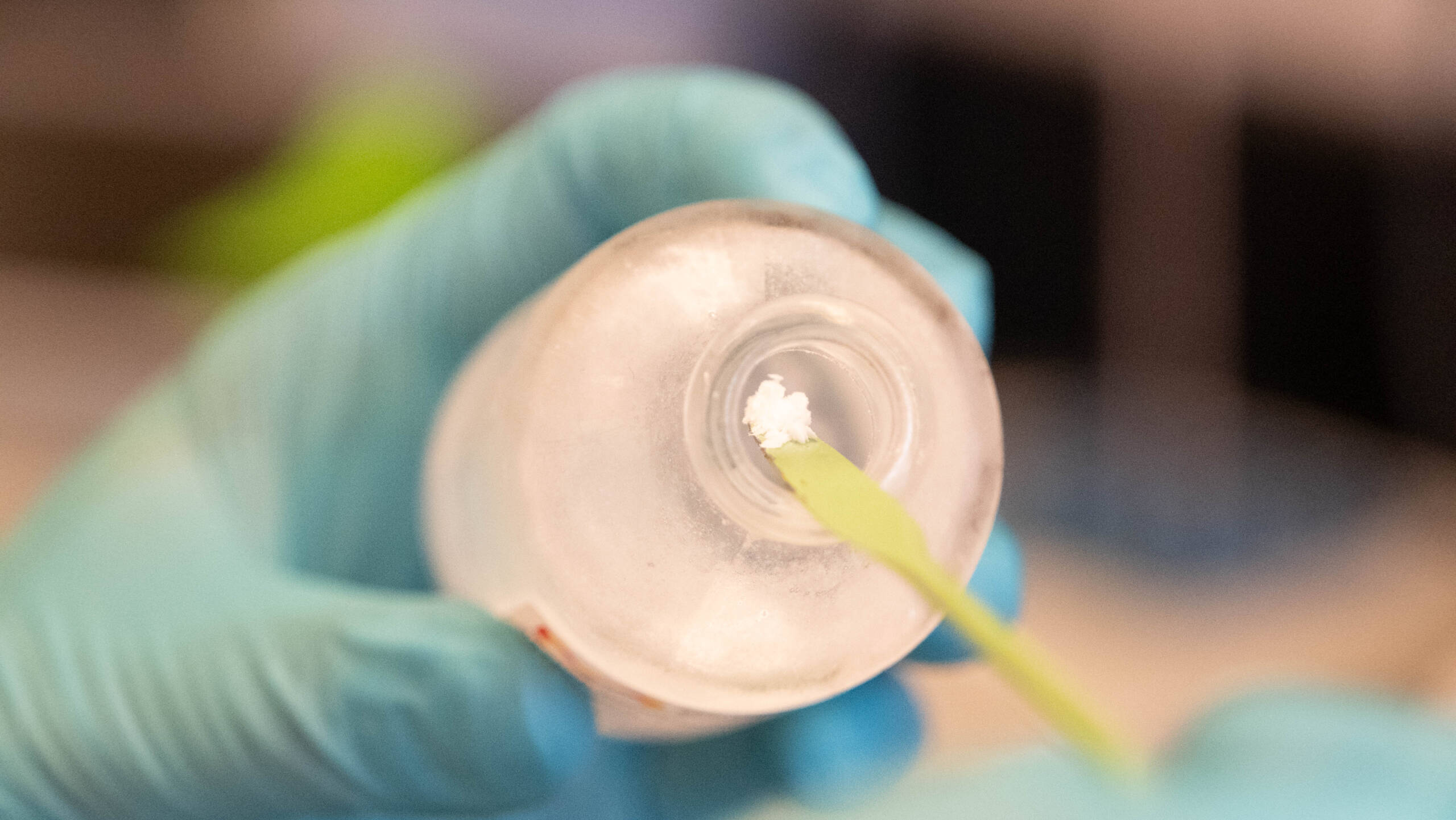
The Strickland lab used purified human fibrinogen, pictured here.
Meanwhile, a paper from Sidney Strickland's lab revealed that tiny amounts of an Aβ/fibrinogen complex-formed when amyloid-beta binds a major blood protein-produce abnormal clots, blood-brain barrier leakage, synapse loss, and early Alzheimer's-like inflammation, despite neither component being harmful in isolation. Preventing the complex from forming reduced damage in cells and mouse models. "Perhaps targeting this complex would alleviate some of the pathologies and be even more effective in combination with other therapies," says Elisa Nicoloso Simões-Pires, a research associate in the lab.
Together, the findings from both papers bring us closer to clarifying a precise pathway of neurodegeneration-fundamental research that may give rise to innovative therapies.
Giving Cryo-EM a major upgrade
A major weakness of cryo-electron microscopy is sample preparation: when excess liquid is blotted away, most of the protein particles stick to the filter instead of the imaging grid, leaving too few behind to determine high-resolution structures. This technical difficulty has limited the types of samples cryo-EM can effectively image, leaving many important targets just out of reach. This year, Hironori Funabiki's lab unveiled a solution. His team introduced MagIC cryo-EM, a method that uses magnetic nanobeads to anchor molecules in place during blotting, reducing sample loss by roughly a thousandfold. The researchers also developed an image-curation technique that filters out low-contrast particles to enable accurate 3D reconstruction.
By dramatically expanding what cryo-EM can see, their work opens the door to structural analyses of rare protein assemblies, and thus could advance the study of infectious disease in particular. "These techniques will be very useful for the structural analysis of virus components," Funabiki says.
Moving closer to a cure for HIV
Daily antiretroviral pills can suppress HIV, but they can't reach so-called "reservoirs" where the virus lurks inside the body-a key obstacle to a cure. This year, trials based on the work of Michel C. Nussenzweig explored a promising alternative: a pair of broadly neutralizing antibodies that could replace daily medication. In the study, participants who received a single infusion maintained undetectable viral loads for up to 20 weeks without drugs; after a second dose, half stayed undetectable at 48 weeks, and a third remained so at 72 weeks-about a year after their last treatment.
The data suggest that the antibodies may even diminish the viral reservoir itself. "Our trial has shown, for the first time, that long-acting bNAbs significantly reduced the size of this reservoir, even reaching undetectable levels in some participants," says Marina Caskey, a professor of clinical investigation in Nussenzweig's lab.
Flipping obesity's hidden switch
For three decades, scientists have known that obesity often stems from the brain's inability to respond to the appetite-suppressing hormone leptin. This year, the Friedman lab identified how that signaling system goes awry: hyperactive mTOR signaling in specific hypothalamic neurons blocks the leptin signal as weight is gained. Further, the team demonstrated that the widely used drug rapamycin can reverse this resistance in mice, restoring leptin sensitivity and triggering pronounced fat loss while sparing muscle.
The findings reveal a neural mechanism behind acquired leptin resistance and point toward new therapeutic strategies for obesity. "Even though Jeff Friedman discovered this powerful hormone back in 1994, its full potential to help people lose weight hasn't been realized," says Kristina Hedbacker, a member of Friedman's lab. "It's really exciting to think that there may be means for addressing this."

Yoko Tajima from the Darnell lab.
Locating spoken language's missing link
Scientists are always searching for the genetic changes that may have helped early modern humans develop the neural machinery for spoken language. This year, Robert B. Darnell's lab uncovered a compelling lead: a human-specific variant of the RNA-binding protein NOVA1 that subtly but meaningfully alters vocal communication. In collaboration with the laboratory of Erich D. Jarvis, who studies the molecular and genetic mechanisms underlying vocal learning, the team used CRISPR to replace the mouse version of NOVA1 with the uniquely human form, distinguished by a single amino-acid substitution. Their results show that the engineered mice developed normally but their vocalizations shifted-providing a molecular foothold into how speech-enabling circuits may have evolved.
Because the human NOVA1 variant is absent from Neanderthals, Denisovans, and nearly all non-human species, the findings may have implications for both the emergence of spoken language as well as the study of language-related disorders in modern humans. "Understanding NOVA1 has been a career-long effort for me," Darnell says. "Our discovery could have clinical relevance in many ways, ranging from developmental disorders to neurodegenerative disease."
Balancing cooperation and competition
Male fruit flies don't just serenade potential mates-they wage acoustic warfare against their rivals. Vanessa Ruta captured three-way interactions between fruit flies, and showed that males simultaneously court females and sabotage other would-be suitors, jamming competitors' songs with rapid, high-frequency wing flicks. They discovered that, in males, distinct but co-active neural circuits for courtship and aggression allow rapid switching between singing to the female and jamming other males. The work reveals that successful mating depends, at least in part, on how deftly a male weaves aggression into his courtship to outmaneuver competitors.
By uncovering how flies flexibly coordinate competing social behaviors, the study offers a framework for understanding how brains adapt actions moment by moment across shifting social landscapes. Similar brain mechanisms likely exist in humans, where we constantly balance cooperation and competition-not just in romantic interactions, but every time we adapt our behavior to our social partners, the researchers say.
"The details of what is happening in the brain to let flies shape these opposing behaviors likely has parallels to other systems," Ruta says.
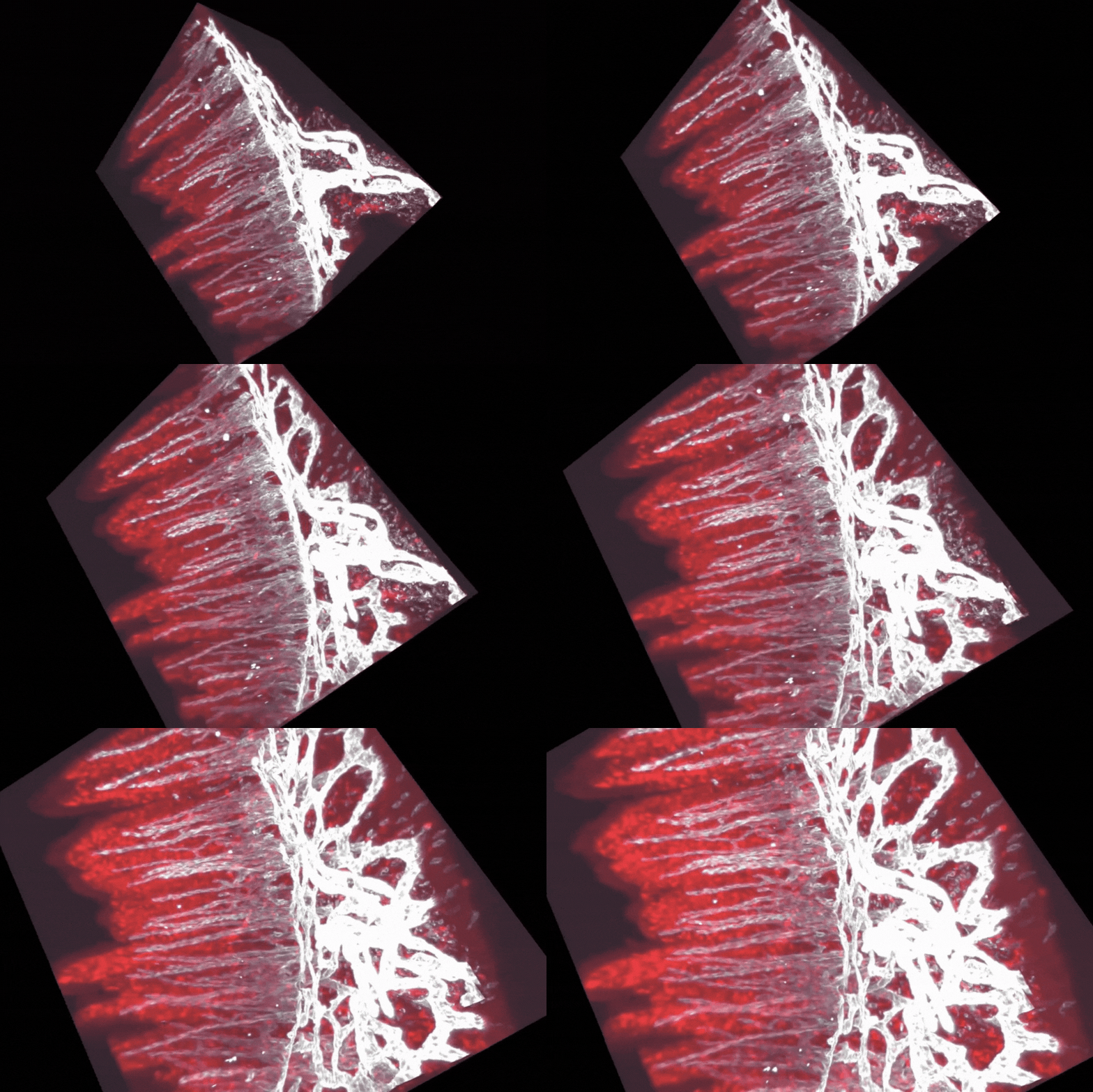
Antigen-presenting cells (APCs) marked in red.
The gut is a gatekeeper, trained to recognize what belongs inside of us-and what doesn't. But how does the intestinal immune system learn to distinguish friend from foe? And why does it sometimes make the wrong call, triggering a potentially dangerous allergic response to something as innocuous as a peanut or an egg?
"The big question is how we survive eating," says Maria C.C. Canesso, a postdoc in the laboratory of Daniel Mucida. "Why do our bodies normally tolerate food, and what goes awry when we develop food allergies?"
A recent study the Mucida lab carried out in collaboration with the laboratory of Gabriel D. Victora offers clues. The researchers used Victora's LIPSTIC technology, which catalogues cell-to-cell interactions, to identify how the intestinal lining teaches the immune system to tolerate dietary antigens. Their findings reveal that two different intestinal immune cells capture food antigens and signal the immune system to stand down, preventing allergic reactions.
Their work also throws light on an intriguing path forward: If food allergies arise when intestinal cells lose their grip on immune balance, the authors suspect that we could one day fine-tune those cells to orchestrate tolerance rather than cause chaos.
Stopping cancer cells in their tracks
For decades, scientists have known that the slender protrusions known as filopodia, which help cells migrate, are built from bundles of actin filaments stitched together by the protein fascin. But how fascin assembles these strong yet flexible structures was unknown. This year, Gregory M. Alushin's lab solved this mystery by developing advanced computational cryo-EM methods to visualize, for the first time, the atomic-level architecture of fascin-bridged actin bundles.
The findings not only explain how filopodia achieve a balance of rigidity and bendability, but also could help improve drugs currently in development that stop cancer cells in their tracks by preventing fascin from bundling actin filaments into filopodia-and thus allowing malignant cells to migrate throughout the body. These insights may also lead to new therapies that work in a similar fashion.
"We've been able to detail essential design principles for the bundles, which could be really helpful information for finding new ways to interfere with their construction," Alushin says.


