Institute of Science Tokyo (Science Tokyo) launched the Visionary Initiatives(VIs) - a cross-disciplinary, integrated research framework -in the 2025 academic year to co-create new value with society while advancing science and human wellbeing. As of 2026, eight VIs are tackling the challenge of shaping the future, with each developing distinct shared visions for societal transformation based on three pillars: "Better Life," "Better Society," and "Better Planet."
One of these initiatives, Future Intelligence - Laying the foundations for the future of science, intelligence, and society - was launched in April 2026 as a new research organization. Hiroshi Asahara, Professor in the Graduate School of Medical and Dental Sciences and Program Director (PD) of the initiative, discusses how diverse forms of knowledge across disciplines can be integrated to envision society 100 years into the future.
From "systems medicine" to the integration of knowledge
Could you tell us about your research background and the ideas underlying Future Intelligence?
Asahara My field is systems developmental and regenerative medicine. I have conducted research at universities and research institutes in Japan, as well as internationally at institutions including Harvard Medical School-affiliated research institutes, the Salk Institute, and The Scripps Research Institute. Throughout my career, I have focused on understanding the principles underlying how life forms, evolves, and regenerates by integrating perspectives across genes, molecules, cells, and whole organisms.
When I was in elementary school, I eagerly awaited Gakken's monthly educational magazines, Science and Learning, along with their hands-on experiment kits. One month featured space science, the next chemistry, then earth science. I still remember my fascination with both the depth and breadth of science across disciplines. Yet after becoming a scientist myself, I gradually found myself immersed in competition within a single field, sometimes viewing other disciplines merely as auxiliary tools. In many ways, Future Intelligence represents a return to those original aspirations and an effort to recover the true breadth of science.
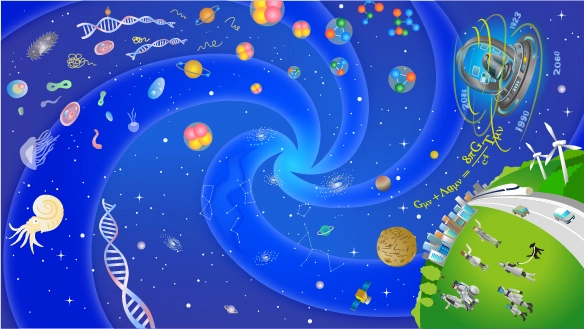
At the core of Future Intelligence is the idea of viewing life as a multilayered system. We see the evolution of matter, life, consciousness, and society as one enormous multilayered complex system. By integrating fields that may initially appear unrelated - quantum science, mathematical science, AI, and medicine - we aim to scientifically uncover the laws governing this complex evolution. Extending the vectors of current scientific understanding into the future, our mission is not merely to predict what lies ahead, but to concretely envision the possibilities of society 100 years from now.
Toward a future where humanity 100 years ahead believes in the power of knowledge
What ultimate future does Future Intelligence aim to achieve?
Asahara The future we envision is one in which the creation and evolution of knowledge enable the future of humanity and society to be scientifically anticipated, while the value of knowledge itself is returned to society through the realization of a better future. We call the intelligence required to create such a future "Future Intelligence."
Even when people 100 years from now face challenges beyond anything we can currently imagine, we hope to build a foundation that allows them to believe that intelligence still has the power to open new paths forward. Knowledge will continue to evolve and illuminate the future - realizing such a future is the ultimate goal of this project.
To achieve this, society itself must no longer be treated as something fundamentally unpredictable, but rather as something that can be scientifically understood and designed. By leveraging advanced technologies such as quantum computing and AI, we seek to transform extraordinarily complex biological phenomena and social systems into systems that can be modeled and anticipated, enabling us to design better forms of society.
A "voyage of knowledge" connecting ontological questions and future design
How is Future Intelligence structured, and how does it connect present science to the future?
Asahara Future Intelligence is built around four interconnected key visions under a central philosophy: advancing the exploration and evolution of knowledge to create future social systems shaped by intelligence.
Future Intelligence is, in essence, a "knowledge time machine" - one capable of moving freely across the past, present, and future to uncover the laws of evolution. This time machine is not a physical device for traveling through time. Rather, it is a new engine of knowledge that surveys the past and present through vast amounts of data and theory, then uses the laws derived from them to illuminate the future.
At the foundation of this approach lies the simple interplay between induction and deduction. Induction involves observing patterns of evolution across multiple layers - including the universe, matter, life, consciousness, and society - and discovering the common principles that connect them. Deduction then applies those principles to envision future societies. By moving continuously between induction and deduction, we believe it becomes possible to perceive spans of time that were previously invisible to us.
This broader framework gives rise to four key visions:
- Foundations of knowledge for shaping the future
- New frontiers in science and technology for future predictions
- Exploring the evolution of life and consciousness
- Social system design informed by future predictions
These are not isolated themes. Together, they form a single intellectual trajectory aimed at discovering the laws of evolution and connecting them to the future. Through this journey, we seek to understand the origins of the past and the possibilities of the future as part of one seamless continuum.
Future Intelligence: Laying the foundations for the future of science, intelligence, and society
Future Intelligence aims to create future social systems shaped by intelligence through the exploration and advancement of knowledge
・Curiosity-driven exploration of fundamental questions to generate new scientific frontiers
・Integrating disciplines to uncover fundamental principles of nature and intelligence
・Establishing a foundation for scientific prediction of natural and social phenomena

・Integrating AI, quantum science, data science, and informatics to reveal the principles of complex natural and social systems
・Building a research foundation that fosters the mutual advancement of science, technology, and knowledge, opening up diverse visions of the future
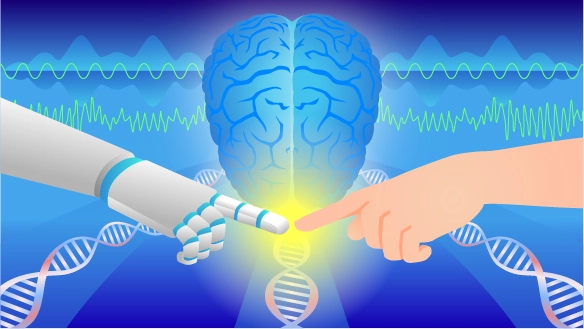
・An integrated understanding of human consciousness, physiology, and underlying mechanisms
・Exploring the forms and possibilities of future intelligence emerging from human-AI co-evolution
・Uncovering the principles of life and consciousness to drive next-generation medicine across the lifespan
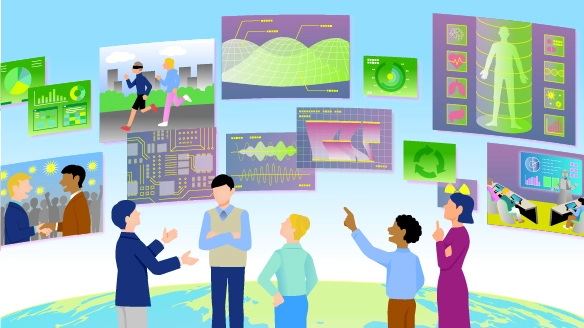
・Simulating and modeling society 100 years into the future enabled by advanced science
・Designing social systems that enhance human well-being and fulfillment
・Advancing medicine, industry, and society by integrating predictive models with decision-making, value judgment, and consensus-building
・Proposing new learning models for social systems driven by intellectual curiosity and ethical judgment
Human resource development through global circulation and medical-engineering integration
As PD, what organizational and educational initiatives are you particularly focused on?
Asahara One of the greatest strengths of Future Intelligence is that it is already deeply connected to the global research community. We collaborate on a daily basis with leading institutions such as CERN, RIKEN, and KEK. As PD, my role is to maximize these international networks and establish a sustainable system for international brain circulation, enabling young researchers and students to actively conduct research abroad.
In industry-academia collaboration, we also aim to fully leverage Science Tokyo's unique ability to bridge science, engineering, and medicine. By connecting quantum technologies and mathematical modeling with clinical knowledge and medical data, we hope to expand our research into concrete social applications such as drug discovery, precision medicine, and medical devices.
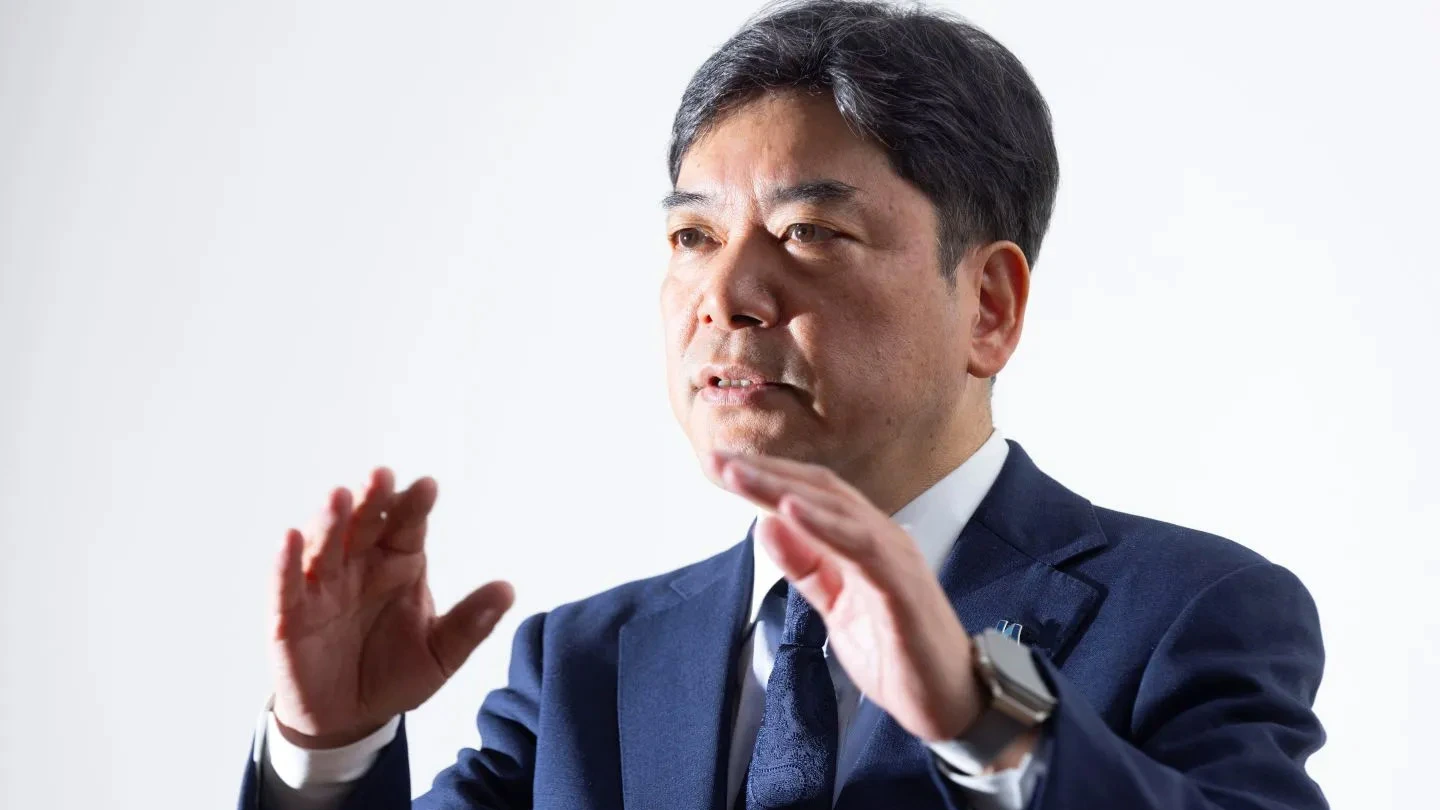
The people we hope to cultivate are not simply researchers who publish papers. We want to nurture global leaders capable of moving fluidly between experiment, theory, and implementation - individuals who understand evolution and can drive the evolution of society itself. We are creating an environment where research outcomes do not end with publications, but reach society through prototypes and implementation models.
Joining together to design the future
What message would you like to share with researchers, companies, and members of society interested in Future Intelligence?
Asahara I believe science is perhaps the only method through which humanity can truly confront its own raison d'être - the reason for our existence. Questions such as "Why do we conduct research?" and "Why do we exist?" cannot be answered by medicine alone or mathematics alone. Only when knowledge from all disciplines comes together can the outlines of those answers begin to emerge.
Ten years ago, integrating such diverse disciplines may have seemed premature. But today, with the emergence of Science Tokyo and its concentration of cutting-edge research fields, the time has finally come when this becomes possible.
Researchers from different backgrounds meeting one another and sharing their admiration for science itself - the new intellectual chemical reactions born from these encounters are the true core of Future Intelligence. We do not simply want to predict the future; we want to design it with our own hands. I sincerely look forward to working together with people who share that passion to open pathways toward the next 100 years.
Interview date: March 14, 2026
Profile
Hiroshi Asahara
Professor
Department of Systems BioMedicine
Graduate School of Medical and Dental Sciences
Science Tokyo