A leading scholar on the life of Mary Queen of Scots is calling for the language used to refer to the first years of her reign to be changed.
Dr Amy Blakeway, Senior Lecturer in the School of History at the University of St Andrews, argues that the term 'the rough wooing' used to refer to the first eight years of Mary's reign, legitimizes sexual violence and distorts historical facts.
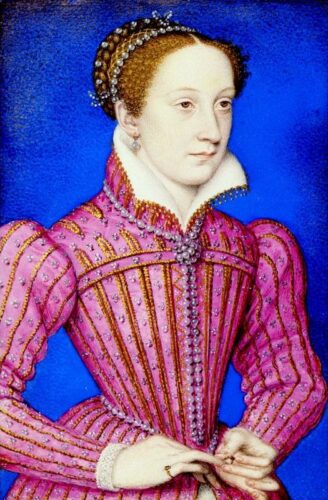
The 'Rough Wooing' was the name given in the eighteenth century to the wars fought between Scotland and England between 1543 and 1550. Henry VIII started this conflict with the aim of forcing a marriage between his son Edward, and Mary, Queen of Scots. If Henry was successful, Scotland and England would eventually share a ruler and Scotland would have to break off its historic alliance with France, as well as converting from Catholicism to Henry's new Protestant faith. Fierce resistance from the Scots and military support from France meant that the plan was never implemented.
At the same time it was used to name these wars, 'Rough Wooing' was also used to refer to the practice of men sexually assaulting women in order to force them in to marriage.
Dr Blakeway said: 'The wars between England and Scotland over Mary's marriage witnessed violent combat which affected the whole of Scotland. The anachronistic name 'rough wooing' was first used over 150 years after the conflict ended and distracts us away from the destruction of war by focusing on the diplomatic marriage over which it was fought. In its wider cultural use a 'rough wooing' was a sexual assault or rape followed by marriage. This subsequent marriage was used to excuse the assault, and even deny that any violence took place, to claim that a woman had, in some sense, been 'wooed' over. A 'rough wooing' is the eighteenth-century progenitor of the modern so-called 'rough sex defence'. The term used outdated eighteenth and nineteenth century ideas about women, sex, marriage and consent to help smooth over a violent past into a history which culminated in Anglo-Scottish union. It is especially inappropriate when we consider the widespread prevalence of sexual assault during the 1540s wars and the fact that, as an adult, Mary herself would be raped.'
Mary ascended to the throne when she was only 6 days old in 1542, she ruled until 1567 when she was forced to abdicate and was eventually executed in 1587 aged 44.
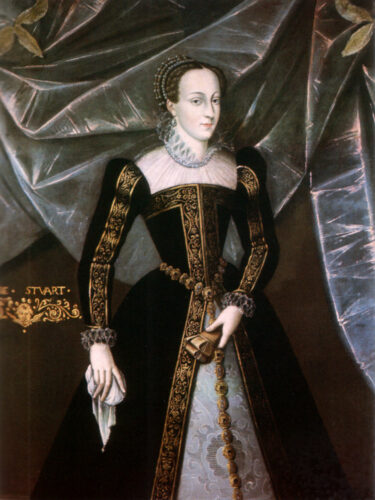
Whilst the adult figure of Mary as a romantic monarch is well-known, the early years of her reign were tumultuous and are often ignored. English armies sacked and looted Edinburgh, and took Broughty Castle (outside Dundee), Haddington, Dumfries and other towns and castles. Children were evacuated, crops burned, and the movement of armies caused a major outbreak of plague. Post-war records reveal a decade of rebuilding, and farms with years of rent written off because of fire damage. Inflation rose hugely, as did the tax bill to pay for defence and rebuilding, causing serious social tensions. In 1559-60 the leaders of a major national rebellion used all this pressure to help gain support - ironically in favour of an English alliance and the Protestant faith which the 1540s wars had been fought to resist.
Dr Blakeway added "The wars of the 1540s were a fascinating and important period in Scottish, English and wider European history, but they are little known. An anachronistic name which excuses sexual violence - and which many people find confusing - does not help. Referring to this conflict as 'the Anglo-Scottish Wars of the 1540s' is a first step towards uncovering the wide range of stories we can tell about this period – not just about Mary, Queen of Scots, but the people over whom she ruled.'
The early years of Mary's reign are the subject of a new exhibition, War, destruction and reform: the early years of Mary, Queen of Scots, which runs until 20th September 2026 at the Wardlaw Museum, St Andrews.