An international research team led by Dr. Gabriele Russo of the Senckenberg Centre for Human Evolution and Palaeoenvironment at the University of Tübingen has reexamined historical fossil collections from Lebanon using modern methodology. The results, published today in two complementary studies in the journal "Communications Earth & Environment," show that the Levant served as an important corridor for animals and various human lineages during the Pleistocene, and that environmental conditions in the central part of the region differed significantly from those in the south. The finds from Ras el-Kelb, Naame, and Nahr Ibrahim date back as far as 400,000 years and provide insights into the life of early humans as well as into the partly densely forested landscapes of that time. The studies also underscore the high scientific value of historical collections-especially in politically unstable regions.
For hundreds of thousands of years, the eastern edge of Mediterranean region, known as the Levant, has connected Europe, Asia, and Africa. It has been a venue for exchange between populations, cultures, regions, and continents. "Research in the Levant continues to present unique challenges to this day due to political and social instability. In the particular case of Lebanon, such instability continues to limit access to important fossil sites for extended periods of time. This makes historical collections all the more valuable," explains researcher Dr. Gabriele Russo from the Paleoanthropology Work Group at the Institute of Archaeological Sciences and the Senckenberg Centre for Human Evolution and Palaeoenvironment at the University of Tübingen, and he continues, "Even though some of the original excavations took place more than 100 years ago, modern methods allow us to now extract new information from them answering new scientific questions."
The Levant is considered a major corridor for the dispersal of various animal species and hominin lineages during the Pleistocene, the period spanning from 2.58 million years to approximately 11,700 years ago. This included migrations of Homo sapiens and possibly encounters with Neanderthals. "While the southern part of the region has been intensively studied for over a century, the central and northern areas have been explored to a much lesser extent. In present-day Lebanon, political instability since the 1970s has limited research there. As a result, environmental conditions and archeological developments from the southern Levant have sometimes been regarded as representative of the entire region," explains apl. Prof. Dr. Sireen El Zaatari, Paleoanthropology research group at the University of Tübingen and last author of the study.
The researchers' new study now calls this assumption into question. For the first time, the scientists were able to precisely date the historical collections from Ras el-Kelb and Nahr Ibrahim. "Ras el-Kelb is approximately 400,000 years old, offering a rare glimpse into the way of life during the late Lower Paleolithic. Nahr Ibrahim is about 250,000 years old and dates to the transition from the Lower to the Middle Paleolithic," adds Russo. Combined, the three collections document a period ranging from about 400,000 to 100,000 years ago, creating one of the longest palaeoecological records for the region.
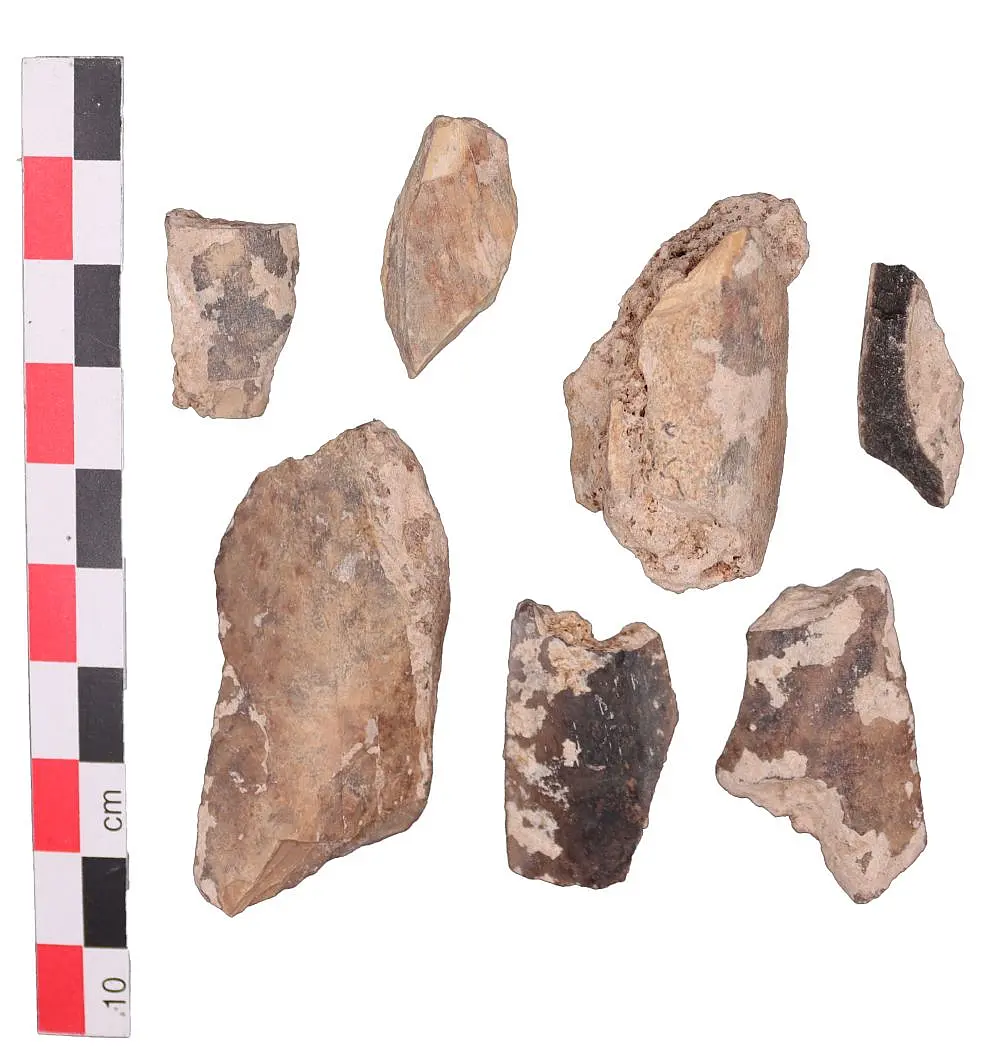
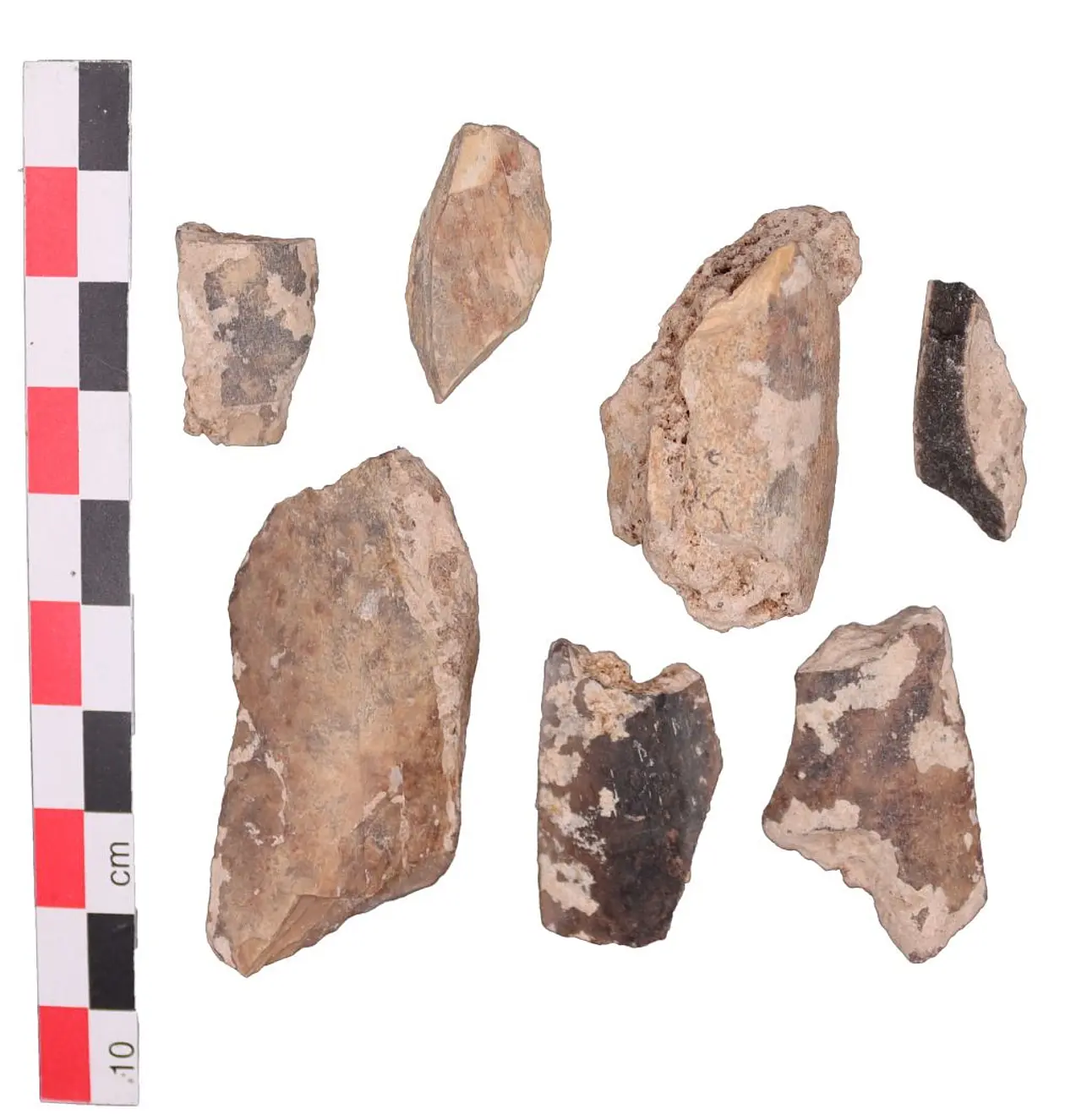
For their study, the research team used archeozoological methods combined with the analysis of tooth wear and stable isotopes, as well as modeling of the past landscapes. Cut marks, impact marks, and intentionally split long bones provide evidence that hominins processed prey animal at several sites. Among other things, these marks indicate the removal of the skin, the butchering of the carcasses, the removal of meat, and the extraction of bone marrow.
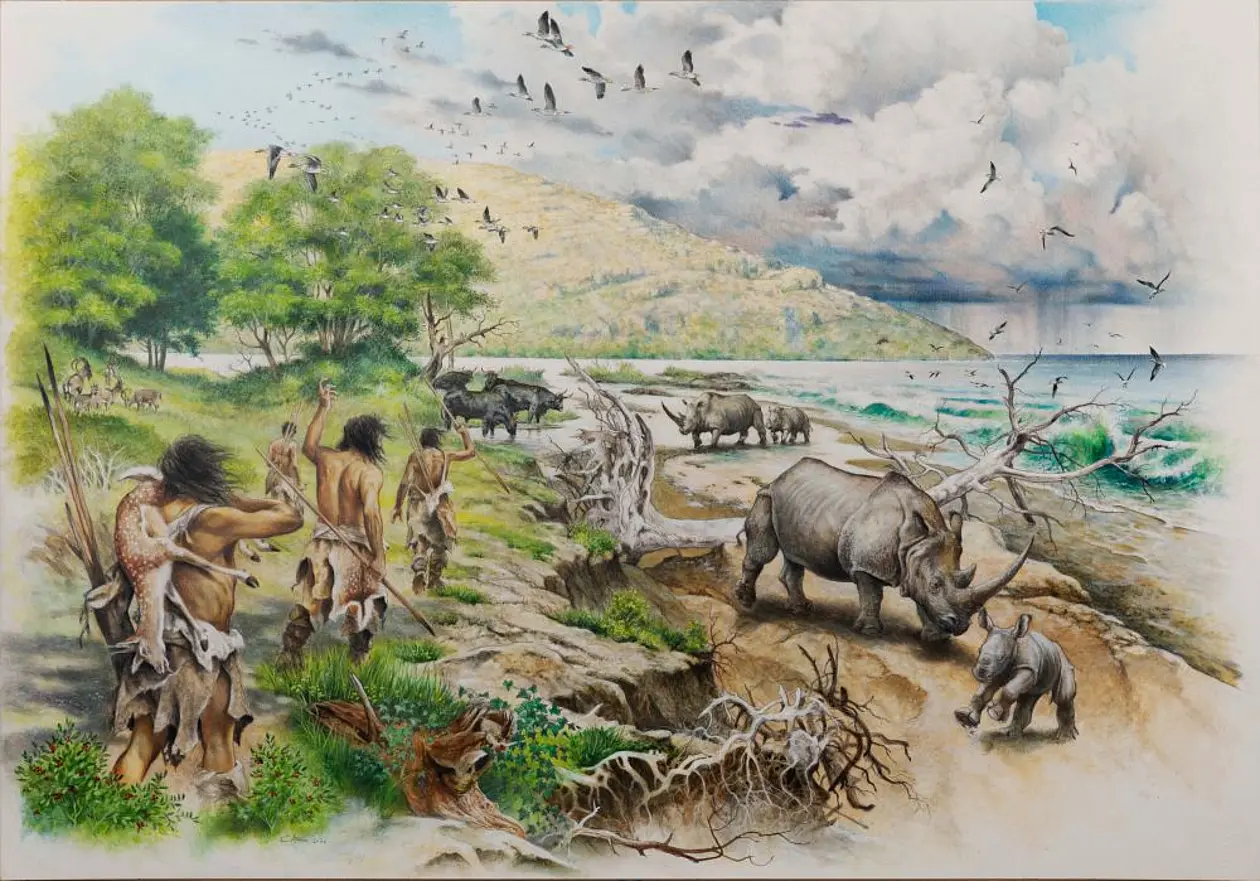
According to the study, the diet of early humans in Lebanon was diverse, although they primarily hunted big game. The most important prey included adult aurochs, fallow deer, red deer, and wild goats. Rhinoceroses apparently also played a role. "Earlier investigations at the Ras el-Kelb promontory had already documented a comparatively large proportion of rhinoceros remains. This is confirmed by archeozoological analyses of the finds from the Ras el-Kelb Cave." The findings suggest that rhinoceroses were regularly found in the estuary-dominated landscape during the Paleolithic, and their high proportion is therefore not solely attributable to the selective recovery of the bones by the Jesuit researchers of that time," adds Russo.
Previous pollen analyses from Naame and other Paleolithic sites had already indicated the presence of well-developed Mediterranean forest vegetation, including firs, birches, hazels, elms, linden trees, hop-hornbeam, and regular hornbeams. Combined with the new findings on vegetation cover and habitat reconstruction, a clearer picture now emerges of what the coastal landscape of present-day Lebanon might have looked like: a mosaic of different habitats with densely vegetated areas and seasonally highly productive clearings.
"These environmental conditions likely also directly influenced the lifeways of hominin groups. The diverse forest and coastal habitats provided a wide range of resources, enabling seasonal patterns of landscape use," explains Russo, and he adds, "Our isotope analyses further indicate a relatively stable and warm climate over long periods of time. Together with more extensive forest cover and the year-round availability of resources, these conditions may have made the Mediterranean coast of present-day Lebanon an ecological refugium for animals and people. Our results show clear ecological differences between the central and southern parts of the Levant. While the south was largely characterized by variable climate and mostly arid steppe and desert landscapes, the central and northern Mediterranean coast provided habitats with significantly denser forest cover and year-round productivity."
In their interpretation, the researchers also take into account the unique challenges posed by historical collections, including potential differences in excavation methods and the sometimes limited documentation of the original stratigraphic layers. By combining various independent analytical methods, however, reliable ecological patterns can still be identified. "Because legacy collections preserve archaeological evidence recovered from contexts that may no longer exist or be accessible, their preservation and re-examination using modern methods are particularly important," says Russo. "They can preserve information about past habitats and human behaviors that we can no longer obtain."
Future research will include further stable isotope analyses, the examination of stone tools associated with the animal bones, and systematic comparisons with newly excavated finds and other collections from Lebanon and neighboring regions that have received little attention to date. "Our goal is to further refine our reconstruction of the environmental conditions of that time and to improve our understanding of the adaptation strategies of early humans as well as their interactions with the landscape and wildlife in the eastern Mediterranean region," adds El Zaatari in conclusion.
This research is part of the on-going REVIVE project funded through the European Research Council (ERC) Consolidator grant awarded to apl. Prof. Dr. Sireen El Zaatari under the European Union's Horizon 2020 research and innovation program (grant agreement number 101001889). The REVIVE project is running in close coordination and collaboration with the Lebanese Directorate General of Antiquities.
Publications:
Russo, G., Rivals, F., Duval, M. et al. Lebanese faunal legacy collections uncover 400,000 years of woodland resilience and distinct hominin ecological strategies. Commun Earth Environ 7, 706 (2026). https://doi.org/10.1038/s43247-026-03926-w
Russo, G., Bibi, F., Tsimopoulou, C. et al. Long-term ecological stability in the Pleistocene central Levantine corridor revealed by enamel isotopes from Lebanon. Commun Earth Environ 7, 705 (2026). https://doi.org/10.1038/s43247-026-03925-x