
Cancer scientists have discovered that lung cancer cells can change their identity to resist treatment.
Research published today in Molecular Oncology reveals how lung cancer cells can become more aggressive and harder to treat by reactivating a process involved in early lung development.
The findings could help doctors predict which patients are likely to respond to treatment and provide personalised care.
They also open the door to developing new treatments aimed at stopping cancer cells from switching identity.
Researchers at the University of Southampton wanted to understand why some patients don't respond well to current treatments like chemotherapy or immunotherapy.
The team analysed large datasets from previous cancer study cohorts amounting to samples from over 1,500 patients.
By combining multiple techniques to measure different features across various scales, from individual cells to whole tumour samples, the researchers were able to build a complete picture of the changes associated with disease progression and therapy resistance.
This led to the discovery that a biological process normally activated during the early stages of lung formation was being switched back on, and that this was a key driver of disease progression.
Dr Chris Hanley , Associate Professor in Cancer Science at the University of Southampton and senior author on the paper, explains: "Our lungs develop in a similar way to trees, through a branching process in which the trachea divides into two bronchi that repeatedly split into smaller and smaller branches.
"Once the branches are formed this process is switched off and the body then uses another process to form millions of alveoli - tiny air sacs where oxygen enters the blood - like the leaves at the ends of a tree's branches.
"We've discovered that in some severe lung cancers, cells revert from their alveoli forming state to their branching state. This helps the cancer to grow, become more aggressive and harder to treat.
"By measuring genes related to branching in samples from patients, we're able to predict how well they might respond to different treatments."
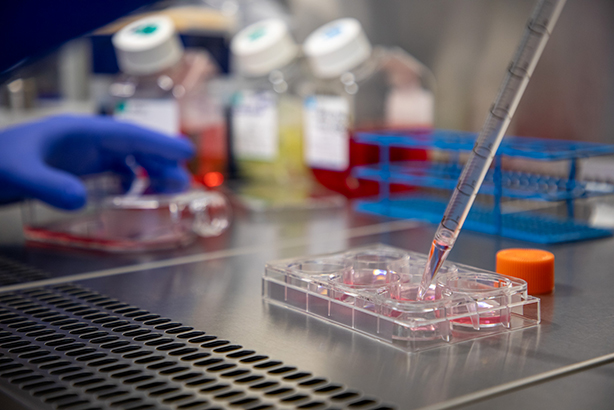
Further analysis, combined with lab experiments at Southampton's School of Cancer Sciences, revealed some of the underlying molecular regulators behind this process.
The team uncovered the loss of a well-known cancer-protecting gene (TP53) and the activation of a pathway that usually protects against viral infections called interferon signalling.
"In the lab we can see that it's this combination of pathways that drives the change from alveoli forming to branching," says Dr Hanley.
"While TP53 is known as the 'guardian of the genome', its role in controlling how cells transition between different states is something that remains poorly understood.
"This new understanding of what is making tumours more aggressive will provide the foundation for further research into targeting these functions, which could lead to new therapies for patients that don't respond well to current treatments."
The paper Developmental programmes drive cellular plasticity, disease progression and therapy resistance in lung adenocarcinoma is published in Molecular Oncology and is available online.
The research was funded by the Rosetrees Trust and the University of Southampton Centre for Cancer Immunology.


