
Aphrodite may be popularly known as the glamourous goddess of love and beauty, but the Ashmolean Museum's latest major exhibition reveals a far older, stranger and more powerful goddess (or deity) than the familiar myths suggest.

Aphrodite: The Making of a Goddess uncovers the fascinating story of one of antiquity's most enduring figures, from her lesser-known origins as an all-powerful deity worshipped in ancient Cyprus, via her transformation into the Greek goddess of love, beauty and desire (later worshipped by the Romans as Venus), to her continuing presence in art, fashion and popular culture today.
For many of us, Aphrodite is a familiar figure: a flirtatious goddess entangled in tales of love, jealousy and scandal. But behind this image lies a much more complex history. Long before she acquired her modern identity, she emerged from traditions of powerful female deities worshipped across Cyprus and the eastern Mediterranean.

"Aphrodite is one of the most famous figures in the history of Western civilisation. The purpose of a good exhibition is to make the familiar strange and the strange familiar, and this achieves that very well."
Through Greek and Roman mythology, archaeology, sculpture, painting, contemporary art and fashion, the exhibition brings together almost 150 objects spanning 5,000 years to reveal the transformations that created the Aphrodite we recognise today. Alongside the Ashmolean's internationally important antiquities and European art collections are exceptional loans from fourteen museums and collections across the world, including the Louvre, the Uffizi, the Metropolitan Museum of Art, the Royal Collection, the Gemäldegalerie in Berlin, and Blenheim Palace.
Dr Anja Ulbrich , A.G. Leventis Curator of Cypriot Antiquities at the Ashmolean and curator of the exhibition, said: All previous exhibitions about Aphrodite show her exclusively as the "goddess of love and beauty" through her, predominantly nude, representations in Classical Greek and Roman art. I felt it was high time for a different approach to explore the goddess, her journey and transformations by bringing Greek and Roman mythology, antiquities, art and archaeology as well as European art together for the first time. Our concept clearly convinced our lenders, who rewarded us with amazing loans to create a truly "star-studded" exhibition.'
From 'all-powerful goddess' to beauty icon
Aphrodite's story begins in ancient Cyprus, where she was worshipped as a deity of universal powers (or all-powerful deity) simply known as 'The Goddess.'
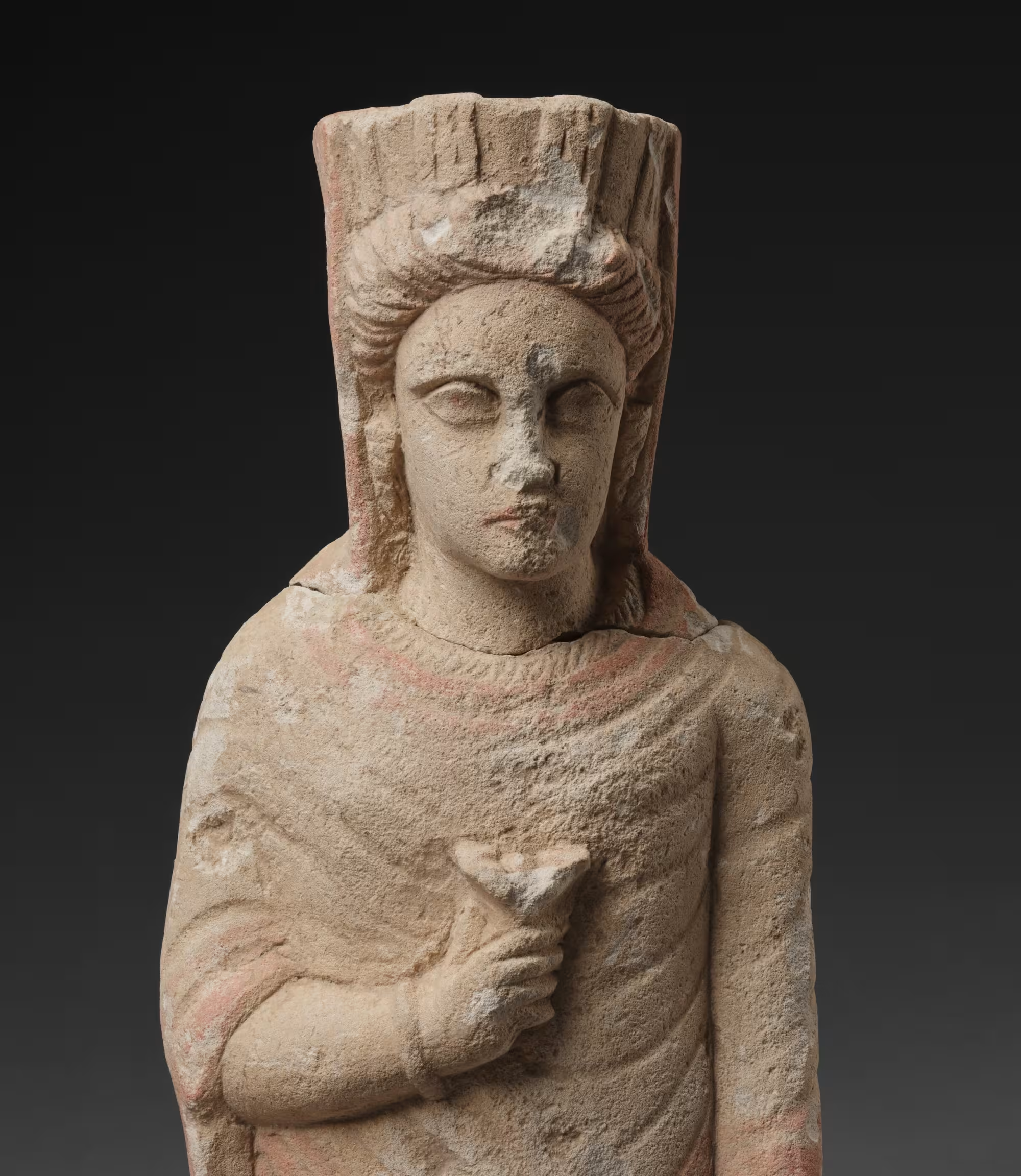
'In her earliest form, Aphrodite's role was far broader than the love and beauty with which she later became associated,' said Dr Ulbrich. 'She was responsible for everything that is important for life to flourish, from crops and vegetation, to childbirth and copper mining.'
Within a space evoking an ancient Cypriot open-air sanctuary, remarkable archaeological finds, including votive figures and offerings, reveal how worshippers honoured the goddess and the many, (sometimes rather strange) forms in which she was represented.
But neither the goddess nor her image remained static. Cyprus stood at a crossroads between the Near East, Egypt and the Aegean, and centuries of trade and migration brought new religious influences from all these regions to the island. Among them were Middle Eastern goddesses, including Ishtar and her Canaanite-Phoenician counterpart Astarte, both associated not only with love, sex and fertility, but also war. The votive figures displayed in the sanctuary show how these traditions mingled with local beliefs, with the Cypriot goddess absorbing new attributes and ways of being represented.
When Greek migrants arrived in Cyprus, they adopted the island's goddess into their own pantheon as Aphrodite, transforming her into the figure who would become central to Greek mythology.
'Aphrodite's role went from all-encompassing to being one goddess among several others, with an increasingly limited remit and codified imagery,' said Dr Ulbrich.
Yet her popularity and influence did not diminish. Instead, stories about Aphrodite as well as her images and worship proliferated across the Greek and Roman worlds.

"This exhibition powerfully demonstrates that although Aphrodite may be thousands of years old, her influence and powers are still being felt today."
Myth, love and power
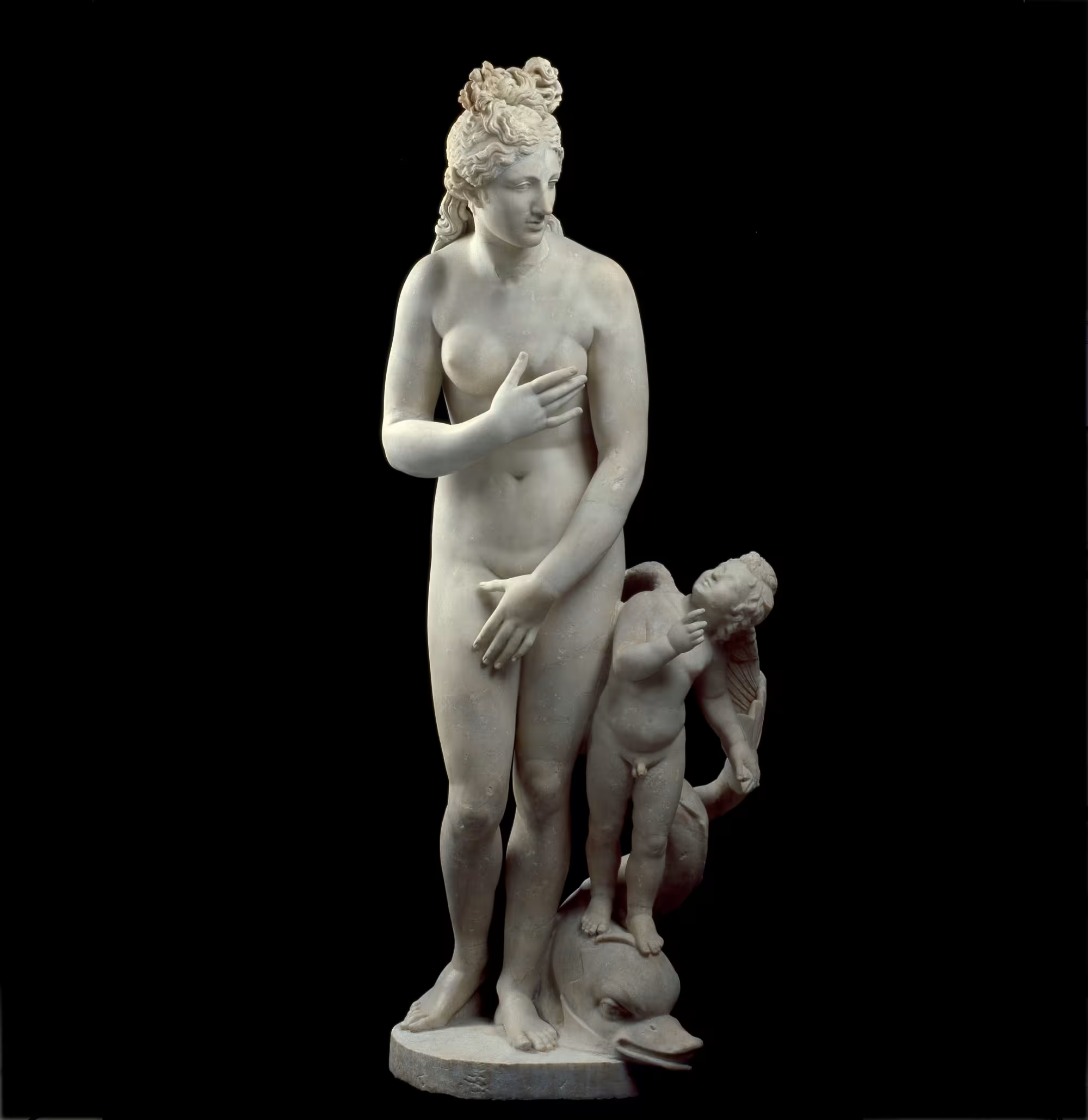
Through ancient objects and animations, the exhibition creatively brings Aphrodite's mythology to life: her dramatic birth from the sea, her marriage and love affairs, and her pivotal role in both the events leading to the Trojan War and the foundation of Rome.
The exhibition also uncovers less familiar aspects of the goddess. Aphrodite was associated not only with love, beauty and fertility, but with the sea and seafaring. She appears riding water birds and was accompanied by marine creatures, while a spectacular third-century CE mosaic from Tunisia shows her sailing in a barque crewed by winged cupids.
Besides legends, Aphrodite also inspired - and even transformed - art itself. Her image pushed sculptors to break new ground in depicting the female body, creating some of antiquity's most influential sculptures, that would be copied for centuries.
Among the exhibition highlights is the Frascati Venus' (around 160 CE), on loan from the Louvre, a Roman version of a revolutionary Greek sculpture by Praxiteles. The original was not only the first monumental female nude, but also introduced a new relationship between sculpture and spectator. Caught naked as if emerging from her bath, the goddess moves to cover herself, reacting to the implied presence of the viewer.

"These sculptures did more than establish enduring images of Aphrodite. They helped transform the representation of female bodies in Western art and were copied and reimagined for centuries."
The return of Venus
After antiquity, Aphrodite largely disappeared from Western European art. Her return came in the Renaissance, as ancient Greek and Roman sculptures of Venus were rediscovered and artists once again turned to her as a subject.
At the centre of the final gallery is Botticelli's Venus, painted around 1490 and on loan from the Gemäldegalerie in Berlin. Belonging to the same period as Botticelli's celebrated Birth of Venus, this full-scale painting demonstrates how the Renaissance transformed the ancient goddess into a new ideal of female beauty.
From here, the exhibition traces Aphrodite's influence into the modern era, from the Venus de' Medici, one of Europe's most admired ancient sculptures, to Michelangelo Pistoletto's provocative Venus of the Rags. Her influence reaches into contemporary fashion too, with a striking Jonathan Anderson dress for Loewe, reworked for Beyoncé's 2023 Renaissance world tour, offering a spectacular 21st-century reimagining of the goddess.


