
When trying to figure out a better design for a bacteria-powered biobattery, Binghamton University researchers found inspiration in nature - specifically, the insides of our small intestines.


Finger-like protuberances called villi line the digestive tract and are covered with microorganisms that help us to digest our food. Their shape and behavior also prove to be ideal for generating bioenergy using spore-forming bacteria.
Professor Seokheun "Sean" Choi and PhD students Ruohan "Astrid" Zhang and Botian Wang from the Thomas J. Watson College of Engineering and Applied Science's Department of Electrical and Computer Engineering recently published their findings in the journal Small.
Choi's previous research has explored a variety of biobattery configurations with paper, fabric, metal, and polymers, and he is trying to integrate them into 3D-printed circuits. He's even created an ingestible biobattery that remains inert until it activates in the small intestine.
As a pioneer of papertronics, Choi is most interested in using paper as the medium. One limitation he's discovered among nearly all the materials he's tried: two-dimensional configurations don't offer enough surface area for the spore-forming Bacillus subtilis bacteria to thrive. The porous nature of paper offers limited three-dimensional possibilities but can lead to performance issues.
"Porous structures can be easily clogged by biofilm formation, so we had a lot of problems with nutrient delivery, waste buildup or uneven biofilm growth," said Choi, who leads the Bioelectronics and Microsystems Lab. "What we need is a bioelectrode that mimics living tissue, so that we provide a large surface area and short diffusion distance, efficient mass transport, and at the same time mechanically flexible, stretchable, and scalable."
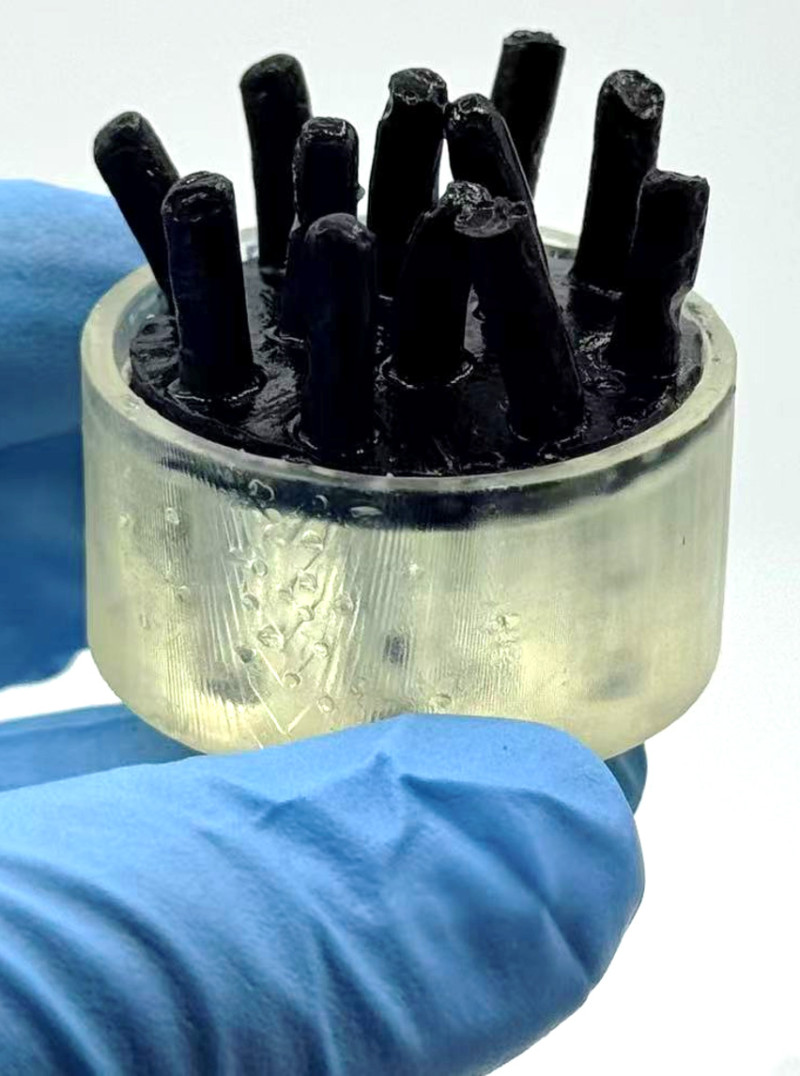
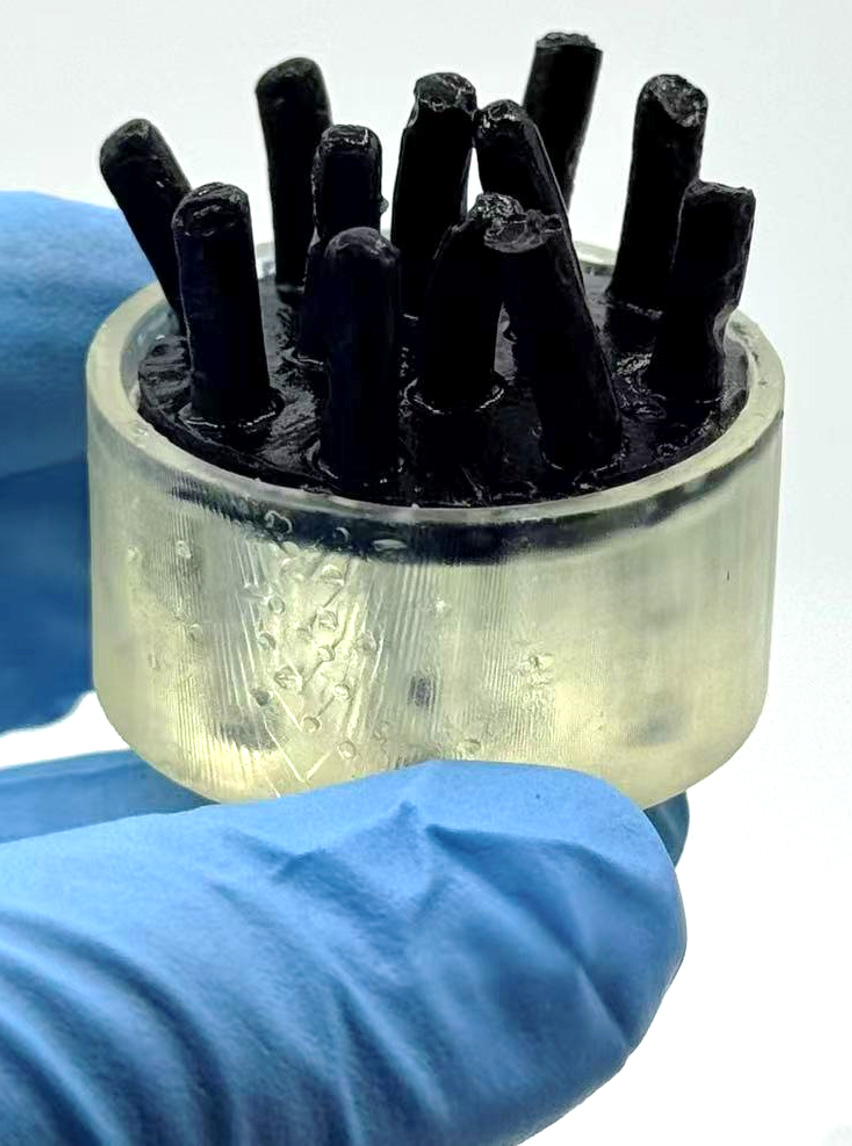
For this latest research, the Binghamton team fabricated the villi-inspired structures out of a dormant yet flexible polymer hydrogel commonly used for biomedical applications. They seeded inactive bacteria throughout the villi, which act as the biobattery's anode. To generate small amounts of electricity, the villi are separated from a modified carbon-cloth cathode by an ion-exchange membrane.
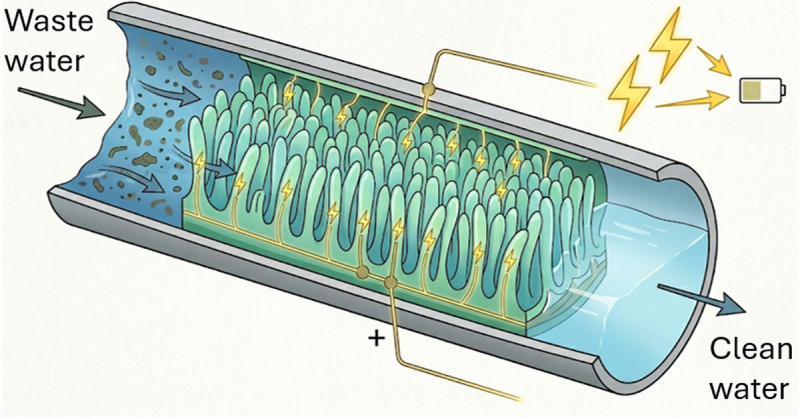
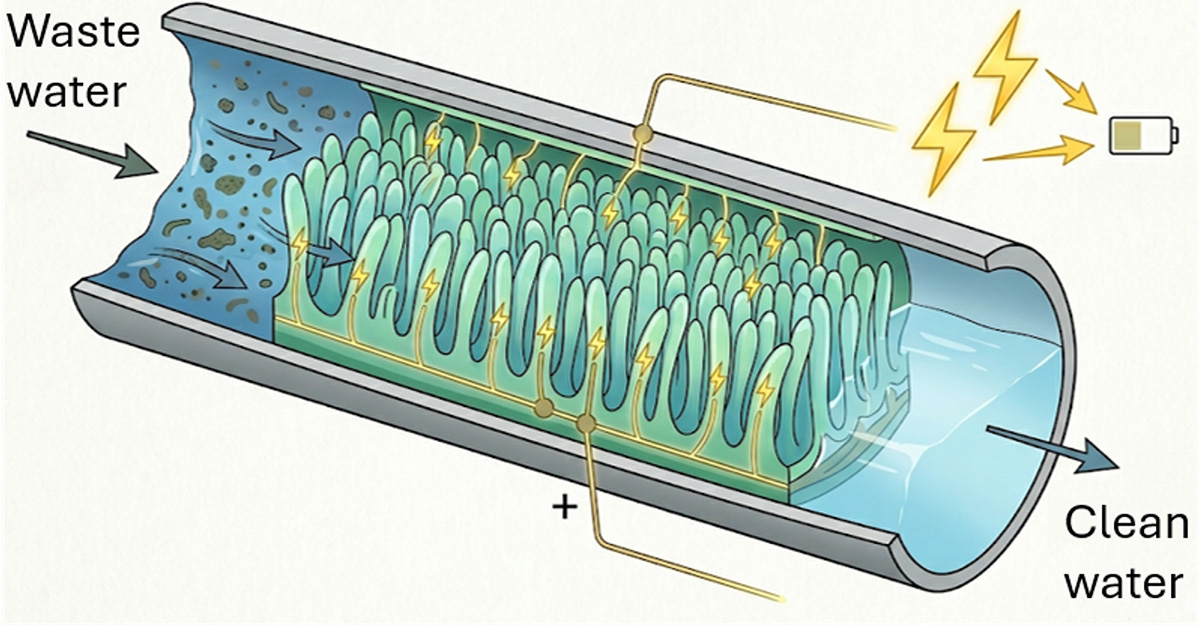
With a constant supply of nutrient medium, the villi device maintained a stable output of about 0.75 volts for at least 14 hours - enough to light small LEDs or power microsensors. One possibility for future use would be self-powered wastewater treatment.
"We can put this biobattery in a waste pipe, because it can easily be integrated with its surroundings," Choi said. "It can use the waste in the water as a nutrient and generate power, and it can exactly conform to the shape and size of the pipeline."
As an electrical engineer, Zhang admitted she wasn't too familiar with the human digestive system before this research, but she and Choi did a lot of reading before deciding to design and build a villi-inspired biobattery.
"I now know how the structure looks and how the bacteria in the gut perform," she said. "I also studied a lot more about the exact structure of the villi and how the different layers of cells function, so I can integrate them in our work."
The Binghamton team wants to improve the manufacturing process for the villi-inspired biobatteries by developing a single-step, scalable printing method. The researchers also would like to move closer to how our bodies work, with bacteria in our digestive tract staying mostly near the surface in a mucous layer that coats the villi.
"In this work, we tried to mimic architectural part," Choi said. "We need to mimic their actual physiological and chemical makeup to truly understand how those bacterial cells can maintain their viability."


