
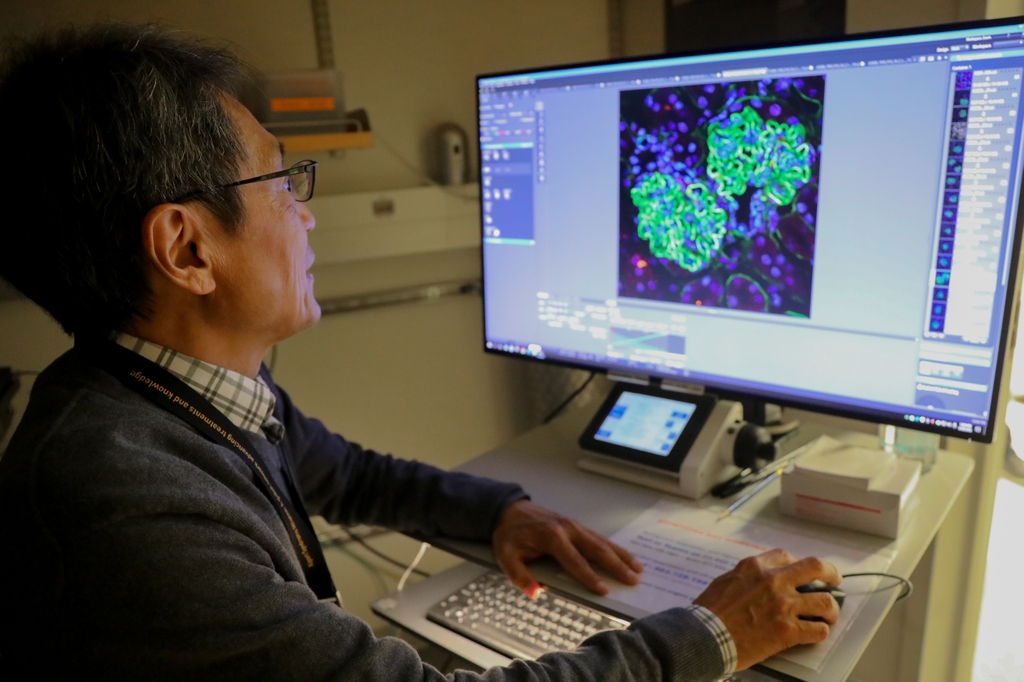
Researchers at Oregon Health & Science University have been awarded more than $7.5 million in new National Institutes of Health funding to develop gene therapies that could one day provide lasting treatments for inherited kidney diseases — which currently leave patients facing lifelong medical complications, dialysis or organ transplantation.
The funding supports the work of Hiroyuki Nakai, M.D., Ph.D., Distinguished Professor in Molecular Medicine in the OHSU School of Medicine's Department of Molecular and Medical Genetics. The awards include one R21 grant for $896,000 from the National Center for Advancing Translational Sciences, and two R01 grants, each for more than $3 million, from the National Institute of Diabetes and Digestive and Kidney Diseases.
Together, the multi-year grants will support the development of adeno-associated virus, or AAV, gene therapies for Alport syndrome and cystinuria, two inherited kidney diseases for which no curative treatments currently exist.
"For inherited kidney diseases, people know gene therapy should work if we can deliver therapeutic genes to the right cells," Nakai said. "But there have been significant technical barriers. It has been very difficult to deliver genes to the kidney. Our aim is to develop new technologies to deliver genes to the kidney, particularly podocytes and renal tubules, which are critical targets for treating these diseases."
According to the National Institute of Diabetes and Digestive and Kidney Diseases, chronic kidney disease affects an estimated 35.5 million adults in the United States and contributes substantially to health care spending. A kidney transplant can cost more than $440,000 per patient, not including the lifelong medical care required afterward. Yet many inherited kidney disorders still lack treatments that address the underlying genetic cause.
Alport syndrome affects an estimated one in 5,000 people, according to the National Kidney Foundation. The disorder damages the kidneys' filtering units and can also cause hearing loss and eye abnormalities. Although medications can slow disease progression, many patients ultimately develop kidney failure, requiring dialysis or transplantation.
Cystinuria, which affects about one in 7,000 births, causes recurrent kidney stones beginning in childhood. Patients often undergo repeated surgeries and face an increased risk of chronic kidney damage over time.
Overcoming barriers
For years, Nakai's laboratory has been developing new approaches to overcome the challenges that have limited kidney gene therapy research. The team has created six technologies that address major obstacles, including engineered AAV capsids that more effectively target kidney cells; improved gene designs; enhanced delivery methods; strategies to reduce off-target effects; immune-evasion technologies; and systems capable of delivering therapeutic genes that are too large for conventional AAV vectors.
The new grants build on nearly eight years of work focused on developing gene therapy for Alport syndrome. One of the central challenges has been delivering the large collagen IV gene responsible for the disease.
"The gene is big and doesn't fit in a standard AAV vector," Nakai said. "We developed a system that splits the gene into two parts and delivers them separately. Once they enter the target cell, they can be reconstituted into the full-length therapeutic gene product. That approach has worked really well in our studies and allowed us to move this work forward."
Three complementary projects
The three grants support a coordinated effort to develop gene therapies for two inherited kidney diseases while advancing technologies that could benefit many others.
One award will support development of an AAV gene therapy for Alport syndrome, a genetic disorder caused by defects in collagen IV, a protein critical to the kidney's filtering system. Researchers will engineer novel AAV vectors to deliver healthy copies of the gene to podocytes, specialized kidney cells essential for maintaining normal kidney function. The team will evaluate the therapy's safety and effectiveness in preclinical studies using mouse and nonhuman primate models.
A second grant will advance translational research aimed at moving the Alport syndrome therapy closer to clinical application. Researchers will study how gene therapy behaves in the kidney, assess immune responses and generate data needed to support future human studies.
The third grant focuses on cystinuria, the most common inherited cause of kidney stones. The disease is caused by mutations in genes that encode amino acid transporters in kidney tubule cells, leading to recurrent stone formation and progressive kidney damage. Researchers will develop and optimize AAV vectors designed to deliver healthy genes directly to these cells and evaluate their safety and effectiveness.
Together, the projects build on technologies developed in the Nakai laboratory to overcome longstanding barriers in kidney gene therapy, and establish a platform that could eventually be adapted for many other inherited and acquired kidney diseases.
Hope for patients, families
For people with inherited kidney diseases, the research offers hope for treatments that address the root cause of disease rather than simply managing symptoms.
"Even though there are treatments such as dialysis and kidney transplantation, people still live with fear," Nakai said. "Some patients worry about needing a second transplant in the future. If this treatment is successful, we can remove many of those fears and substantially improve patients' quality of life."
Nakai recently attended an international Alport syndrome meeting in Budapest, where researchers, physicians, industry representatives and people with the disease gathered to discuss progress in the field.
"I heard from many patients expressing their desire for new therapies," he said. "Because these are inherited diseases, many people are not only thinking about themselves, but also about their children and future generations. They want to know what can be done so their children can have a better life."
Beyond Alport syndrome and cystinuria, Nakai believes the technologies developed through these grants could create a platform for treating many other kidney disorders.
"Once we establish these methods, we can apply similar technologies to many different kidney diseases," he said. "Our hope is that what we learn from these projects will eventually open doors not just for inherited diseases, but potentially for other serious kidney conditions as well."
Nakai's projects involve a multidisciplinary team of OHSU co-investigators, including Nicole Andeen, M.D., Ben Burwitz, Ph.D., Masahiro Horikawa, M.D., M.B.A., Ian Metzler, M.D., MTM, and Kentaro Yamada, M.D., Ph.D., along with researchers Jeffrey Miner, Ph.D. of Washington University in St. Louis, and Jonathan Nelson, Ph.D., of the University of Southern California. Mary Nabity, D.V.M., Ph.D., of Texas A&M University, is co-principal investigator of the R21 grant.
This research is supported by the National Center for Advancing Translational Sciences of the National Institutes of Health under award number R21TR005230, and the National Institute of Diabetes and Digestive and Kidney Diseases of the National Institutes of Health under award numbers R01DK146261 and R01DK144804. The content is solely the responsibility of the authors and does not necessarily represent the official views of the National Institutes of Health.
In our interest of ensuring the integrity of our research and as part of our commitment to public transparency, OHSU actively regulates, tracks and manages relationships that our researchers may hold with entities outside of OHSU. In regard to this research, OHSU's Nakai has a financial interest in NeoSakura, a company that may have a commercial interest in the results of this research. Review details of OHSU's conflict of interest program to find out more about how we manage these business relationships.
All research involving animal subjects at OHSU must be reviewed and approved by the university's Institutional Animal Care and Use Committee (IACUC). The IACUC's priority is to ensure the health and safety of animal research subjects. The IACUC also reviews procedures to ensure the health and safety of the people who work with the animals. No live animal work may be conducted at OHSU without IACUC approval.


