
Professor Robert House (Department of Materials) and Professor Moritz Riede (Department of Physics) have both been awarded one of the Royal Academy of Engineering's first ever Green Future Fellowships . The first cohort of 13 Fellows will each receive £3 million over 10 years to develop solutions that tackle multiple causes of the climate crisis, as well as mitigate and adapt to its impacts.
UK Science Minister Lord Patrick Vallance said: 'We can't solve the climate crisis without engineering solutions. By supporting new approaches to key problems - storing renewable energy, extracting greenhouse gases from the atmosphere, and the huge carbon footprint of some industrial processes - these Fellowships are empowering researchers to tackle global warming.'

Professor Robert House will use the Fellowship funding to develop a new type of battery that is four times more energy dense than current lithium-ion (Li-ion) batteries, thereby making them much lighter and powerful - and suitable for use in electric or hybrid aeroplanes. Using nanoengineering, the new battery will overcome the challenges presented by their Li-ion counterparts which carry a lot of excess unused weight in the electrode materials. Increasing the practical energy density four-fold will mean that batteries will be made much smaller and lighter, which could help electrify air travel.
He said: 'The long-term Green Future Fellowship funding will allow me to launch an ambitious new research programme to develop novel battery concepts to meet the stringent performance and safety requirements for aerospace. This high-risk, high-reward research could transform the way we travel by air by making aeroplanes quieter and less polluting at airports, reducing their greenhouse gas emissions in the high atmosphere, and increasing the range of electric flying taxis. The technology could also have a wider impact on EVs as well as heavy goods, construction and mining vehicles, improving their power and driving range.'
Professor Moritz Riede will focus on accelerating the commercialisation of organic photovoltaics (OPV), to provide clean energy anywhere in the world at a fraction of the environmental footprint of traditional solar panels. OPV are solar cells made from carbon-based earth abundant raw materials. Being lightweight and flexible, they could be used for applications unsuitable for traditional solar panels such as curved surfaces or in transparent glass facades. But whilst OPV have exceeded 20% efficiency in the laboratory, commercial panels remain at around 8-9%.
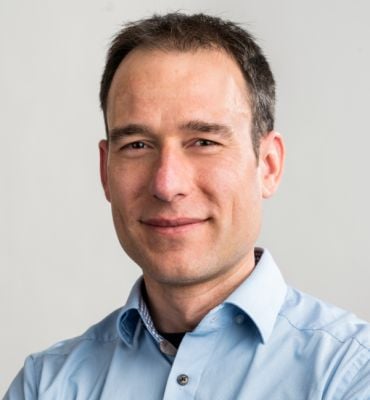
Professor Riede will combine automation and machine learning to develop production methods for 20+% efficient OPV that work reliably at industrial manufacturing scale, closing the gap between laboratory and factory. This will accelerate OPV commercialisation - supporting UK Net Zero goals, creating jobs, and advancing a fair clean energy transition everywhere.
He said: 'We know organic photovoltaics work very well in the lab. The challenge is achieving the same at scale in factories in a way that is both fast and affordable. That is what the climate urgency demands right now and that is what we are solving. Focusing on industrially relevant materials and proven processes, we aim to scale organic photovoltaics, the greenest and most equitable form of solar energy reaching low-, middle- and high-income countries alike.'
Professor James Naismith , Head of the Mathematical, Physical, and Life Sciences (MPLS) Division at Oxford University, said: 'These Green Future Fellowships recognise the power of fundamental science and engineering to address one of the defining challenges of our time. Professors House and Riede exemplify the ambition, creativity, and translational focus that characterise research across MPLS at Oxford. Their work not only advances world-leading science, but also has the potential to deliver practical, scalable solutions that support the transition to a more sustainable future.'
The Green Future Fellowship programme is funded by the Department for Science, Innovation and Technology. Further information about the first cohort can be found on the Royal Academy of Engineering's website .


