
As professional baseball sees another high-profile elbow injury with Toronto Blue Jays right-hander José Berríos having undergone ulnar collateral ligament (UCL) surgery, new research from the University of Waterloo suggests many pitchers may be able to reduce stress on their elbows without sacrificing velocity.
Computer modelling at the University of Waterloo shows that professional baseball pitchers could make mechanical changes to avoid a common, career-threatening elbow injury without necessarily sacrificing competitive velocity.
"Our simulation found solutions that suggest there's untapped efficiency out there," said Cedric Attias, who led the study as a graduate student in mechanical engineering at Waterloo. "Our goal isn't to tell pitchers to throw softer. It's to help them throw smarter."
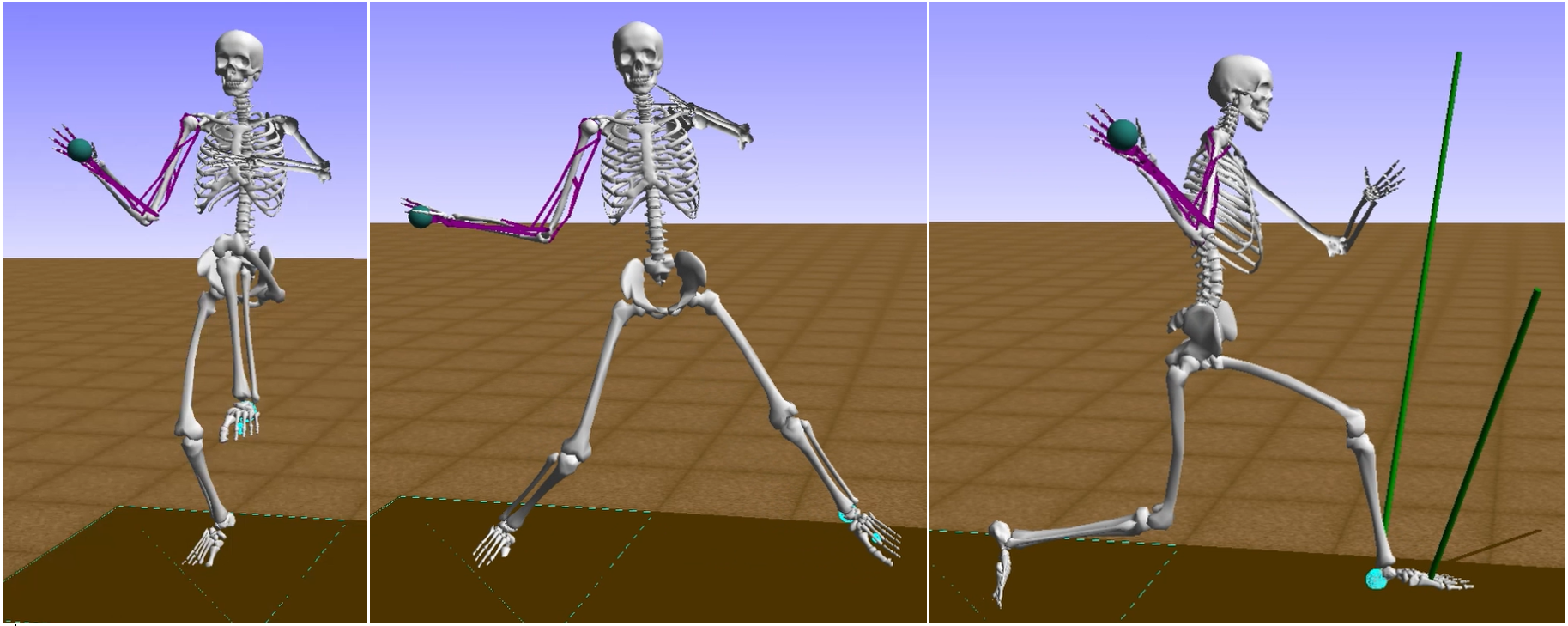
A digital skeleton developed by researchers at the University of Waterloo shows the stages in a typical baseball pitching delivery (University of Waterloo).
Researchers built a detailed digital skeleton with muscles, ligaments and joints to examine the extreme twisting forces exerted during the throwing motion on the UCL, a small band of tissue on the inside of the elbow that helps hold it together.
Their study, the first of its kind, revealed two main factors - a high arm slot, or angle and tilting the torso away from the pitching arm during delivery of the ball - that put the most demand on the UCL.
With repeated explosive motions required to pitch at professional speeds, the UCL often breaks down and tears, resulting in Tommy John surgery to replace it and a long rehabilitation process to return to the field. Some pitchers never recover enough to play at elite levels.
"This ligament is especially vulnerable because it's small, has a poor blood supply and wasn't designed for movement this extreme or repetitive," said Attias, who was supervised by Dr. John McPhee in the Motion Research Group (MoRG) at Waterloo.
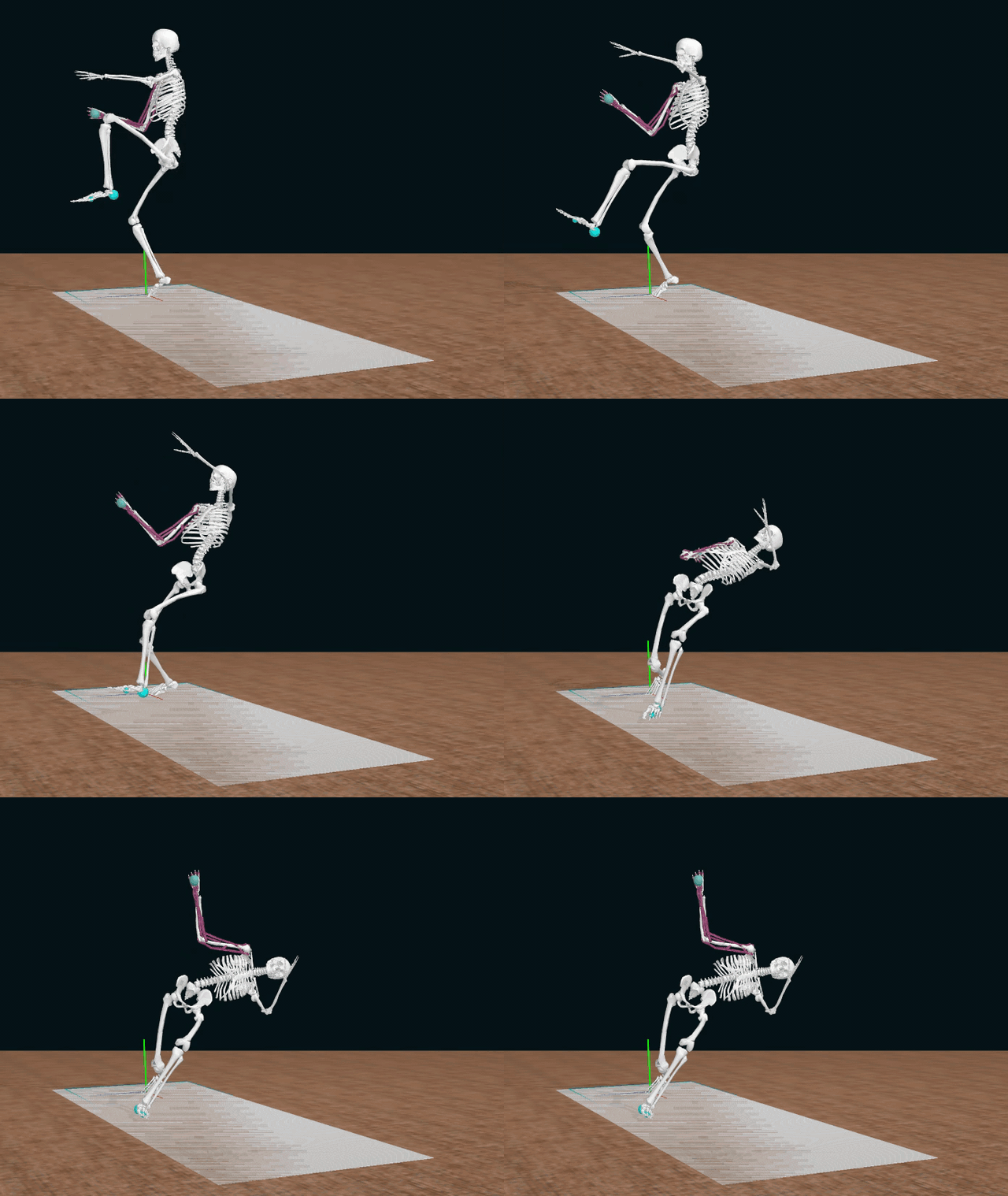
Researchers created a digital skeleton, complete with arm muscles and ligaments, to examine the forces at work when a professional player pitches a baseball at 93 mph, the MLB average (University of Waterloo).
Although strain on the UCL is inevitable, the study results point to mechanical changes, particularly to arm slot and torso tilt, as well as lower body movements, that could help pitchers reduce injury risk while still throwing at high speeds.
Researchers hope insights from their new modelling tool can be used to predict and avoid costly injuries at elite levels of the sport, as well as to teach safer pitching deliveries to children to prevent problems as they rise through the ranks.
"We confirmed that mechanics matters tremendously," said Attias, who now works as a biomechanist for the Seattle Mariners of Major League Baseball with fellow Waterloo Engineering and MoRG alumnus Dr. Keaton Inkol. "We showed that one pitcher throwing 93 miles an hour with controlled, upright mechanics puts meaningfully less stress on the UCL than someone using a more extreme technique to reach the same speed."
Attias was fascinated when the simulation showed that the pitching delivery that best minimizes elbow stress and produces the lowest speeds, is nearly identical to the mechanics of Tyler Rogers, a Toronto Blue Jays pitcher known for an extreme submarine style.
At the other end of the spectrum, the model showed that an imaginary player capable of throwing 110 mph - much faster than anybody has - would likely look more like a cricket bowler, with a huge trunk tilt and almost vertical arm angle, than a baseball pitcher.
A paper on the study, Musculoskeletal modelling and predictive simulation of baseball pitching to improve performance and mitigate injury using forward dynamics and optimal control, appeared in the journal Multibody System Dynamics.


