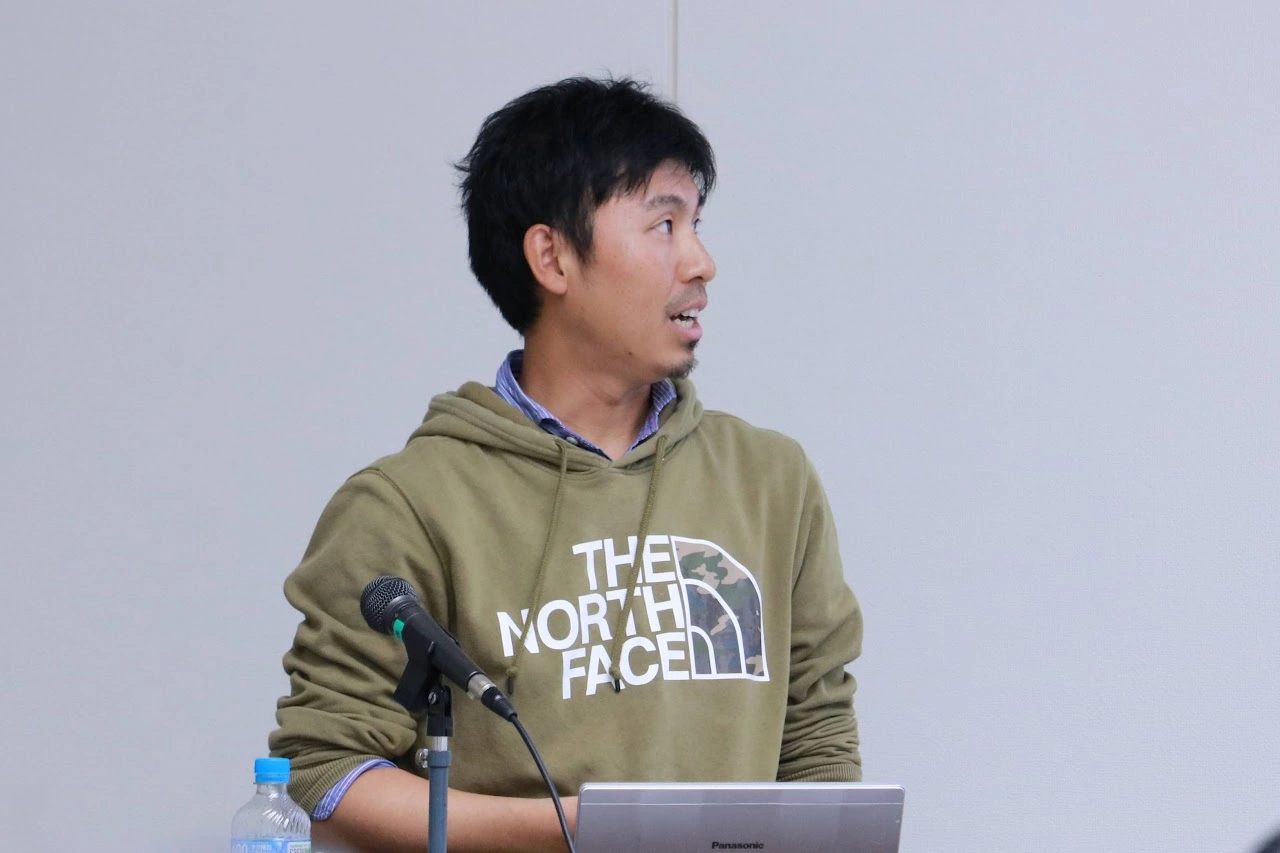
The 2025 Nobel Prize in Economic Sciences has been awarded to Professor Joel Mokyr (Northwestern University, USA), Professor Philippe Aghion (Collège de France, INSEAD, and the London School of Economics and Political Science), and Professor Peter Howitt (Brown University, USA). Associate Professor Hiroshi Morita from the Department of Industrial Engineering and Economics, School of Engineering, Institute of Science Tokyo explains the significance of their achievements.
What were the reasons for awarding the 2025 Nobel Prize in Economic Sciences?
Morita The prize recognizes their contributions to uncovering the mechanisms through which technological innovation drives economic growth. Economics is typically divided into four fields: microeconomics, macroeconomics, econometrics, and economic history. Professor Mokyr is an economic historian. He was awarded the prize for his influential research that uses historical records and new data derived from them to explain why the Industrial Revolution-history's greatest turning point in economic growth-occurred. In contrast, Professors Aghion and Howitt specialize in economic growth theory, a subfield of macroeconomics that analyzes long-term changes in output. They were recognized for constructing models that explain how technological innovation generates sustained economic growth.

Economics can be understood as a science that discovers the hidden regularities within economic phenomena and formulates them into theory. To do this, economists typically follow four analytical steps: (1) Collect data, (2) Identify empirical patterns (stylized facts), (3) Build mathematical models that reproduce these stylized facts, (4) Derive policy implications from the model. Professor Mokyr's contributions lie primarily in steps (1) and (2), while Professors Aghion and Howitt excelled in (3) and (4). Taken together, their work covers all four steps, representing a truly comprehensive and classic approach to economic analysis.
For reference, I myself am also a macroeconomist, though my expertise lies not in growth theory but in business cycle theory, which analyzes the economic effects of monetary and fiscal policy. I would be delighted to see a Nobel Prize awarded in this field as well someday.
Could you explain Professor Mokyr's research?
Morita Professor Mokyr, as an economic historian, identified the conditions under which sustained economic growth first began. He first highlighted the striking fact that, prior to 1700, per-capita GDP in countries like Britain and Sweden hardly increased, even though important inventions such as windmills and printing presses already existed. Economic growth was not historically inevitable; for long periods, living standards remained almost unchanged from one generation to the next. Only after the Industrial Revolution did long-term growth begin.

To explain why, Professor Mokyr focused on the interaction between "practical knowledge" (experience-based know-how that guides what works in practice) and "propositional knowledge" (scientific understanding that explains why something works). For example, the design blueprint of a watertight bathtub (practical knowledge) combined with scientific insights about the properties of water (propositional knowledge) enables the creation of higher-quality products. Improved designs then stimulate new scientific inquiry, which in turn leads to further technical improvements. This feedback loop between the two forms of knowledge drives technological progress.
For such feedback to function, three conditions are necessary:
(a) an environment in which science and technology evolve together,
(b) skilled craftsmen and engineers, and
(c) institutions capable of accommodating the social changes brought by new inventions.
In 18th-century Britain, academic societies flourished, engineers possessed advanced skills, and the parliamentary system enabled negotiation among competing interests. These factors, Mokyr argues, underpinned the Industrial Revolution.
What about the research of Professors Aghion and Howitt?
Morita Professors Aghion and Howitt developed a theory explaining sustained economic growth through creative destruction. Their seminal "quality ladder model" depicts firms climbing "rungs" of quality by engaging in research and development. A firm that develops a superior technology displaces incumbent firms and takes the lead in production-yet it too will eventually be overtaken by a competitor with even better technology. This continuous chain of creative destruction raises technological levels and productivity, thereby generating long-term growth.
The model aligns well with real-world data and provides a powerful explanation for industries where firm entry and exit are highly active. Its flexibility has enabled numerous extensions, producing influential research in areas such as environmental policy and antitrust regulation. The original 1992 paper has been cited nearly 18,000 times, demonstrating its profound impact.
What do these findings suggest about the future of our society?
Morita In recent years, total factor productivity (TFP)-an index of growth driven by knowledge and technology, rather than labor or capital-has slowed across the G7 countries. The pattern of sustained growth that began with the Industrial Revolution is beginning to waver. The work of the three laureates offers important insights into how we should interpret this situation.
From Professor Mokyr's perspective, advances in AI have the potential to dramatically expand access to propositional knowledge (understanding why something works), accelerating feedback with practical knowledge and fostering new technological breakthroughs. On the other hand, the theory of Professors Aghion and Howitt warns that if market power becomes too concentrated, creative destruction is hindered and growth slows. If AI development becomes dominated by only a handful of firms, the pace of innovation could diminish.
Crucially, their research explains why growth occurs-it is not a ready-made prescription for how to achieve sustainable growth. That is precisely why we must use their insights-creating environments that encourage knowledge feedback, designing competition policies that do not stifle creative destruction, and determining how to share the benefits of new technologies-to think proactively about what "sustainable growth" should mean for our future.
* This article is based on the presentation given at Science Tokyo Nobel Prize Lecture, held online on Wednesday, November 26, 2025.