
An international research team including UAB Serra Húnter lecturer Martín Hugo describes how two opposing chemical modifications of proteins, sulfenylation and persulfidation, regulate the behaviour of key proteins in the brain during ageing in a study published in Nature Structural and Molecular Biology.
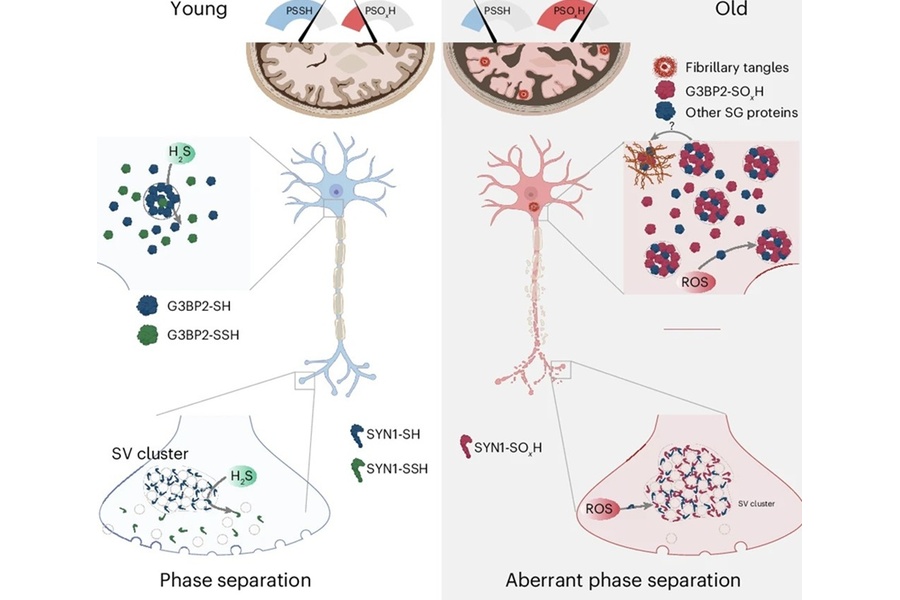
An international research team, which included the involvement of Martín Hugo, Serra Húnter lecturer of the Department of Biochemistry and Molecular Biology at the UAB, has described how two opposing chemical modifications of proteins, sulfenylation and persulfidation, regulate the behaviour of key proteins in the brain during ageing. The study was recently published in the journal Nature Structural and Molecular Biology.
The study shows that protein oxidation accumulates with age, a process that promotes the excessive condensation of these proteins and the formation of aggregates. Persulfidation, a process regulated by hydrogen sulfide production, has the opposite effect, as it maintains proteins in a fluid and functional state. This balance controls the liquid-liquid phase separation of proteins such as synapsin 1 and G3BP2, two proteins involved in neuronal function and cellular stress response.
When intracellular hydrogen sulfide production fails, proteins become trapped in an abnormal state, and the mice studied exhibit a shorter lifespan and traits resembling neurodegeneration.
One of the results with the greatest potential for application is that compounds that increase hydrogen sulfide levels—such as ergothioneine—can reverse this effect in cells, opening up a promising avenue for addressing age-related brain diseases.
The research team also developed an interactive platform that allows exploring the complete atlas of cysteine modifications across different ages and molecular pathways: https://www.agingredox.org/
The full article can be viewed here: https://www.nature.com/articles/s41594-026-01857-w
Original article: Vignane, T. et al. Protein thiol alterations drive pathologic liquid-liquid phase separation in the aging brain. Nature Structural and Molecular Biology, 33, 1252 a 1265 (2026). DOI: 10.1038/s41594-026-01857-w


