
A study by the UAB and the IJC demonstrates that SIRT7 is a key regulator of the quality of male germ cells and that the deficiency of this protein during ageing can lead to a functional decline in sperm.
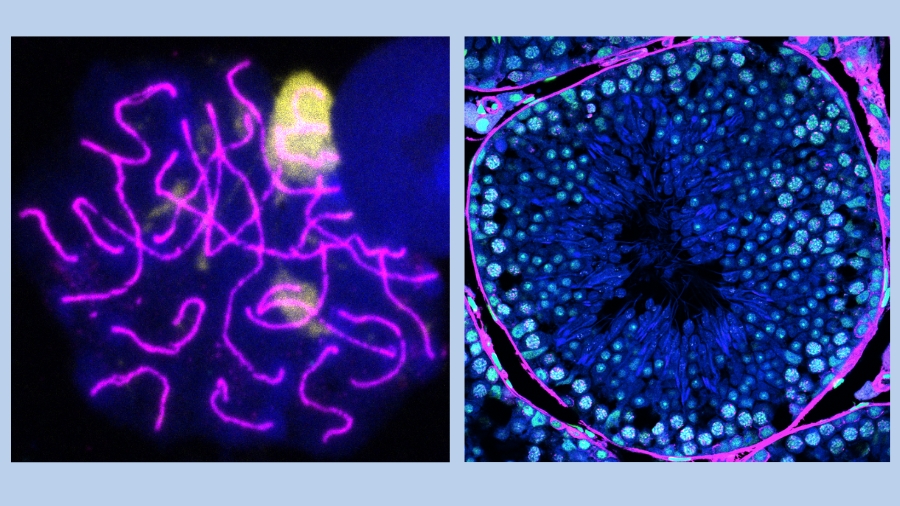
A study led by researchers at the Universitat Autònoma de Barcelona (UAB) and the Josep Carreras Leukaemia Research Institute (IJC) has identified the Sirtuin 7 (SIRT7) protein as a new essential factor in maintaining the genome stability of male germ cells over time. The study, conducted with mice, is published in the journal Nature Communications. Researchers from Rutgers University (USA) have also participated.
Delayed parenthood is increasingly common and is often associated with decreased fertility due to loss of sperm quality, but the molecular mechanisms of this decline are poorly understood. The research team studied how epigenetic mechanisms, which regulate genome integrity and the genes that are activated or deactivated depending on factors such as age, diet, environment or stress, influence male reproductive capacity and germ cell quality as individuals age.
The study demonstrates that SIRT7 is highly expressed in early stages of germ cell development, including spermatogonia (stem cells responsible for maintaining sperm production), and researchers identified a previously unknown epigenetic mechanism in which it is involved, associated with male reproductive ageing.
At the molecular level, the study found that the protein limits the levels of an epigenetic marker, histone H3K36ac, and regulates the accessibility of chromatin, the structure in which DNA is packaged. The absence of SIRT7 causes premature loss of spermatogonia and a greater accumulation of damage to the genome during ageing or in response to environmental stress. Its deficiency also results in a delay in the process of sperm formation depending on age and a increase in sperm DNA fragmentation. Furthermore, the H3K36ac marker increases during physiological testicular ageing, which suggests a causal relationship with age-associated reproductive decline.
A scarcely studied protein in male gametes
SIRT7 is part of a family of proteins that play a key role in preventing cellular and tissue ageing, by regulating genomic stability and metabolism in somatic tissues. Recently, they have also been shown to have important functions in reproductive tissues, although most studies focus on female gametes, where they regulate chromatin structure and antioxidant defenses.
"This research shows that SIRT7 is also essential in males, which opens new avenues for understanding male infertility and developing strategies to preserve reproductive health with age," states Berta Vázquez, researcher in the Department of Celullar Biology, Physiology and Immunology at the UAB, and the study's lead researcher. "In addition, it reinforces the role of epigenetics in germ cells to cope with gonadotoxic agents, such as chemotherapy, pointing to new strategies to protect reproductive function in cancer treatments."
Original article: Guitart-Solanes et al. SIRT7 links H3K36ac epigenetic regulation with genome maintenance in the mouse testis. Nat Commun. 2026 Apr 28. doi: 10.1038/s41467-026-72540-3. Epub ahead of print. PMID: 42049778


