
Modern power systems are rapidly evolving into highly digitised smart grids, increasing their complexity at an unprecedented pace. Renewables, batteries, electric vehicles, power electronics, sensors and real-time control systems are all expanding rapidly, and this is making electricity grids significantly harder to simulate, optimise, secure and operate. 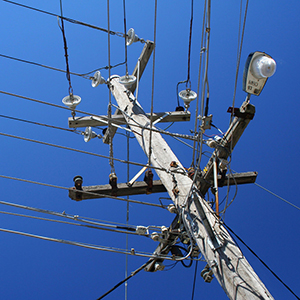
This is driven by the increasing energy demands of a tech driven modern world. Think of a suburban street in 2005 – every house pulled electricity from the grid, and power flowed in one direction from big power stations. This same street in 2026 might have houses with rooftop solar exporting power back into the grid; electric vehicles (EVs) that need to charge over night; home batteries storing solar energy and feeding it back into the grid when prices spike; electric busses, electric irrigation pumps, automated machinery and smart appliances that turn on and off based on grid signals.
The simple one-way grid has suddenly become a dynamic, two-way, constantly shifting network, where supply and demand change minute by minute.
Published in Nature Review's Electrical Engineering, CSIRO's Quantum Systems team, working with international researchers, has laid out a roadmap outlining potential opportunities and challenges in entangling the exciting new field of quantum computing to the management of these energy systems.
As grids approach physical and computational limits, CSIRO quantum research scientist, Dr Zeheng Wang , explained that engineering infrastructure, such as poles and wires, might not be the biggest challenge to creating the intelligent and sustainable smart grids we need in the future.
"The main limitations will actually be in computation" Dr Wang said.
"Computing power is crucial in managing the flow of energy in complex networks. In other words, some of the most critical problems in future smart grids may eventually be unworkable and unsolvable by today's best computing systems," he said.
Enter quantum computing: powering our future networks
Today's computers have suited the world's needs well. But if you've seen a photo of a quantum computer - often likened to a golden chandelier – it's clear they're nothing like the office laptop.
Quantum computers operate in a fundamentally different way, offering a new class of computational capability. They can solve certain computational challenges with unprecedented speed and have the potential to revolutionise fields like medicine, finance, communications and more. CSIRO's research explores whether the same approach could help address growing challenges in energy systems.
"Quantum computing won't replace our current everyday computers, but it could become a strategic computational resource for the energy industry," Dr Wang explained.
Put simply, smart grid operation has two connected parts - the converter layer, which controls solar panels, batteries and other energy resources using power electronics, and the system layer, which manages tens of thousands of these resources together across electricity networks.
"Quantum computing could help address key bottlenecks, unlocking new possibilities at both device-level converters and system-level grid operations."
Reliability, resilience and renewables
For the public and end users, there won't be a quantum computer in every home any time soon. Their value lies in working behind the scenes to create a vastly more capable and resilient smart grid that powers our everyday lives. 
CSIRO's quantum team lead and co-author of the study, Professor Muhammad Usman , highlighted the possibility of quantum advantage in smart grids.
"With so many different energy sources and devices connected across a busy network, managing the grid becomes incredibly complex – so complex that traditional computers struggle to keep up. By leveraging quantum computing, we could potentially model these complex systems more accurately, optimise grid operations faster and monitor networks more securely," Professor Usman explained.
This could mean not only more reliable electricity and better integration of renewable sources like solar and wind, but also the capacity to support much larger societal and industrial ambitions.
A stronger, more stable grid is the foundational infrastructure required to power the massive energy demands of our future. Think next-gen AI data centres, increased transportation electrification at the global level and large-scale industrial decarbonisation.
Despite the great potential of quantum computing, the authors have been cautious about its deployment in near future.
"We're careful not to promise immediate lower power bills because near-term quantum systems are still costly, and the technology is still immature. But the long-term potential is clear - quantum technologies could deliver the efficiency, resilience and security needed to power our future".
Where to from here?
The roadmap identifies where quantum computing is most likely to deliver early value – particularly in selected optimisation problems, data-intensive grid calculations, smaller machine-learning tasks, and improvements in system security. It also clearly delineates its limits, especially for fully real-time, safety-critical control applications.
Most importantly, the findings show that the sector needs to start preparing now, and it's essential that key stakeholders coordinate their action.
Prepare now
This work provides a forward-looking roadmap for how quantum computing could help overcome current computer power limitations and strengthen future smart grids, from power converters to system-level operations. The value of quantum computing lies in enabling smarter, more secure and more reliable grids that can integrate renewable energy at scale.
"The key message is not that quantum computing will solve the energy transition on its own, but that it will become a critical enabling technology, helping build the efficient, resilient and secure electricity systems our future depends on," concluded Dr Wang.
"While quantum technologies are still maturing, early recognition and preparation will be essential."
The purpose of this roadmap is to bring the power and quantum communities together, encouraging early, coordinated action so the sector is ready to harness this transformative potential when the grid needs it most.
"Our guidance is that the energy sector shouldn't wait for perfect quantum hardware before preparing. They should start building the skills, use cases and governance needed to responsibly test credible applications, now."
You can read the team's paper in Nature Review's Electrical Engineering .


