

A new research hub based at the University of Southampton will develop innovative new technologies - such as wearable sensors, smartphone tools and at-home tests - to help identify and monitor people with flu and other acute respiratory infections.
The Community Respiratory Infection Screening and Prognostics hub, known as CRISP, aims to give patients and healthcare professionals earlier, clearer information about how an infection is developing, helping those with mild illness recover at home while making sure those at risk of becoming seriously ill receive appropriate care sooner.
Working in collaboration with the University of Cambridge, the University of Glasgow, UK Health Security Agency and 21 founding partners, CRISP will bring engineers, data scientists, clinicians, behavioural scientists, community groups and patients together.
Funded by the Engineering and Physical Sciences Research Council, CRISP will develop new and emerging technologies to transform and understand the way acute respiratory infections (ARIs) are assessed and managed in the community.
Patients may be given wearable sensors to monitor their breathing at home, take simple tests to track how their body is responding to an infection, or use a smartphone app to analyse their cough.
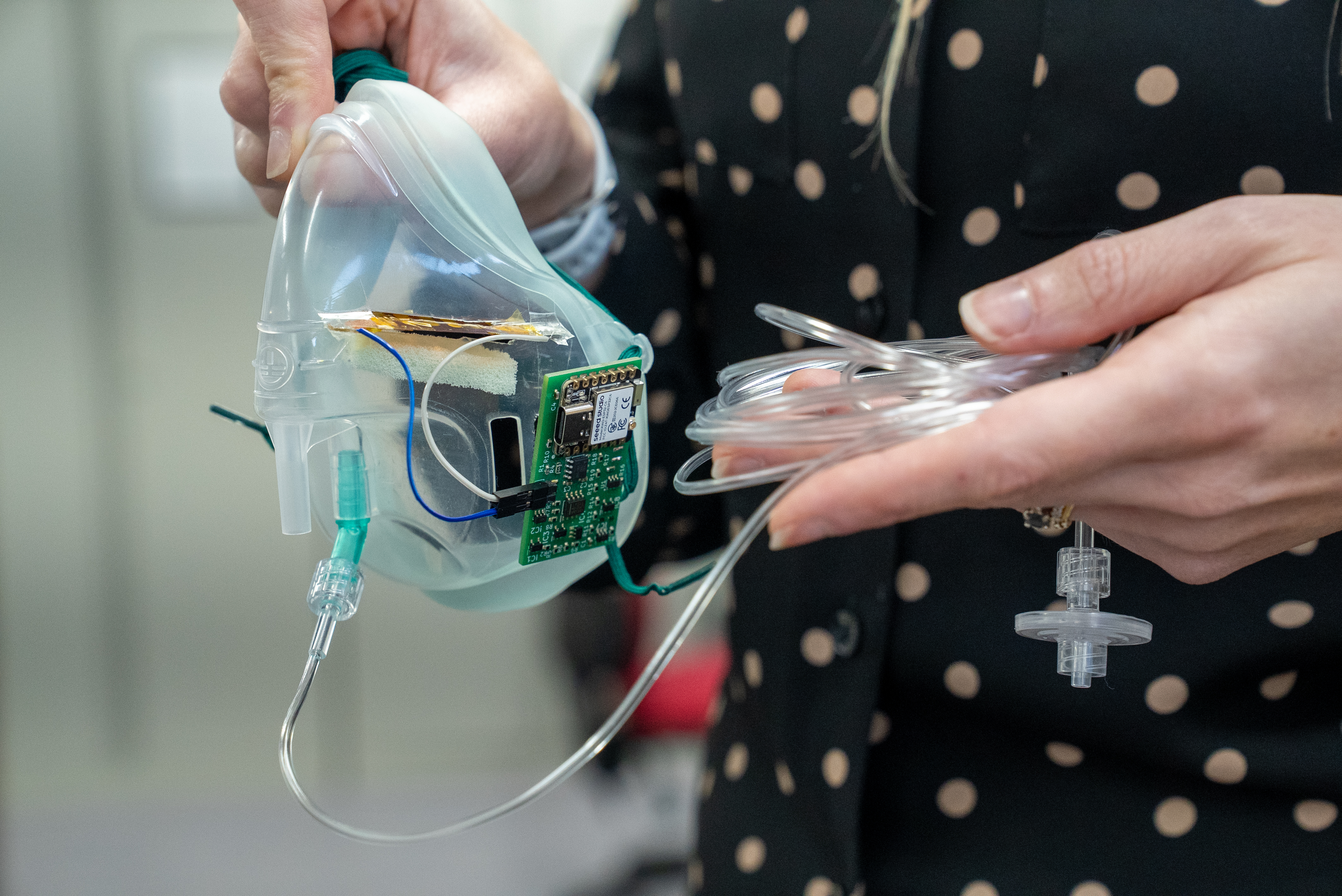
By combining information from these technologies with health records and AI models, researchers hope to better predict how an illness is likely to develop, helping patients and clinicians understand more about how to manage the illness.
Professor Nick Francis, Professor of Primary Care Research at the University of Southampton, said: "One of the biggest challenges with acute respiratory infections is identifying those who are at risk of becoming seriously ill from the majority who will recover safely without treatment.
"People can move between care at home, pharmacies, GPs and hospitals, but decisions are often based on a snapshot of their symptoms and limited measurements.
"CRISP aims to change that by finding better ways to spot risk earlier, track how an illness is changing and connect that information to the right care.
"Instead of waiting until they feel much worse, patients could receive personalised guidance on whether to continue recovering at home, speak to a pharmacist or GP, or seek urgent help."
Dr Al Edwards, Associate Professor in Biomedical Technology at the University of Southampton, added: "Advances in sensing, diagnostics and data science mean that it is now possible to assess and monitor ARI over time in community settings, but key engineering questions remain about reliable measurement, and translation into recommendations for action."
ARIs, including flu, COVID-19, bronchitis and chest infections, are the leading cause of acute illness worldwide. In England alone, they account for more than 850,000 hospital admissions each year.
While most infections are mild, the sheer number places significant pressure on patients, families and the NHS, particularly during winter. Uncertainty about whether an infection will resolve without treatment can also contribute to unnecessary healthcare visits and antibiotic use, increasing the risk of antimicrobial resistance.
Rather than study each new device or test in isolation, CRISP will assemble and evaluate complete systems across the home, community healthcare and health services, allowing different combinations of sensing, prediction and decision support to be tested under realistic conditions before large-scale clinical deployment.
CRISP is one of five new research and partnership hubs backed by over £52 million from the UK government through UK Research and Innovation (UKRI), to develop tools that help people stay healthier for longer.
The University of Southampton has announced plans for a groundbreaking new medical institute which will bring medics, computer scientists and engineers together in one brand new building. The pioneering Institute for Medical Innovation ( IMI ) will tackle five devastating disease areas - including respiratory infection.


