
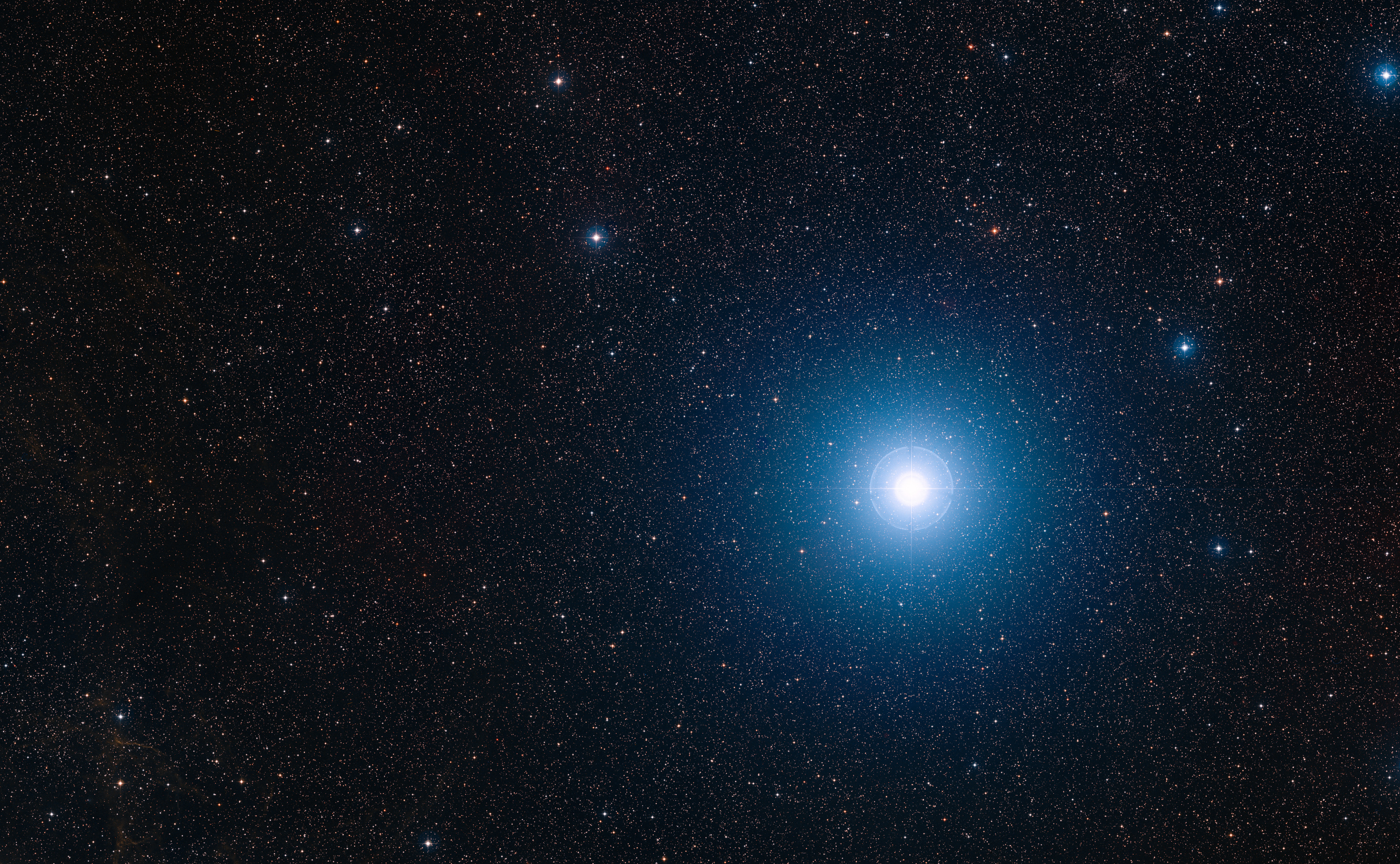
Astronomers have discovered a mysterious shock wave around a dead star - something they say has never been seen before.
A team of scientists from the universities of Southampton and Durham, working with others, saw the phenomenon around a white dwarf some 730 light years from Earth.
The white dwarf is the remnant of a low-mass star being orbited by a companion.
Usually, material from its cosmic twin would transfer to the white dwarf, forming a disc which in turn drives powerful outflows from its surface.
Under the right conditions, these outflows create a shock wave around the object.
However, this white dwarf shows no signs of a disc and has a strong magnetic field that it should not possess, said Professor of Astrophysics Christian Knigge (below), a co-author on the paper from the University of Southampton.
He added: "This makes the power source of the surrounding shock wave a cosmic mystery.
"For years, we believed the strong magnetic fields from these stars prevent the generation of powerful outflows because they inhibit the formation of the discs that usually power such outflows.
"Seeing this enormous bow shock, stretching billions of miles into space, tells us there is an alternative, unexplained way for these magnetic stars to leak energy and mass into their surroundings. It is a missing piece of the puzzle in how binary star systems evolve."
The discovery, published in Nature Astronomy, challenges astronomers' understanding of how dead stars interact with their surroundings and how they evolve.
The shock wave from the white dwarf is nearly 4,000 times the distance between Earth and the Sun.
It is formed because the white dwarf is moving supersonically through the Galaxy, creating a bow shock where its outflow sweeps up interstellar material

Research co-lead author Associate Professor Dr Simone Scaringi from Durham University said: "This is something never seen before and is entirely unexpected.
"This star is known as a polar white dwarf, which unlike other accreting white dwarfs, do not collect a disc of material around them from their companion.
"With no disc, we would not expect this type of star to have any bow shock wave, or nebula, around it. The surprise that this supposedly quiet, disc-less system could drive such a spectacular nebula was one of those rare 'wow' moments."
Just how a dead star without a disc can power such a long-lasting outflow challenges previous understanding of the physics around polar white dwarfs.
To investigate the object in more detail, the research team used the MUSE instrument on the European Southern Observatory's Very Large Telescope.
They were able to map the bow shock in detail and analyse its composition - its shape and size suggests that the white dwarf has been expelling powerful outflows for at least 1,000 years.
The results also showed the dead star has a strong magnetic field, channelling material accreted from its companion star directly into the white dwarf.


