
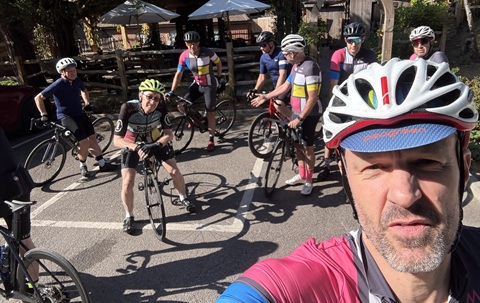
Surgeons and colleagues behind groundbreaking advances in treating oesophageal cancer are taking on 600 kilometres through the French Alps on their bikes in aid of cancer research.
Tim Underwood and Jamie Kelly, from the gastrointestinal surgery team at the University of Southampton and University Hospital Southampton (UHS), along with six teammates, will be cycling from Avignon to Annecy over six days, crossing some of the most demanding climbs in European cycling.
Starting on Sunday 6 September, they will be tackling iconic Tour de France climbs including Mont Ventoux, the Col d'Izoard, the Col de Sarenne, the Glandon and the Madeleine - totalling 14,000 metres of climbing.
Supporting them throughout the challenge are oesophageal cancer survivor Nicola Packer, who was treated by the Southampton team, and Donna Sharland, Upper GI Clinical Nurse Sister Specialist.
Tim, Professor of Gastrointestinal Surgery at the University of Southampton and Director of Research at the Association of Upper Gastrointestinal Surgery of Great Britain and Ireland, said: "Every one of the six days will be a long mountain day, with sustained climbs, heat, altitude and cumulative fatigue - which would challenge even the most experienced professional cyclist, never mind us amateurs."
Jamie, consultant upper gastrointestinal surgeon and fellow member of the Southampton team, said: "However hard it feels, we are doing this to raise critical funds for oesophageal cancer research to help patients who do not have a choice in their challenge. Recovery after oesophagectomy is prolonged and demanding, often requiring months of physical and psychological adjustment."
Oesophageal cancer is one of the hardest cancers to treat successfully. Even following chemotherapy, radiotherapy and surgery, about 70 per cent of patients see their cancer return, and only about 10 per cent of patients survive for 10 years post-treatment.
Southampton is leading the way in investigating new and innovative ways of treating oesophageal cancer and working to identify rare residual cancer cells that can survive treatment and drive recurrence.
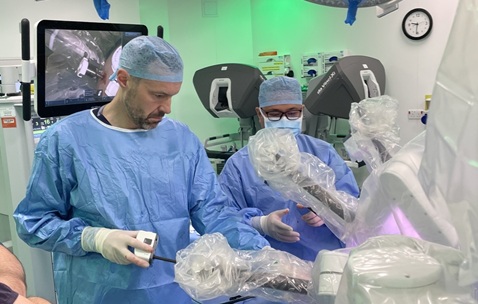
Tim said: "It matters enormously to us that Nicola will be supporting us. It reflects something important about cancer care and research here at Southampton - it's not just about operations, chemotherapy or lab science. It is about long-term relationships between patients, families, nurses, scientists and clinicians, all working together to improve outcomes."
Nicola, from Alton in Hampshire, was diagnosed with oesophageal cancer in 2021 when she was 53. She underwent a gruelling course of treatment, including radiotherapy, chemotherapy and major surgery performed by Professor Underwood to remove her oesophagus.
"At the end of my treatment, I said I would do anything in my power to help other people not go through the mill like I did," she said.
In 2024, Nicola and her husband Jeremy organised a 300-mile fundraising cycling challenge in support of the research, and in 2023 Tim jumped out of a plane at 14,000 ft with Jeremy and their son Freddie, again to raise funds.
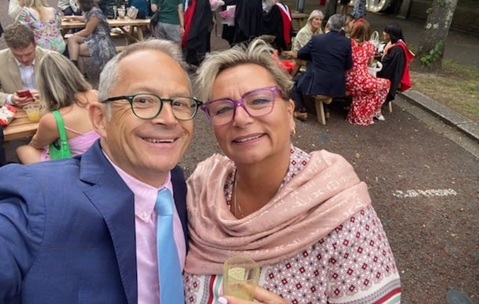
The other cyclists tackling the Alps are Rob Walker (Consultant Upper Gastrointestinal Surgeon in Guildford and former trainee in Southampton), Richard Ellis (Consultant Gastroenterologist in Portsmouth), Phil Boardman (Consultant Interventional Radiologist in Oxford), Andy Butler, Stephen Pettyfer and Patrick Fisher.
Additional support crew members are Sophie Underwood (Emergency Medicine Consultant in Portsmouth), James Sharland and Jane Mancini.
You can sponsor the Avignon to Annecy challenge via JustGiving .
The University of Southampton has announced plans for a groundbreaking new medical institute which will bring medics, computer scientists and engineers together in one brand new building. The pioneering Institute for Medical Innovation (IMI) will be based at UHS and will tackle five devastating disease areas - cancer, dementia, sight loss, infection and respiratory and allergic conditions.


