
A reconstruction of temperature in Colombia during the Pliocene, when CO2 levels were similar to today, suggests that parts of the tropics might soon experience more dramatic warming than previously expected.
PROVIDENCE, R.I. [Brown University] - A new study of ancient lake sediment from central Colombia suggests that temperatures in some parts of the tropics may warm up significantly more than scientists had previously suspected as levels of atmospheric carbon dioxide (CO2) continue to rise.
The study, led by a researcher at Brown University, establishes a temperature record for Colombia's Bogotá Basin datingback to the Pliocene, a geological period spanning 5.2 million to 2.5 million years ago. The Pliocene was the last time Earth's atmospheric CO2 levels were as high as they are today, making the period a good analog for future climate scenarios.
The study found that temperatures in the basin were, on average, 4.8 degrees C (8.6 degrees F) warmer in the Pliocene than they were in the Pleistocene, the epoch ending about 12,000 years ago when CO2 had dropped considerably. That's a much larger temperature difference than the researchers had expected, based on reconstructions of ocean temperature from the same periods.
"Most of what we know about past temperature comes from the oceans or terrestrial high-latitudes, and there's been a lot of theoretical work in recent years on how low-latitude ocean temperatures relate to the land," said lead study author Lina Pérez-Ángel, a senior researcher in Brown University's Department of Earth, Environmental and Planetary Sciences and an affiliate of the Institute at Brown for Environment and Society. "I think the big takeaway here is that we found significantly more warming on land in this region than you'd expect from theory."
The research is published in the Proceedings of the National Academy of Sciences.
New data from an old core
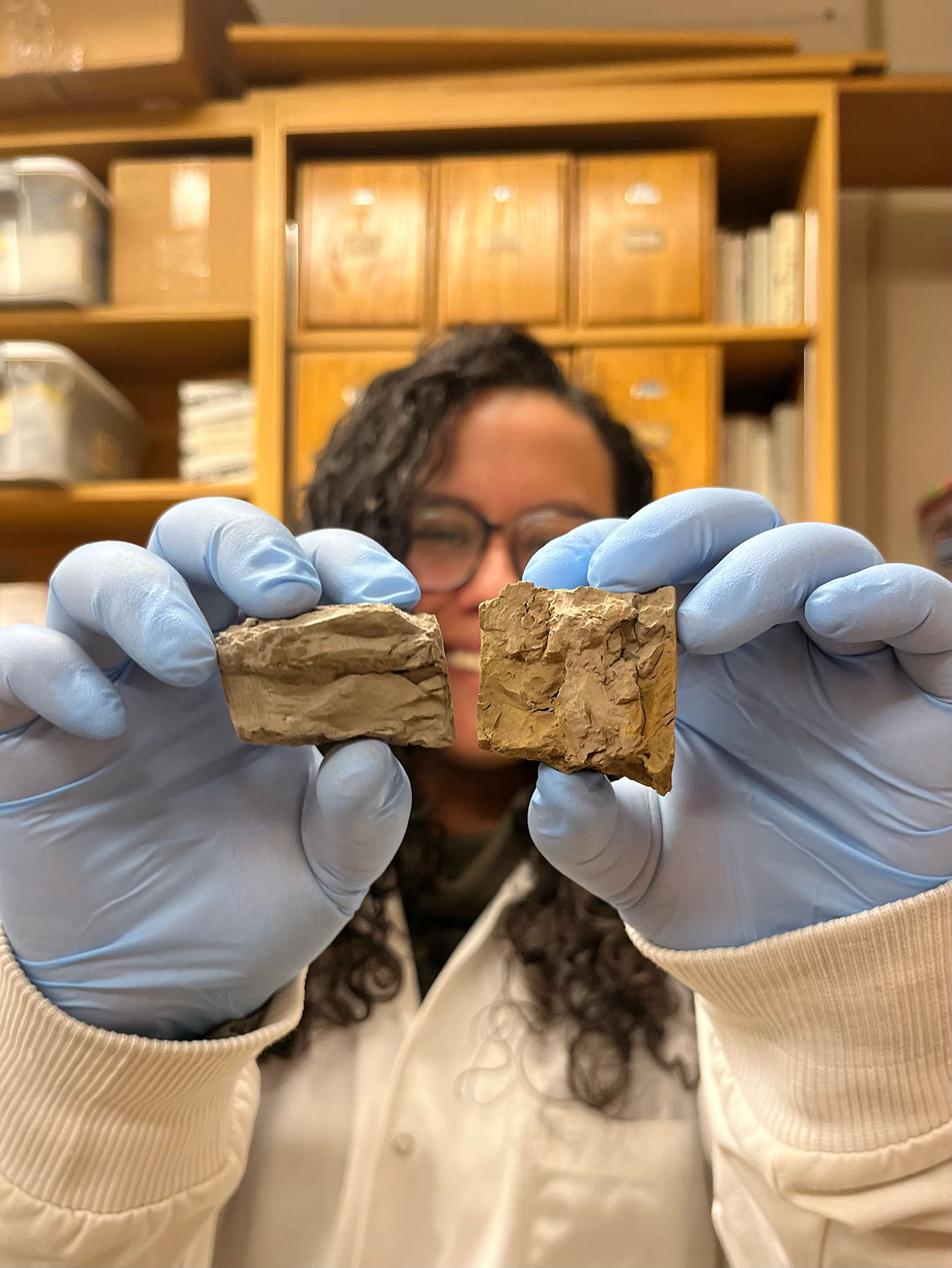
For the study, the researchers analyzed a 585-meter-long sediment core drilled in central Colombia along the eastern branch of the Andes Mountains. The core captures millions of years of ancient lake, river and wetland sediments, which are excellent repositories of key environmental signatures through time. The core had originally been drilled and analyzed in the late 1980s, but Pérez-Ángel, who grew up in Bogotá, wanted to re-analyze it using more precise modern dating techniques and more reliable temperature proxies. She began the work as a graduate student at the University of Colorado, Boulder and continued it during her postdoctoral work at Brown.
To establish the ages of the core sediment, the researchers analyzed zircons from layers of volcanic ash found within the core. Zircons are incredibly durable crystals that form as magma cools and solidifies. The crystals trap tiny amounts of uranium, a radioactive element that decays at a constant rate. By carefully measuring uranium decay in the zircons, researchers can establish precise ages of the sediment layers. The zircon dating revealed that the core contained sediment dating back to around 3.7 million years ago, roughly the midpoint of the high-CO2 Pliocene.
To measure temperatures through time, the researchers analyzed brGDGTs - durable fats found in the cellular membranes of bacteria. The molecular architecture of those fats changes with temperature. By analyzing the structure of brGDGTs preserved in the core, the researchers could create a continuous temperature record of the region through time.


