The unheralded role that film societies and community cinemas have played in shaping our national film culture is to be the focus of a new research project.
The University of Exeter will partner with Cinema For All - the charity that supports the country's 1,600 film societies - to unearth papers and materials relating to the foundational years between 1925 to 1946.
The two organisations will liaise with societies across Britain to document and catalogue information stored locally in garages and attics, which has yet to be formally archived.
The three-year project has been funded by a £240,000 Arts and Humanities Research Council Catalyst grant. It builds on a decade of collaboration between lead researcher Dr Matthew Rule-Jones and Cinema For All.
During this time, Dr Rule-Jones has worked with Cinema For All to catalogue over 56,000 of its documents dating from 1946 onwards, when it was known as the British Federation of Film Societies.
"For a century, these societies have been the only way that some rural communities can access film," said Dr Rule-Jones, Senior Lecturer in Film Studies in Exeter's Department of Communications, Drama and Film. "So, their contribution to our film culture, away from commercial cinema, is huge.
"But our understanding of their histories before 1946 is incomplete because the papers have been lost or forgotten in attics, sheds and village halls. Through this project, we will work with those societies to complete the story of how grass-roots cinema has flourished and helped to shape our national culture."
It is estimated that around 250,000 people are currently involved with community-led cinemas and societies in the UK, from urban areas to rural communities, particularly in regions such as Devon, Cornwall, Wales and Scotland. Some are organised around towns and villages, such as those in the South West like St Ives, Topsham and Exmouth. Other societies, however, reflect particular societal demographics, such as the one in Sheffield founded specifically to showcase films that tell stories about queer people of colour.
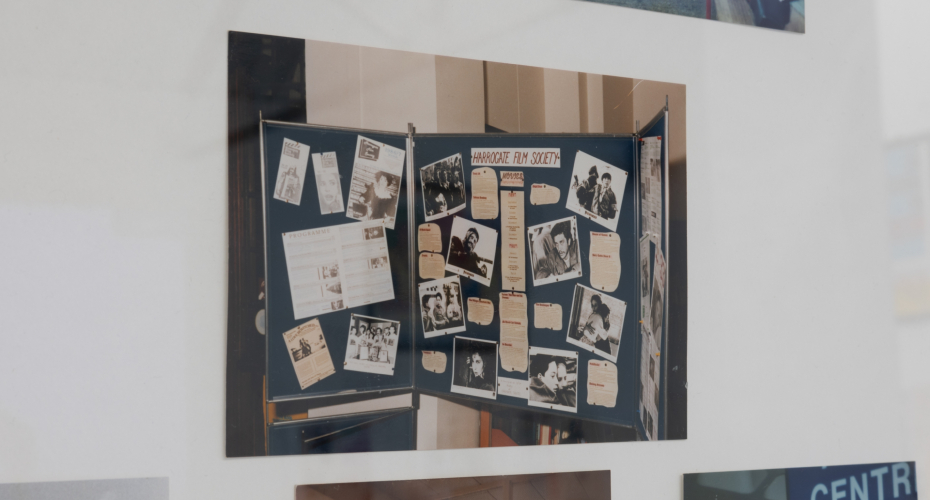
Dr Rule-Jones will work with film historian Laraine Porter to gather information held locally, with the support of Cinema For All, and produce five case studies of key societies, including the oldest surviving one, the Manchester and Salford Film Society.
Jaq Chell, CEO of Cinema For All, noted that: "Film societies and community cinemas have shaped the UK's film culture for 100 years, but too much of that story has been hidden away in village halls, cupboards, garages and personal collections. We are delighted to be working with the University of Exeter to help uncover, protect and share that history.
"At Cinema For All, we know that volunteer-led cinema has always been about more than the act of screening films. When people make culture happen in their own communities and choose what they want to see, they create spaces where people can come together and connections that change lives."
The case studies will form part of a new book by Dr Rule-Jones on film societies, which brings together much of his work over the past 10 years. And the collaboration between the University and Cinema For All extends to the relocation of the archive of the British Federation of Film Societies to the Bill Douglas Cinema Museum on the University's Streatham campus. Any new material unearthed locally will either be stored safely in this archive or will remain in its original location, with the project team offering guidance on how to effectively preserve and catalogue it.
Dr Rule-Jones said: "Cinema matters to people and our way of life. In an age that has seen a shift to more isolated consumption, the demand for communal cinema shown by these film societies demonstrates there is something very important about the collective experience of being in a dark room together, watching stories unfold.
"Our film societies reveal just how much people care about cinema, and have cared for 100 years, despite the changes we've seen in our overall society, our economy, our technology and culture. We still care enough to go to the effort of organising screenings in village halls and rooms above pubs. And if it matters that much to people, it should matter to history."