
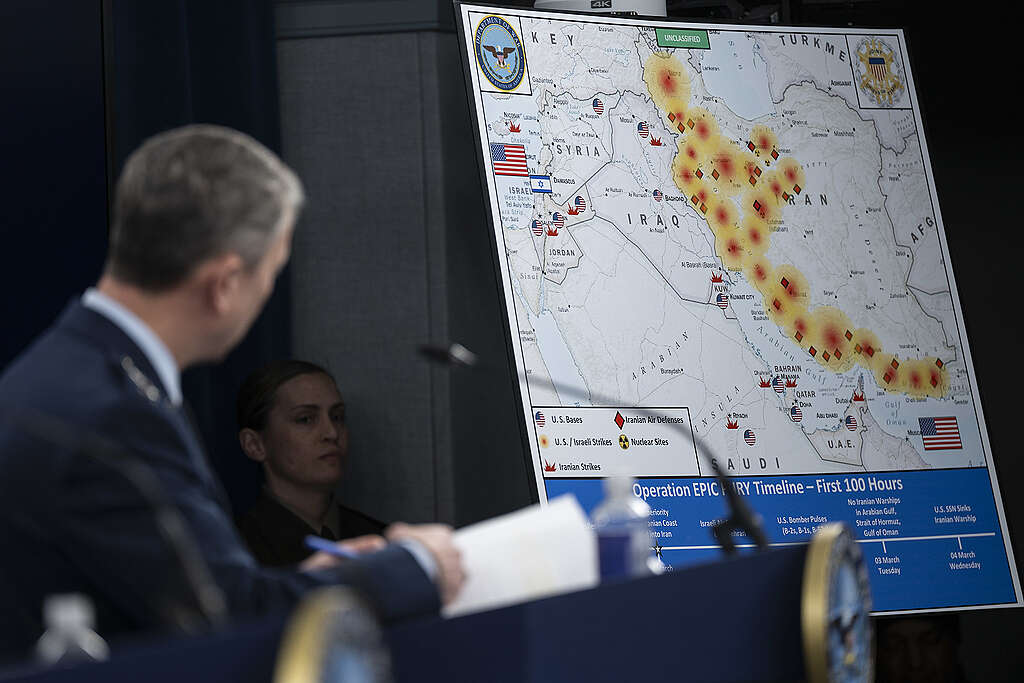
The ongoing illegal war waged by the United States and Israel against Iran has already cost the US more than US$100 billion in direct military spending and related economic losses. However, this figure captures only a fraction of the conflict's true toll.
Beyond the immediate fiscal burden on governments, the war has triggered global energy market volatility, inflated basic living costs, disrupted international trade, and caused immense human suffering. These compounding impacts expose a fundamental vulnerability: the world's continued dependence on fossil fuels transforms regional crises into severe global economic and humanitarian shocks.
Human losses and the humanitarian crisis in Iran and the wider Middle East
While financial statistics dominate economic debates, the most severe cost of the conflict is human. Beyond the geopolitical and market disruptions, the US‑Israeli war on Iran has inflicted widespread destruction across the region. Direct military bombardment has led to thousands of civilian and military casualties, shattering families and leaving deep, generational trauma.
The systematic destruction of housing, schools, and essential civic infrastructure has forced millions onto perilous displacement routes, crowding families into under-resourced shelters. Compounding this crisis, targeted damage to critical power grids, water treatment plants, and regional hospitals has left entire populations cut off from clean drinking water, electricity, and emergency healthcare. As basic lifelines collapse, the conflict rapidly transforms from a regional war into a catastrophic, full-scale humanitarian emergency.
The Pentagon's bill is only the beginning
The war has already cost US taxpayers more than US$100 billion, according to Fortune. On 21 July, US Defense Secretary Pete Hegseth told Congress that military operations against Iran had reached US$37.5 billion, and the Pentagon has requested an additional US$67.1 billion to further fund the operation. All this while making massive cuts to funding for healthcare and clean energy.
While substantial, this figure measures only the direct military expenditure. It omits the far larger economic toll borne by global businesses, public finances, and households coping with energy shocks and inflation.
The Strait of Hormuz: a fossil fuel chokepoint at the heart of the Iran energy shock
The conflict has re-emphasised the strategic vulnerability of the Strait of Hormuz. Updated data from the US Energy Information Administration (EIA) indicates that 20.9 million barrels of oil per day roughly one-fifth of global petroleum consumption passed through the Strait in the first half of 2025. The corridor is equally vital for liquefied natural gas (LNG) exports, particularly from Qatar.
Because a massive portion of global energy flows through this single maritime bottleneck, even the threat of disruption impacts the global economy. Heightened geopolitical risk instantly spikes oil prices, shipping insurance rates, and transport costs. The economic consequences of the war extend beyond energy prices and trade disruptions.
As risks in the Strait of Hormuz intensified, major maritime insurers repriced or withdrew war-risk cover, while Lloyd's expanded its high-risk designation to the entire Persian Gulf. According to the World Economic Forum, shipping traffic through the Strait fell by around 95%, prompting the US International Development Finance Corporation (DFC) to establish a US$40 billion reinsurance facility to help restore maritime trade. The episode illustrates how governments are increasingly acting as insurers of last resort when geopolitical risks exceed the capacity of private markets.
Higher food prices, a deepening cost of living crisis and windfall fossil fuel profits
Rising energy prices rapidly ripple through every sector of the economy. Agriculture still relies heavily on fossil fuels for machinery, fertilizer production, irrigation, and shipping. Consequently, high oil prices directly drive up the cost of food, hitting lower-income households hardest.
While consumers bear the burden of inflation, major energy corporations reap massive profits from market instability. Greenpeace estimates that during the initial phase of the conflict:
- Top 100 oil and gas companies: earned an estimated additional US$30m or more in profit per hour during the first month.
- Projected revenue: with oil hovering near US$100 per barrel, major producers such as Saudi Aramco, Gazprom and ExxonMobil could generate an additional US$234bn in profits by the end of 2026.
- Corporate earnings surge: Shell reported US$6.9bn in first‑quarter profits, more than double the previous quarter. Four major European firms, Shell, TotalEnergies, BP and Equinor, reported over US$18bn in adjusted post‑tax earnings in Q1 2026, an 80% quarter‑on‑quarter increase.
This is fossilflation in action, a cost of living crisis driven by fossil fuel price shocks, where households worldwide pay through higher bills while oil and gas giants turn war‑fuelled chaos into windfall profits.

Trade disruptions, global economic risks and fossilflation
Energy markets are not the only sector under strain; major shipping routes have faced severe operational shifts. Red Sea and Bab al-Mandeb Strait disruptions since late 2023 forced maritime carriers to reroute around the Cape of Good Hope, adding up to 6,000 kilometers per voyage and up to 38% more CO2, in routes like from Shanghai to Hamburg.
- Hourly economic damage: Germany's parliamentary research service estimated losses in 2023 of up to €360m per hour due to extended transit times, higher fuel burn, increased labour costs, port congestion and supply chain delays.
- Flow reductions: route shifts have severely curtailed the share of global oil trade and liquefied natural gas trade that historically passed through the Red Sea and Suez Canal.
Looking ahead, the World Bank's chief economist has warned that a prolonged escalation could slow global economic growth to 1.3% and drive global inflation up to 4.5% under a severe disruption scenario. In other words, the more we depend on oil and gas, the more war and instability anywhere becomes an economic crisis everywhere.

Climate, security and peace: how fossil fuel dependence creates strategic risk
The US‑Israeli war on Iran highlights that fossil fuel dependence is not only a climate challenge; it is also a security challenge. The global reliance on oil and gas creates strategic vulnerabilities by concentrating energy supplies in regions exposed to geopolitical tensions and by making economies sensitive to disruptions in a limited number of production sites and transport routes.
Military conflicts involving fossil fuel-producing regions often create a cycle of insecurity: dependence on oil and gas increases geopolitical competition; conflicts then trigger energy price shocks, inflation and economic instability; and the resulting uncertainty can delay investment in cleaner and more resilient energy systems.
The environmental consequences of war also add to the long-term costs. Military operations require large amounts of fossil fuels, while damage to energy infrastructure can release pollutants and greenhouse gases. Reconstruction after conflict often requires energy-intensive materials such as steel and cement, potentially locking economies into additional fossil fuel demand.
Reducing fossil fuel dependence should therefore be understood not only as a climate policy, but also as a strategy for strengthening energy security, reducing exposure to geopolitical shocks and improving economic resilience.
War's hidden environmental cost: how geopolitics wrecks the Earth and deepens injustice
Beneath the geopolitical headlines, an environmental crisis is unfolding across the Middle East as military conflict and extreme climate vulnerability reinforce one another in a region warming at twice the global average rate.
Resource scarcity such as water insecurity, and destruction of farmland worsen pre-existing displacement crises, forcing millions more people from their homes into severe climate and economic vulnerability. With desalination plants supplying over two-thirds of the region's water, targeted strikes on facilities and reservoirs spanning Iran's Qeshm Island to sites in Bahrain and the UAE have cut off clean drinking water for tens of thousands of civilians.
At the same time, heavy bombardments targeting oil depots and refineries, including Tehran's Shahran and Shahr-e Rey facilities, threaten public health by leaching toxic pollutants directly into local air, soil, and waterways.
 (@greenpeace)
This environmental breakdown is compounded by severe financial and atmospheric costs that further undermine long-term stability. Over US$58bn in destroyed energy infrastructure alongside US$600m per day in lost tourism revenue are forcing regional governments to divert critical capital away from water management, renewable energy, and climate adaptation.
Furthermore, the first two weeks of military operations alone produced an estimated 5m tonnes of CO₂ exceeding the annual carbon footprint of 84 nations combined. Ultimately, climate resilience cannot be built in a vacuum, as peace and geopolitical stability remain essential prerequisites for environmental adaptation and human survival.
Breaking the cycle: energy independence, renewables and a just transition
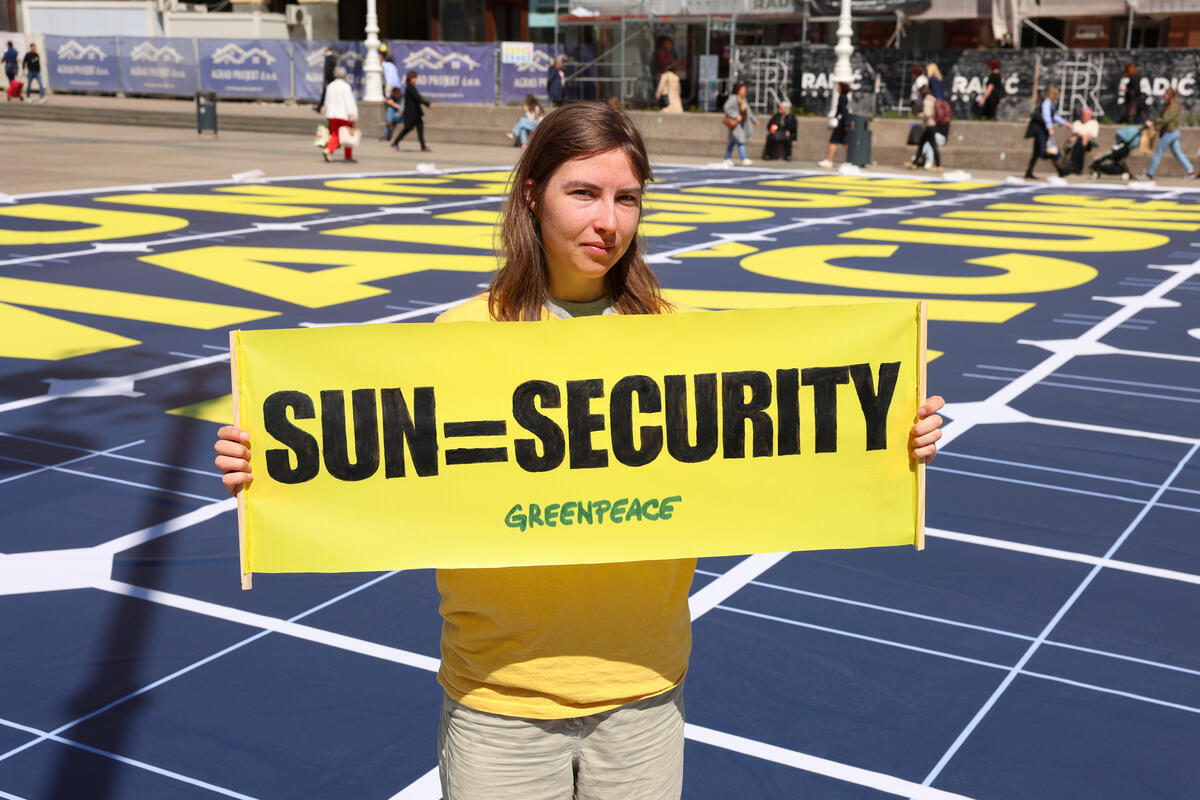
The Iran war demonstrates that the transition away from fossil fuels is increasingly an economic and security priority. Renewable energy, energy efficiency and electrification can reduce exposure to volatile international fossil fuel markets and decrease dependence on politically vulnerable supply routes.
Unlike oil and gas, renewable energy sources such as wind and solar rely primarily on domestic resources rather than imported fuels. Expanding renewable electricity generation, strengthening electricity grids, improving energy efficiency and accelerating electrification of transport, buildings and industry can help protect economies from future energy price shocks. The benefits extend beyond climate mitigation. Reduced fossil fuel dependence can lower energy import bills, improve trade balances, create more predictable energy costs for businesses and households, and reduce the economic leverage created by concentrated fossil fuel supplies.
The lesson from the US‑Israeli war on Iran is that energy security in the 21st century is not achieved by securing access to more fossil fuels; it is achieved by reducing dependence on them.
Reducing fossil fuel reliance is ultimately an essential investment in global stability, human security, and economic resilience. In the meantime, an immediate ceasefire and a return to diplomacy are urgently required to stop further civilian loss, prevent regional destruction, and pave the way for sustainable global security, economic stability and a just peace rooted in climate and social justice.
Fawad Durrani is an expert on climate change, conflict and migration at Greenpeace Germany.
Stop fossil fuel giants profiting from war and pollution. Sign now to tax profits and fund disaster relief and energy independence.


