
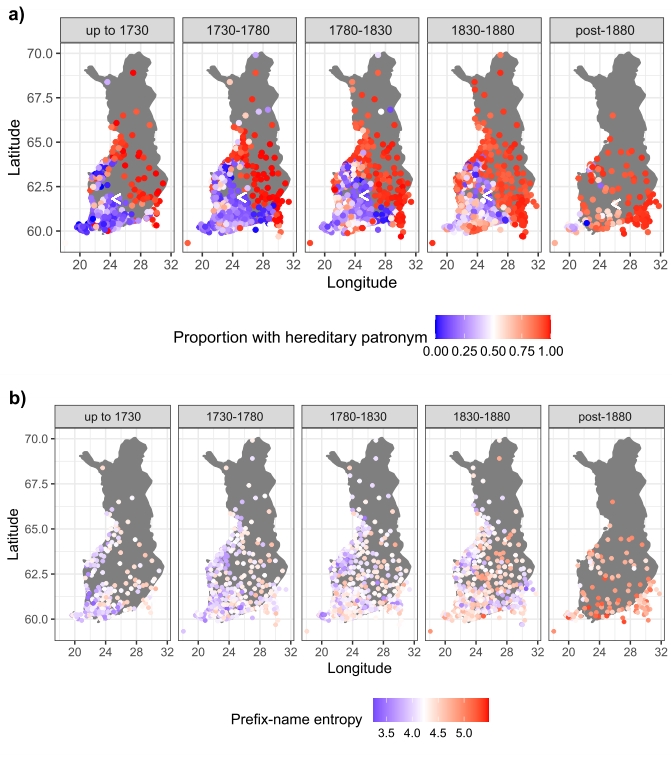
First names in Western countries today are more diverse than they were before early modern states evolved. This difference started to emerge in the 17th century in response to a change that took place in the naming system in large parts of Europe and the English-speaking world. Societies moved away from attributive last names - based on occupation or appearance like John (the) Short - to inherited surnames. Researchers at the University of Tübingen, the Massachusetts Institute of Technology (MIT), the University of California at Irvine, and the University of Texas at Austin say the fixing of last names meant a loss of information within the naming system, which had to be compensated for - which is why first names now convey more and more information. The study has been published in the latest Nature Communications.
What's In Name?
/University of Tuebingen Public Release. This material from the originating organization/author(s) might be of the point-in-time nature, and edited for clarity, style and length. Mirage.News does not take institutional positions or sides, and all views, positions, and conclusions expressed herein are solely those of the author(s).View in full here.


