
Rainforests in Central America that have remained largely untouched by modern human activities could bear the invisible imprint of ancient Maya civilisations.
New research has found that forest structure in Belize, such as canopy height and leaf density, may be influenced by how the Maya transformed and employed the land thousands of years ago.
By examining LiDAR scans of the region, archaeologists have, for the first time, compared forest characteristics to the remnants of Mayan infrastructure beneath, such as ancient canals or buildings.
Their findings, published in the journal Scientific Reports, reveal that taller and more varied forests are growing in areas previously used as wetland fields, while forests with higher foliage canopies are often found around settlements and upland wall features.
The research has been conducted by experts at the Universities of Exeter and Texas at Austin as part of an ongoing study of human/environment interactions in Belize, named Bladen Legacy.
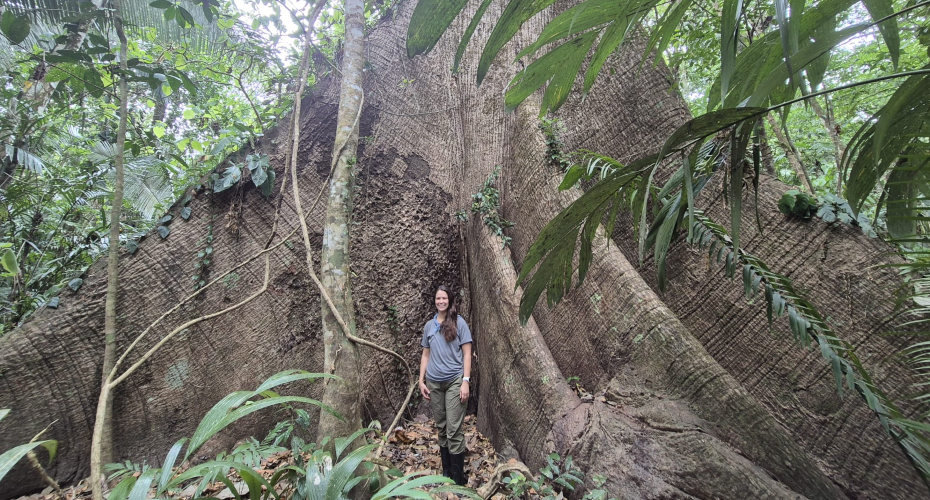
"We know that modern land use is transforming tropical landscapes on an unprecedented scale," says lead author Dr Sara Eshleman, a Postdoctoral Research Associate on the Bladen Legacy project. "What this research reveals is that those landscapes already bear the deep ecological imprint of ancient civilisations. What we think of as 'pristine rainforest' may well owe much of its structure to the different ways that the Maya stewarded the land."
The focus of the study was an area of the Rio Bravo Conservation and Management Area (RBCMA) once home to two large Maya centres, Wari Camp and Gran Cacao, as well as the Central Rio Bravo wetland field complex.
The results revealed the strongest correlation between forest composition and Maya infrastructure was found in areas that had been modified for wetland agriculture. The Maya engineered entire canal systems, and this may have altered the ecological trajectory of the land, leading to taller trees with denser canopies.
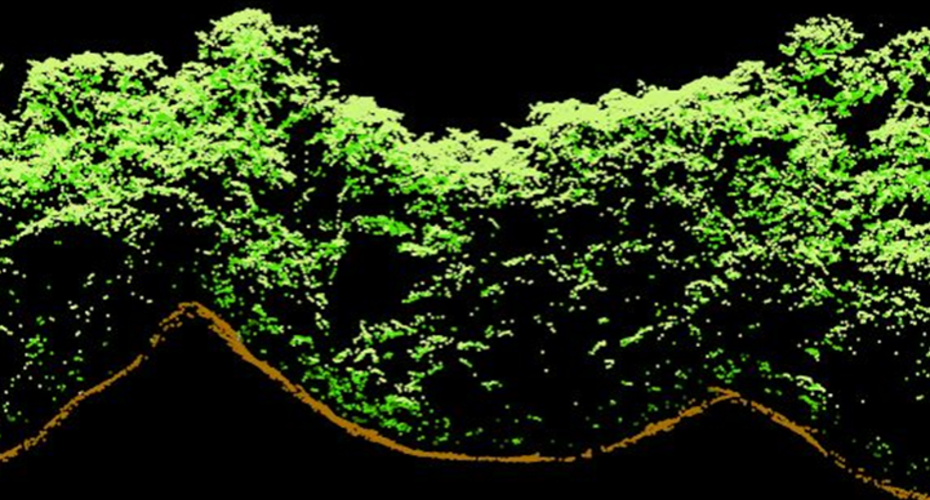
Forest growing around ancient settlements was also distinguished by greater canopy cover, and vegetation concentrated towards its upper reaches. This, the researchers say, could have been influenced by factors such as limestone leeching into the soil from the buildings, and the presence of species such as the Ramón tree, which is associated with Maya structures.
The research also looked at areas of the RBCMA containing upland wall features, but here, there was a weaker correlation, with some evidence that vegetation tended to be concentrated at higher canopy heights.
Overall, the results were strongest when studied at a scale of between 100m and 300m in width, and the research team says a much larger study area will be needed to determine whether the patterns identified extend across the wider Maya Forest.
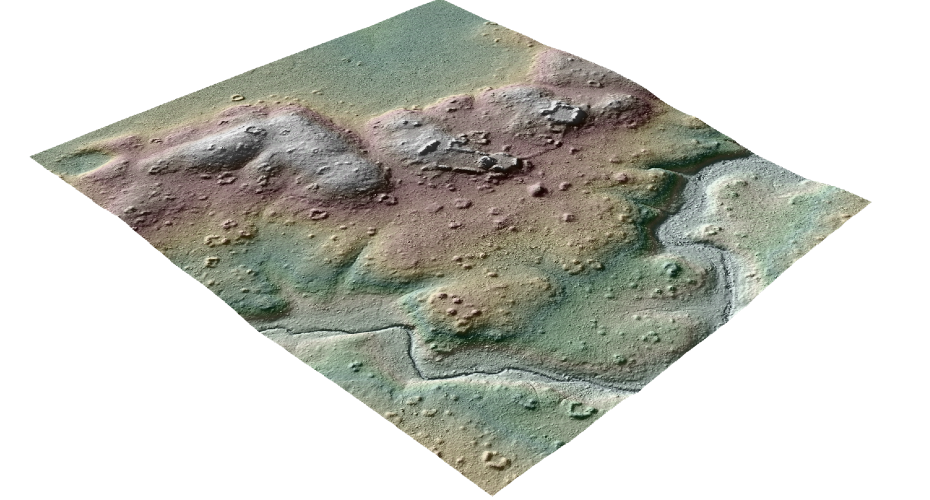
"LiDAR surveys are revealing extensive networks of ancient settlements, terraces, walls and wetland fields across Central America," says Dr Mark Robinson, of Exeter's Department of Archaeology and History. "If this relationship that we have identified in Belize is found in these other areas, then that legacy of ancient Maya land management may well be influencing huge portions of our tropical ecosystem."
Biodiversity and the Legacy of Anthropogenic Disturbance on Environments in the Neotropics - Bladen Legacy - is a UKRI-funded project that is exploring 13,000 years of human/environment interactions in the Bladen Nature Reserve of Belize.
The enduring legacy of the ancient Maya on tropical forests is published in Scientific Reports.


