
A University of Manchester astronomer is set to build the most detailed and accurate model of the radio sky ever built, offering new insights into the first stars, galaxies, and possibly new physics.
Thanks to a €2.25M Consolidator Grant from the European Research Council (ERC), UnifySky - a five-year project led by Dr Phil Bull - will combine decades of existing radio observations with new data from a custom-built horn-antenna - named RHINO - to tackle one of cosmology's biggest challenges.
The "radio sky" refers to the radio waves emitted by objects across the Universe, including pulsars, quasars, and clouds of hydrogen gas. Although invisible to the human eye, these signals carry vital clues about the Universe's earliest moments, such as how the first stars and galaxies formed. Mapping the radio sky allows astronomers to uncover hidden structures and processes that cannot be seen with traditional optical telescopes. However, progress has been held back by sky maps that are incomplete, inconsistent, or affected by instrumental errors.
"Existing sky maps can be wrong by more than 10%, yet we need errors below 1%," explained Dr Bull, Reader in Cosmology at the Jodrell Bank Centre for Astrophysics, University of Manchester. "These inaccuracies arise from old, inconsistent data stitched together from many different telescopes. Without improved models, the faint signals from the first stars and galaxies are lost beneath the much stronger radio emission from our own Galaxy."
To achieve this, the project will combine decades of existing observations with new, precisely calibrated measurements from RHINO. Using advanced statistical techniques implemented in Dr Bull's world-leading Hydra software, UnifySky will untangle overlapping signals and correct for errors from previous instruments, producing the first fully consistent model of the radio sky.
A key target is the extremely faint 21cm signal emitted by hydrogen in the early Universe, which carries key information about when the first stars and galaxies formed. The improved models will transform the scientific output of major experiments such as the Hydrogen Epoch of Reionization Array (HERA), MeerKAT, and the Square Kilometre Array (SKA), which are seeking to observe the signal.
The project will also revisit two puzzling results reported by the ARCADE-2 instrument and EDGES experiment, which both detected unusual radio signals that some researchers have suggested might hint at new physics. It is not yet clear whether these signals are real or the result of errors in making these tricky measurements.
The UnifySky project will focus on three main areas of work:
1. Building a high-precision statistical model of the radio sky
By developing an advanced statistical model that combines past and current radio observations, the project will produce a single, consistent map of the sky. This model will correct long-standing errors, account for uncertainties, and provide a flexible tool for calibrating telescopes and studying the faint signals from the early Universe.
2. Observing the sky with a novel horn antenna telescope
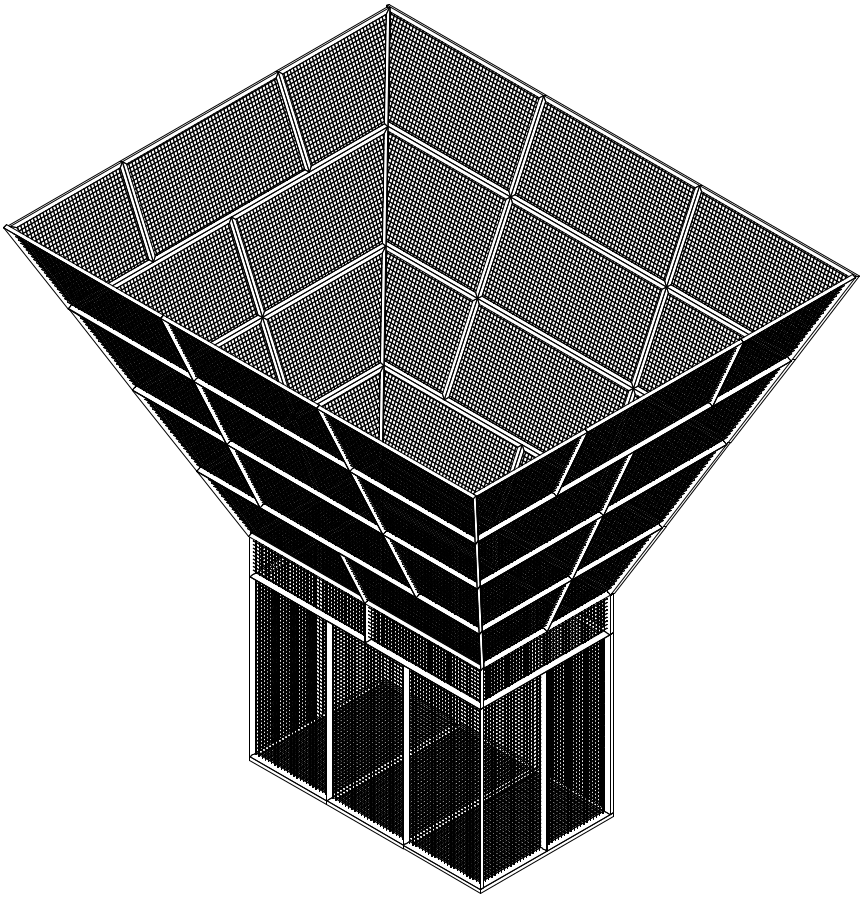
By building a precisely calibrated horn antenna called RHINO, the project will reobserve the unusual signal seen by the EDGES experiment and provide a reliable reference for other measurements. The antenna will be the size of a semi-detached house, and will be built at the Jodrell Bank Observatory, a stone's throw away from the historic Lovell telescope.
3. Unlocking new physics from the radio sky
By combining the new, high-precision sky model with RHINO's calibrated measurements, the project will re-analyse data from leading radio telescopes to study the early Universe. This will improve measurements of the 21cm signal from the first stars and galaxies, map the radio emission from our Galaxy, and separate different sources of cosmic radio waves. The results will give new insights into the formation of early structures and the effects of dark energy.
The work builds on Jodrell Bank's long-standing global reputation in radio astronomy, together with Dr Phil Bull's world-leading expertise in theoretical and observational cosmology, ensuring Manchester is uniquely equipped to deliver the UnifySky project.


