Seasons defined by ice
Autumn is settling across the country with cooler conditions and colourful tree leaves. Thousands of kilometres south of Australia, Bureau staff in Antarctica are experiencing a very different kind of seasonal change.
Unlike most places on Earth, Antarctica's seasons are defined by sea ice rather than temperature or daylight alone.
This is because the annual growth and retreat of sea ice has dramatic impacts on the landscape.
"At its lowest, Antarctic sea ice gets down to around 2 to 3 million square kilometres," explains sea ice scientist Dr Phil Reid.
"At its maximum, it grows to 20 million square kilometres."
Dr Reid says the continent therefore has two main seasons.
"There's the 'advance' of the sea ice, which starts from about mid-February, and ends at about mid-September, and the 'retreat' (of the sea ice), which is the reverse," he says.
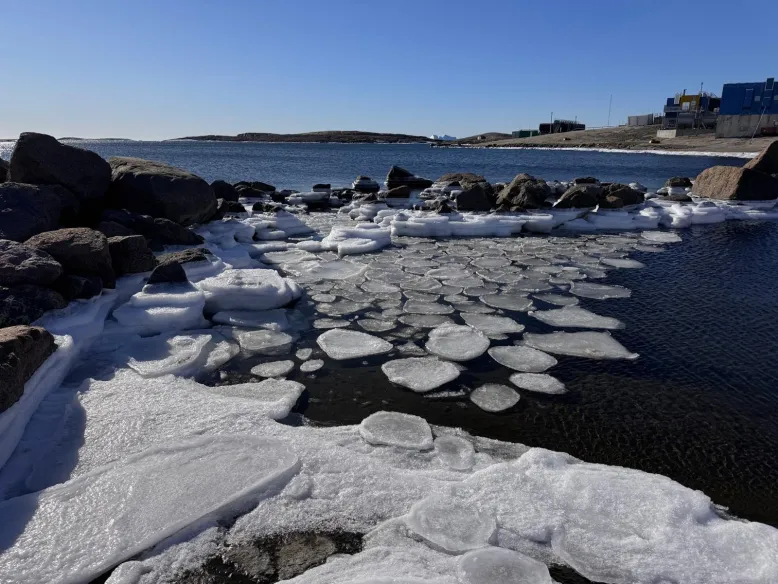
Sea ice forming during the advance stage. Credit: Diane Chanut.
These seasons are also commonly referred to as summer and winter.
Antarctica is the coldest and windiest continent on Earth, and conditions become increasingly more severe as winter approaches.
The summer season on Australia's Antarctic stations brings average temperatures of between -0.4 °C and -1.7 °C.
During the months of March, April and May, these averages drop to between -11.0 °C to -13.7 °C, reaching between -14.7 °C and -17.6 °C in winter.
Sub-Antarctic Macquarie Island sees a similar reduction in average temperature, from 6.8 °C in summer, to 5.4 °C in autumn and 3.4 °C in winter.
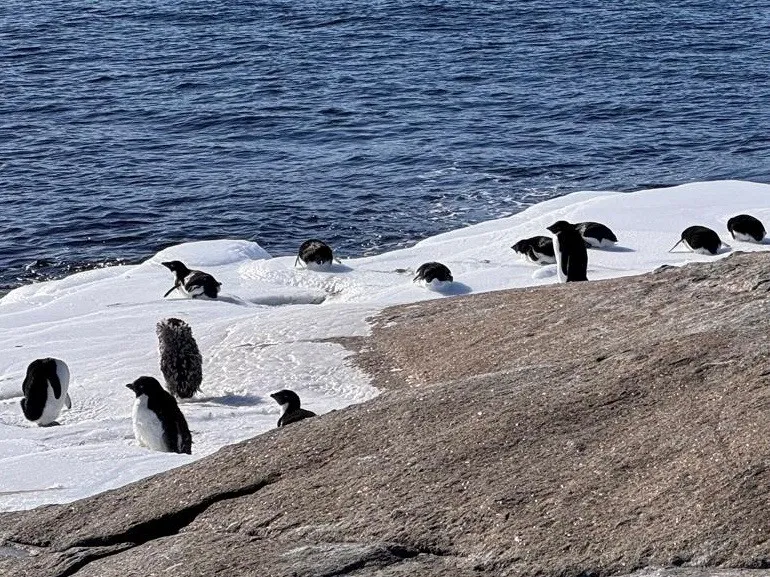
Adélie penguins. Credit: Diane Chanut.
The summer exodus
During summer, around 300 expeditioners are located across Australia's three Antarctic stations at Mawson, Casey and Davis Stations, as well as sub-Antarctic Macquarie Island.
Forecaster Scott Carpentier says the warmer, calmer and daylight-filled months are when activity peaks.
"The research, transport and outdoor activities are a lot easier to undertake than in winter," Scott explains.
"So, a lot happens in summer, the whole programme swells."
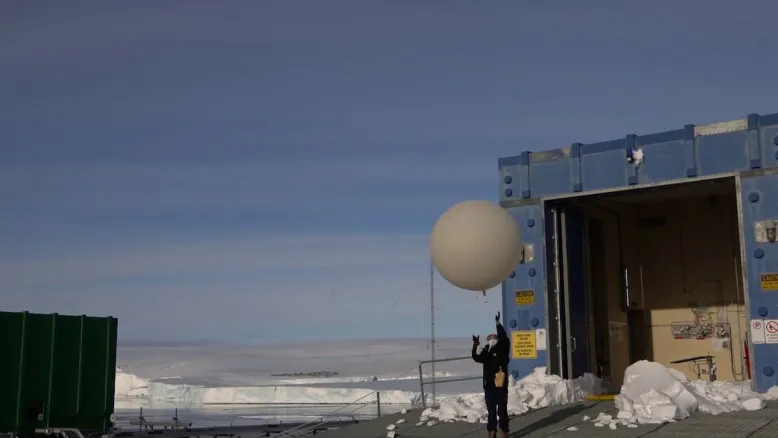
Bureau staff release a weather balloon at Mawson Station. Credit: Dan Godlevsky.
At the beginning of the sea ice advance season, most expeditioners must leave before sea ice fully reforms, daylight dwindles and weather conditions deteriorate, limiting access by ship and plane.
By winter, the population across all four stations drops to around 70.
"By the end of summer, people leave and we just have a core group of people to keep the stations going and baseline research maintained over winter," Scott says.

Bureau staff admire sea ice views on board RSV Nuyina. Credit: Dan Godlevsky.
For the Bureau's Antarctic program, that means the embedded forecasters who are deployed to provide critical air, land and sea decision support services, leave with the last aircraft and ships around March.
However, Bureau observation and technical engineering staff that maintain the climate monitoring program remain over winter.
The departure itself is a frenetic period. Meteorologist Pieter Classen was at Davis Research Station this year and provided weather forecasts for aircraft and vessels. He says timing is critical.
"We need to find weather windows to get people home," Pieter says. "It's always a busy period."
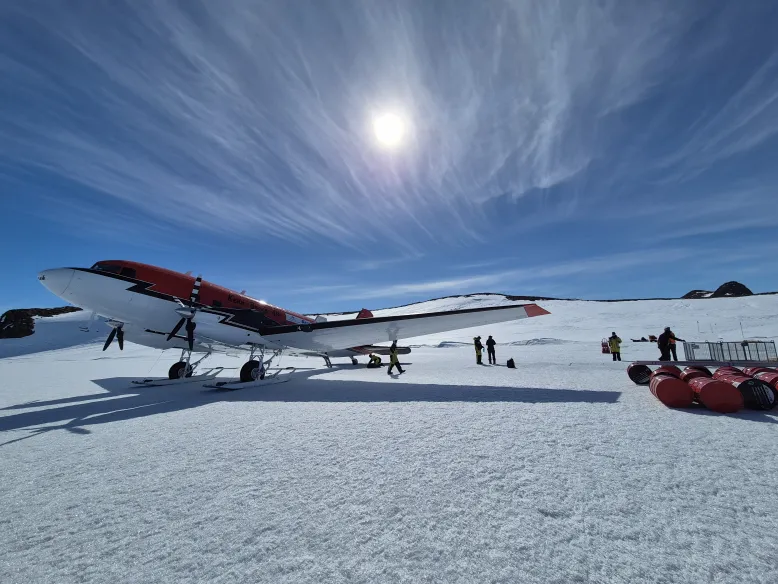
A Basler aircraft used for flights between Antarctic stations and field camps. Credit: Brian Kirby.
Once the last ship departs, the change is substantial.
"You notice how quiet it is once all the people go," says Sharon Labudda, a seasoned expeditioner who has worked many seasons across multiple stations and roles in Antarctica.
"It's sort of surreal. It's just us that are left and you watch [the ship] sail out of sight, and then you realise that you're actually here and you're doing it."
Change in landscape
With fewer people, the stations are less busy, and the remaining expeditioners are able to turn their focus on the changing landscape.
Around them, sea ice spreads and snowfall settles, transforming the browns and greys of exposed rock to a growing blanket of white.
This change in landscape introduces subtle beauty.
"You look out the window and it's iceberg alley," Casey Research Station technical officer Brian Kirby explains.
"Even though they're the same icebergs every day, the light changes on them and they just look so different every day. It's amazing."
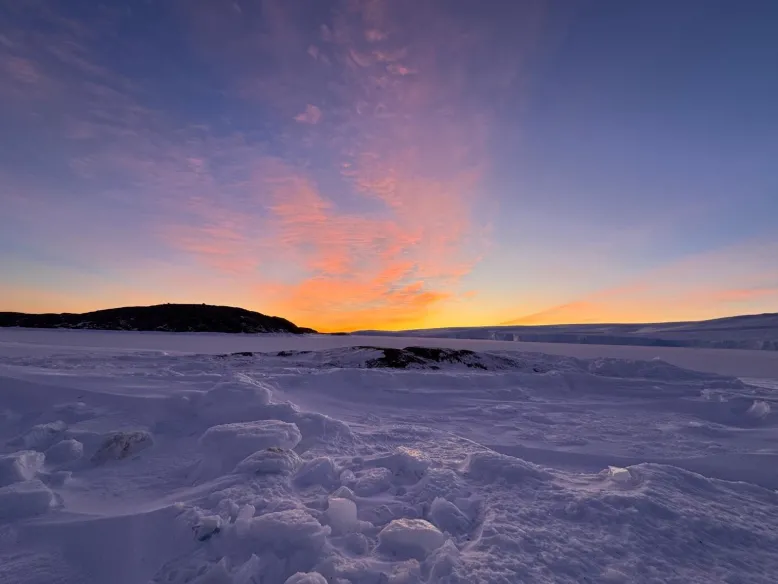
Colourful clouds during an Antarctic sunset. Credit: Diane Chanut.
At the same time, as the days continue to shorten, sunrises and sunsets begin to occur at a more familiar hour.
This brings more colour to the landscape, similar to the increase in colour during Australia's autumn period with the changing tree leaves.
"You don't realise you've missed [sunsets and sunrises] so much until they start happening again," Brian explains.
"It's a splash of colour in the sky and the whole landscape takes on a different feel."
The white landscape also acts like a mirror, reflecting the colours across the ice and snow.
With the increasing hours of darkness, another colourful change occurs in the sky with the visibility of the aurora australis becoming more frequent. This lights up the sky with hues of green and blue.
"Sometimes there will be an aurora and on top of that still are all the stars of the Milky Way, so it really can be quite beautiful," explains Diane Chanut, a technical officer at Mawson Station.
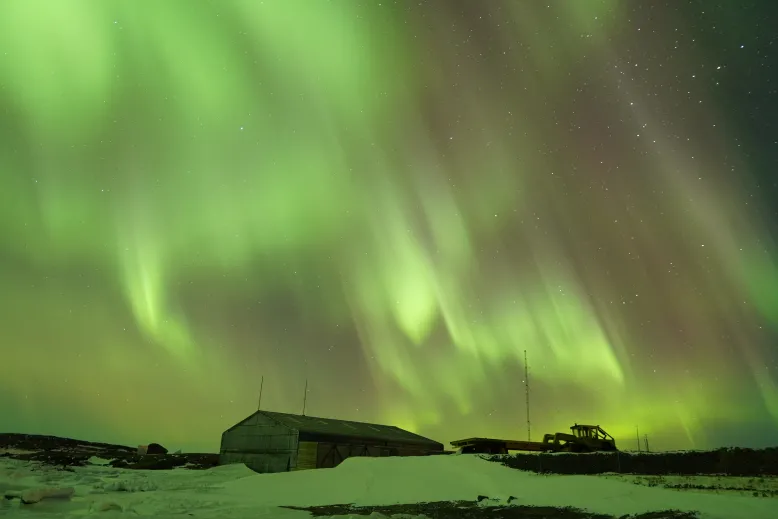
An aurora at Mawson Station. Credit: Dan Godlevsky.
As days will grow steadily darker, temperatures will continue to fall, and sea ice will expand.
It won't be until October that ships and aircraft return, bringing a new wave of expeditioners which marks the start of the summer season.