
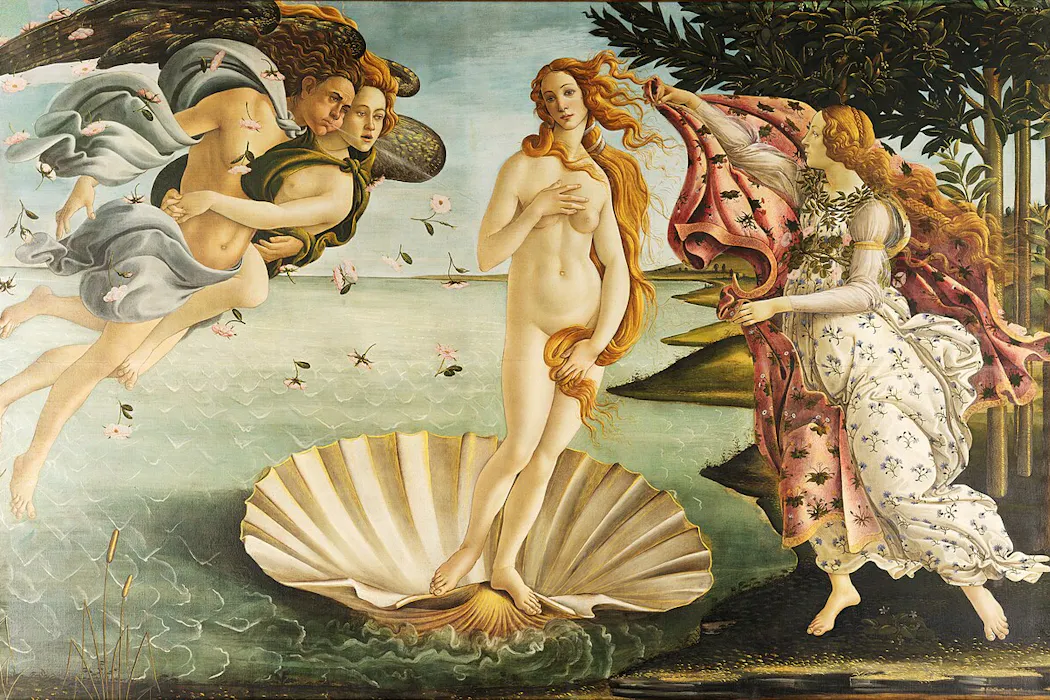
Simonetta Vespucci is probably one of the most painted women of the Italian Renaissance. Sandro Botticelli is widely believed to have used her as his model for Venus, and she appears, transformed and idealised, across several of his most famous works.
She died in 1476, aged just 23. For centuries, historians have assumed tuberculosis was to blame - it was common, it was often fatal, and it fitted the pattern of a young woman fading quickly.
In 2019, my colleagues and I proposed a different explanation . We examined the portraits attributed to Botticelli alongside written descriptions from the period, looking for whether the same woman's face changed in ways that might reflect an underlying illness.
What we found was a gradual shift in her features across multiple paintings - subtle changes to the jaw, the brow, the soft tissue of the face. These are the kind of changes seen in patients with a pituitary adenoma, a tumour of the small gland at the base of the brain that controls hormone production.
Specifically, we suspected a tumour secreting both growth hormone and prolactin. Excess of these hormones can alter facial contours over time and, in some cases, cause unexpected lactation - and one allegorical figure in Botticelli's work appears to depict exactly that symptom.
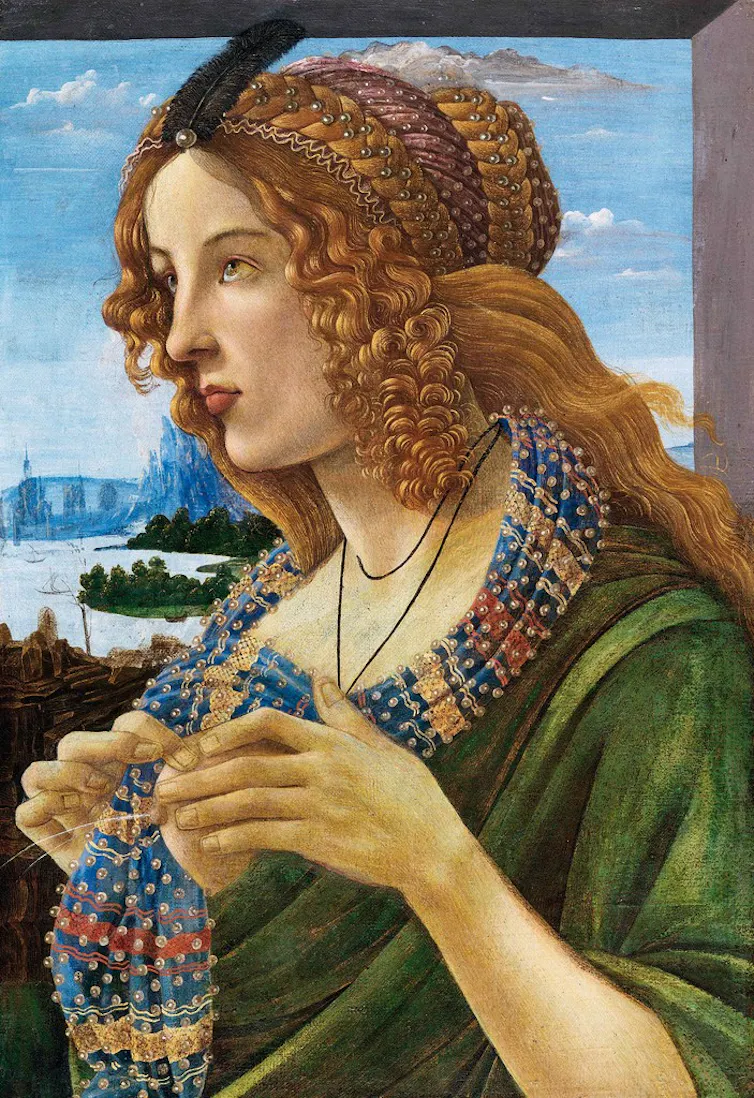
Our 2019 paper was cautious. We were not claiming proof - we were offering a plausible medical reading of the visual evidence, built by combining art history with clinical endocrinology.
Now, in a new paper published in Endocrinology, Diabetes and Metabolism, my team and I have gone further. We believe Simonetta's death itself - sudden, rapid, and dramatic according to contemporary accounts - is consistent with a specific medical emergency: pituitary tumour apoplexy.
Apoplexy occurs when a pituitary tumour bleeds or rapidly swells. It typically causes a sudden and severe headache, loss of vision, confusion, and a swift decline as the body's hormonal regulation collapses.
We argue that this would explain something that tuberculosis alone struggles to account for: how a previously healthy young woman went from apparent wellness to death within a short period. Chronic infections such as tuberculosis usually cause a slower, more visible decline.
Three strands of evidence
Our case rests on three strands of evidence. First, the physical changes visible across the portraits - Botticelli painted her several times, from the 1470s through to the posthumous Birth of Venus (1482-1485) - suggesting a tumour growing over months or years.
Second, the symptoms described in chronicles of her final illness (letters exchanged between Piero Vespucci and Lorenzo de' Medici, describing her collapse at a ball and the headaches, hallucinations, vomiting and fever that followed), which align closely with the clinical presentation of apoplexy.
Third, two documented events in the months before her death - her collapse during vigorous dancing at a ball, and an alleged violent encounter with Alfonso II of Aragon, Duke of Calabria - that could plausibly have triggered a bleed or sudden tumour expansion.
None of this amounts to certainty. There is no tissue sample from 1476, no scan, no way to examine Simonetta directly - only paintings, letters, and clinical reasoning applied five centuries after the fact.
What we can say is that a tumour capable of slowly reshaping a person's face is also capable, if it ruptures, of killing them quickly. Put together, the portraits and the historical record tell a more complete story than either can alone.
We hope this encourages both historians and medical professionals to look again at cases like Simonetta's. Medical knowledge can sometimes answer questions that pure historical record cannot. And, in turn, historical puzzles can push medicine to think differently about how disease unfolds in the body over time.

Paolo Pozzilli does not work for, consult, own shares in or receive funding from any company or organisation that would benefit from this article, and has disclosed no relevant affiliations beyond their academic appointment.


