
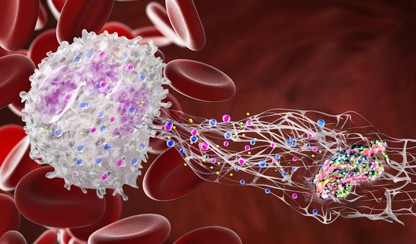
Thanks to a $1.2 million Federal Government grant, the Baker Heart and Diabetes Institute's Dr Patrick Lelliott and Dr Anna Watson will lead an international team to investigate how environmental exposure to plastics may contribute to cardiovascular disease and how this risk can be better understood and reduced.
The research will involve developing new tools to detect plastics in plaques in human arteries and using models to study how these plastics might damage blood vessels and trigger harmful immune responses.
Dr Lelliott says the goal is to understand whether different types of plastics make heart disease worse and how. This will help to inform public health advice and determine some of the health risks of plastic pollution.
Microplastics and nanoplastics (MNPs) are increasingly recognised as environmental pollutants building up in our bodies at an alarming rate with the potential to impact cardiovascular health. Studies have begun to link exposure to the tiny deteriorating plastics with increased heart disease, heart attacks and strokes, yet no one has really been able to explain why yet.
Dr Lelliott says that they are going to investigate the inflammatory stress response they can see in the endothelial cells, which line the blood vessels. In the Baker Institute lab, they have witnessed human immune cells called neutrophils trying to kill microplastics because they recognise the microplastics as foreign invaders — like an infection. As a last resort, the immune cells self-destruct and explode on the microplastics, releasing a toxic cloud of DNA and proteins. The tiny plastics aren't impacted but surrounding cells can be injured in this process. So if this is happening in our blood vessels as well, it could be causing the life-threatening side effects of inflammation and swelling in our blood vessels and the accumulation of plaques. These side effects can make it hard for blood to flow through the vessels, increasing the risk of a heart attack, blood clots and stroke.


