
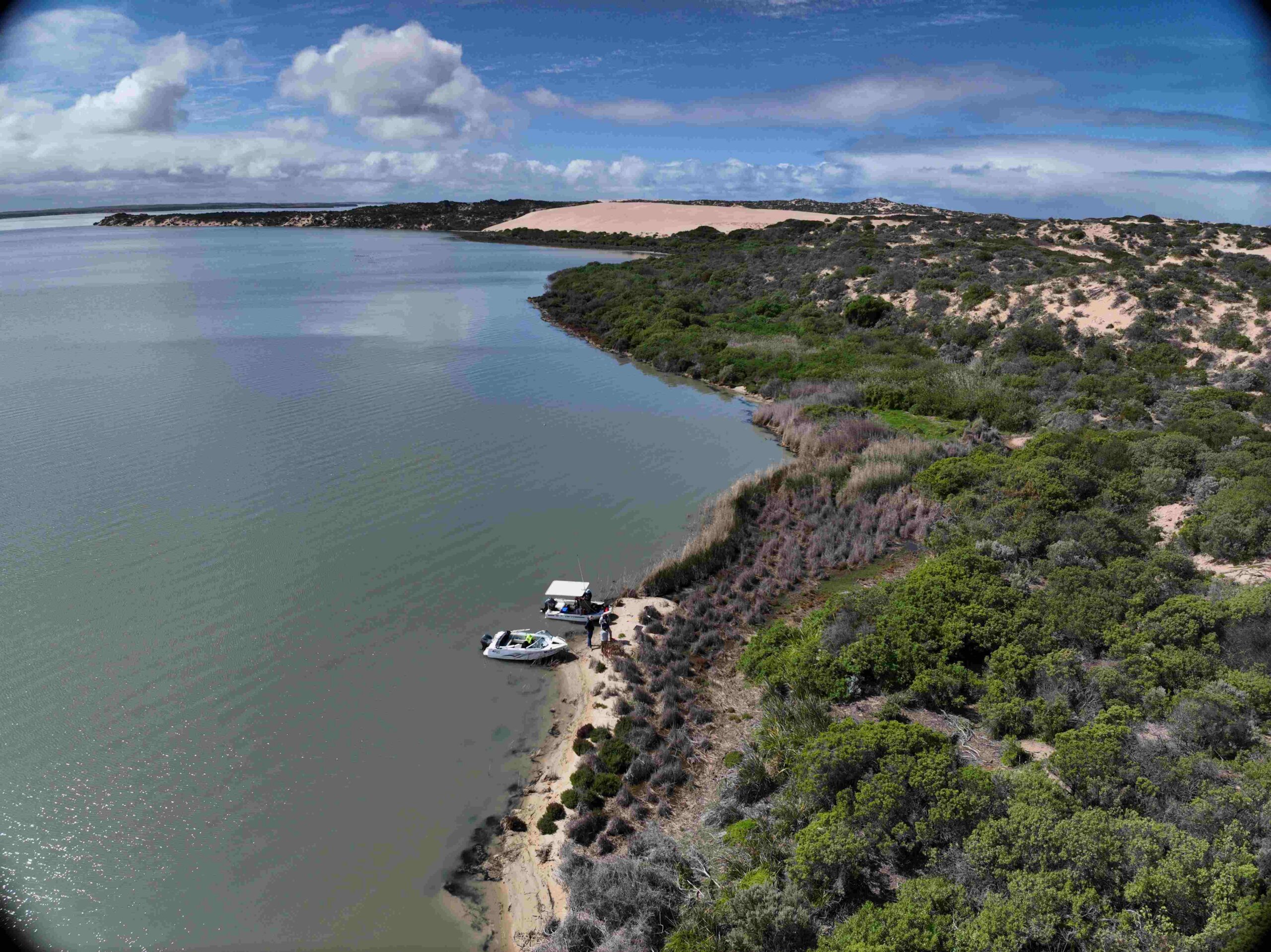
Ongoing research is providing a clearer picture of how climate change can affect different aspects of the Coorong in South Australia - and is developing strong environmental strategies that can be adapted as the climate changes.

One project, led by Flinders University researchers and funded by the Goyder Institute for Water Research, looks at the effect of climate change on phytoplankton, including microalgae and harmful algal blooms.
These microscopic, free-floating aquatic organisms absorb sunlight and carbon dioxide to produce oxygen. Although tiny, they are a key part of the Coorong's food web, as pipis, mussels, insects and small fish all eat phytoplankton.
However, some phytoplankton can also form harmful algal blooms, so Flinders researchers have investigated which phytoplankton species live in all the different Coorong habitats, and how water level, salinity, nutrients and temperature affect them.
"This information can help us predict how climate change may impact the food web and the risk of harmful algal blooms," says research paper lead author Dr Daniel Chilton, from Flinders University's College of Science and Engineering.

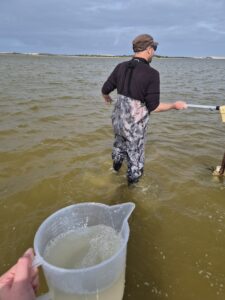
The research team sampled phytoplankton across the Ramsar-listed Coorong, from freshwater to salty habitats, to see what species - and how many - lived in which environment. These results were combined with 16 years of historical data to determine what environmental factors most influenced the phytoplankton preferences.
"The 16-year dataset encompasses an exceptional climate gradient, from extreme drought to flood conditions, and these flow extremes strongly shape phytoplankton communities," says Dr Chilton.
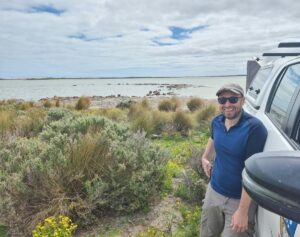
The researchers, including experts from Adelaide University and The University of Western Australia, found that changes to salinity and water levels through variations in freshwater inputs to the Coorong had the most influence on phytoplankton abundance, diversity and community structure.
Freshwater and low-brackish, or mildly salty habitats had the most species, but these communities were dominated by cyanobacteria (including blue-green algae) and chlorophytes (green algae).
Extremely salty habitats had fewer species and were dominated by diatoms and dinoflagellates in balanced numbers.
Researchers also found that while the levels of harmful bloom-forming species in the Coorong is low overall, there are more than 80 phytoplankton species capable of producing toxins.

"Harmful algal bloom risk varies by species and environmental conditions," explains Dr Chilton. "High-nutrient and low-salinity conditions can promote cyanobacterial blooms, while drought-driven, high-salinity conditions can increase the risk of harmful dinoflagellate blooms."
The researchers say these results support predictive tools for climate-driven lagoon management.
"Our results can facilitate predictions of phytoplankton communities under future climate change scenarios where salinity outputs are generated," says Dr Chilton.
"Coastal lagoons such as the Coorong support high biodiversity and provide many ecosystem services, but these are under threat from changes in freshwater flow due to climate change and other actions.
"Because of this, understanding how phytoplankton responds to flow-induced changes in environmental conditions is crucial to assess the impact of climate change."
The research - 'Shifts in flow and salinity shape phytoplankton communities in the Coorong, a Ramsar-listed shallow coastal lagoon (South Australia)', by Daniel Chilton, Justin Brookes (Adelaide University), Matthew Hipsey (University of WA), Tamar Jamieson (Flinders), Christopher Keneally (Adelaide Uni), Michelle Waycott (Adelaide Uni) and Sophie Leterme (Flinders University) - has been published in Continental Shelf Research. DOI: 10.1016/j.csr.2026.105744
Acknowledgements: This study was supported by the Australian Research Council Discovery Project grants, the SA Government's Healthy Coorong, Healthy Basin Program, ARC Training Centre for Biofilm Research and Innovation and Goyder Institute for Water Research.
The Goyder Coorong, Lower Lakes and Murray Mouth (CLLMM) Research Centre, funded by the Australian Government, has recently released a further eight research reports covering a range of topics affecting the region. They are:
 Blue and teal carbon - 'Blue and Teal carbon potential in the Coorong, Lower Lakes and Murray Mouth. Task 1.1: Final report
Climate adaptation - 'Climate impacts on biogeochemistry, microbial ecology, and methane emissions in the CLLMM region'
Community adaptation to droughts and floods - 'Community adaptation to worsening droughts and floods in the CLLMM'
Coastal dunes - 'A tentative stratigraphy of, and geomorphological and vegetation temporal changes on the Wuyung/Sir Richard Peninsula'
'Coring and Installation of Groundwater Infrastructure on the Sir Richard Peninsula, South Australia'
Freshwater soaks - 'Hydrology of freshwater soaks on the Younghusband Peninsula in a changing climate'
Waterbird conservation - 'Shorebird body condition monitoring through machine learning, targeted field surveys and community science in the CLLMM region' and 'Movement ecology of waterbirds at multiple scales in the CLLMM region'


