Victoria Gray's pain started when her mom was giving her a bath in their home in Goodman, Mississippi. She was only 3 months old when she began crying inconsolably. Her mom tried giving her a bottle, she rocked her, but nothing helped.
At first, her mother feared she'd reinjured Victoria's arm - it had been dislocated during birth - but at the emergency room, doctors couldn't find what was causing the pain, so they ordered some blood work.
When the labs came back, they delivered the devastating news: Victoria had sickle cell disease. She might live to age 7, but not much longer.

Courtesy of Victoria Gray
Sickle cell disease causes red blood cells to become misshapen and block the flow of oxygen to the body. At least 100,000 Americans are living with the disease, more than 90% of whom are Black. The global scale is staggering, impacting an estimated 8 million people in the world, from sub-Saharan Africa to India.
For those affected, sickle cell disease can lead to organ damage and cause unbearable pain, and treatment requires regular blood transfusions.
Although the life expectancy of a person born with sickle cell today is around 50 years old, the prognosis was much worse in 1985, when Victoria was diagnosed. Before the era of modern screenings and preventive antibiotics, many died in early childhood from sudden infections or organ failure.
For Victoria's family, the diagnosis felt like a countdown.
As a kid, Victoria knew what she was living with was dangerous. She'd overhear her grandmother's prayers and hushed conversations between her mother and grandmother.
"Unlike normal kids, for my birthday I would wish for another year of life," Victoria says.
But she didn't know that years later, a scientific breakthrough 2,000 miles across the country at UC Berkeley would give her another chance at life.
The origins of CRISPR
Berkeley biochemist Jennifer Doudna grew up on the Big Island in Hawaii. When her dad, an academic in American literature, gave her a copy of The Double Helix, a book about the discovery of the DNA structure, she was enthralled.
"That was my first exposure to what it's really like to do science," she says. "The personalities involved, the competitions involved, the incredible sense of excitement when you figure out something new about the world for the first time. I was absolutely captivated."
Doudna joined Berkeley's faculty in 2002. She's a professor of molecular and cell biology and of chemistry, and she leads the Innovative Genomics Institute on campus.
In 2010, Doudna's lab discovered a pathway that allows bacteria to "learn" about viruses, store that information and use it for protection.
When Doudna started collaborating with French microbiologist Emmanuelle Charpentier, the scientists realized that the same system could be used to edit DNA in plant, animal and human cells, effectively allowing them to rewrite the code of life.
It marked the revolutionary discovery of CRISPR-Cas9 gene editing.
Curiosity-driven research
The seminal paper on CRISPR was published in 2012 by Doudna and Charpentier.
"I'm highly motivated by the fact that I work at a public university and I want our discoveries, meaning the work that all of my students are now doing, to have real-world impact," Doudna says.

Brittany Hosea-Small/UC Berkeley
At Berkeley and other universities, she says, researchers are innovating in ways that couldn't be done easily at private companies. They're taking big risks driven by curiosity with findings that might not be immediately commercially viable.
"That's really where the whole idea of genome editing with CRISPR started - with fundamental science done at UC Berkeley," she says.
To support their work financially, scientists rely on federal funding - taxpayer dollars - largely through the National Science Foundation and the National Institutes of Health. For every dollar invested through the NIH, $2.50 is returned to the country in economic advances.
"I think we need to continue to support science in the way that we have in the past if we want to continue to be the leaders around the world," says Doudna. "I want America to be number one."
Treating inherited blood disorders, like sickle cell disease, was at the top of Doudna's list of CRISPR therapies to develop.
Victoria's fight
For Victoria, age 7 came and went. Despite knowing that her illness was serious, she describes herself as a happy-go-lucky child. There were times, though, when she couldn't forget her illness. Times when the pain came on so suddenly that it took her breath away.
"That's when things changed," she says. "The pain felt like getting struck by lightning and hit by a truck at the same time."
The pain was deep and all-consuming - it was in her arms, legs, chest, back - and hard to describe. The doctors would ask, "Does it burn? Is it an aching pain? A sharp pain?" But Victoria couldn't narrow it down.
"The pain felt like getting struck by lightning and hit by a truck at the same time."
All sorts of things could cause a flare-up: an illness, stress, being too tired or too cold. Doctors worried that too much physical activity would trigger an episode, so she always had to sit out during PE at school, watching from a bench as her classmates played dodgeball and jumped rope together.
If her pain wasn't severe, Victoria's parents could usually manage her symptoms with medication, rest and fluids. But every three to six months, the pain would become excruciating - a sickle cell crisis, she calls it - and she'd have to be rushed to the hospital. There, she'd spend a week or more getting blood transfusions, IV fluids and pain meds until her symptoms subsided. It was the same cycle, again and again.
She was always treated at Batson Children's Hospital, now named Children's of Mississippi. Even though Victoria missed her friends and family and school, the pediatric team made her feel protected and cared for.
"Everyone knew me, I knew them, and it just felt like home," she says. "I was always welcomed there with smiles and empathy, so I wasn't as afraid.
When she turned 19, though, everything changed. Living as an adult with sickle cell disease was much different than living with it as a kid.
What is sickle cell disease?
In 2014, two years after Doudna and Charpentier published their landmark paper on CRISPR, Doudna began focused efforts on using CRISPR to treat sickle cell disease.
Blood cells were an ideal starting point because they are far easier to reach and edit than cells in complex organs like the brain or heart.
When someone has sickle cell disease, a mutation in their genes alters the shape of adult hemoglobin, the protein that carries oxygen from the lungs to the rest of the body. Instead of remaining soft and round, red blood cells become rigid and crescent-shaped. These misshapen cells get stuck and jam up blood vessels, blocking normal blood flow and oxygen delivery.
"You might ask, 'Why has a mutation like that been maintained in the human population?'" Doudna said during a talk she gave last year for the campus's Brilliance of Berkeley lecture series. "We think it's because in people that inherit one copy of the sickle cell gene, they don't have sickle cell disease - they actually have protection from malaria."
Globally, the sickle cell mutation is more common in places where malaria is widespread, including sub-Saharan Africa, South Asia and parts of the Middle East and Mediterranean. That's why Black Americans are more likely than many other groups in the U.S. to inherit the sickle cell gene.
While a person who inherits one copy of the gene has sickle cell trait, which can help protect against severe malaria, inheriting two copies - one from each parent - causes sickle cell disease.
To try to treat it, scientists looked to a time before the sickle cell mutation can cause harm: early human development.
A genetic light switch
During gestation, a fetus's hemoglobin, also known as "hemoglobin F," has a higher affinity to oxygen because it needs to pull oxygen from the mother's blood and help feed the tissues in the fetus. But after birth, the fetal hemoglobin gets shut off and adult hemoglobin is activated.
Scientists like Stuart Orkin, a professor at Harvard Medical School, began to ask: How does that regulation work? What is it that controls the production of fetal hemoglobin? What turns it off when we're born?
What he found was there's a protein called a transcription factor, known as BCL-11A, whose job it is to turn off the production of fetal hemoglobin.
"This was sort of the light bulb going off," says Doudna.
If scientists knew how the production of fetal hemoglobin is turned off, maybe, they thought, they could turn it back on, overriding the effects of adult hemoglobin that's in the sickled form.
This scientific discovery offered a glimmer of hope on the horizon - but for Victoria, the immediate reality of living with sickle cell disease was about to become much more dangerous.
'I stopped dreaming'
When Victoria turned 19, she was moved to adult care in a new facility. That's when everything changed.
"I rarely saw the same person twice," she says. "They didn't know my name and I didn't theirs. It wasn't the same proactive care."
Her once five-minute waits for treatment turned into sometimes 12-hour waits in the ER. Nurses and doctors no longer listened to her and didn't take her pain seriously. They suspected she was playing up the pain in order to get opiates or other pain medication. She'd choose smart outfits to avoid being labeled an addict. But it didn't help.
"When you're already living with pain that feels unbearable and you're trying to be stoic - because if you're too loud, you get judged, if you're too quiet, you get judged - it's enough to make anyone want to just throw in the towel."
This was how her life would always be, she thought.

Courtesy of Victoria Gray
"I stopped dreaming," she says. "I was basically just existing in my home, going to doctor's appointments, because I thought I was close to dying."
By this time, Victoria had a family. She had her first son, Jamarius, at age 21, and twins, Jaden and Jadasia, a year later. She says the pain during child birth was nothing compared to that of her sickle cell crises. At 25, she got married to Earl, a U.S. National Guardsman who had a daughter, Asia, from a previous relationship.
Victoria felt like she couldn't give her kids the lives they deserved. Her kids' birthdays fall in the winter, when the cold would often trigger an episode, and they'd have to celebrate in the hospital. Same with Thanksgiving and Christmas.
"I had this guilt that I was cheating my children out of their childhood. I just felt like I was breaking my kids' hearts."
At the time her oldest son, Jamarius, then in sixth grade, kept getting in trouble at school. One day, when Victoria went in to pick him up, his teacher told her: "I think he's afraid that he'll be at school and you'll die at home and he won't be there to save you."
"That was a hard reality to hear as a mom, because the truth was I had been praying to God every night to allow me to die," admits Victoria. "I thought I was a burden. But here my son was fighting for me to live.
"That's when I got the courage to start fighting. It was the love of my kids that kept me here, that gave me the courage to look for options."
A life-saving treatment
After several years of safety testing, the Food and Drug Administration approved CRISPR to be used in clinical trials for sickle cell disease in late 2018.
A year later, Victoria was in Nashville, Tennessee, to be evaluated for a bone marrow transplant. That's when her doctor, Haydar Frangoul, presented her with another option: an experimental trial of a CRISPR therapeutic.
He explained the procedure - that it was like going into a textbook with thousands and thousands of words, finding one word that's misspelled, and correcting it without disrupting the story. Potentially, he told her, it would cut down the amount of crises she had by at least half.
It's amazing to think of how brave she had to be.
Victoria was ready. She would be the very first person in the world to be treated for sickle cell disease using a CRISPR therapy. Doudna is still impressed at the courage it took.
"Imagine that," Doudna says. "Imagine being the first person who volunteered to be number one when something has never been tested before in humans, and to volunteer to try it. It's amazing to think of how brave she had to be."
The one-time treatment was a long and physically demanding process. First, doctors had to collect millions of Victoria's stem cells. She was connected to a machine for six hours a day for three days in a row. These cells were then sent to a lab to be edited with CRISPR.
Victoria then underwent one month of high-dose chemotherapy to wipe out her existing bone marrow, which was producing the sickled cells, to make room for the new, edited cells.
After about three months, her CRISPR-edited cells were ready.
"On July 2, 2019, Dr. Frangoul infused the new, edited cells that I call my 'supercells'; right through the same catheter that I received my blood transfusions," Victoria says.

Nicole Craine/Liberty Science Center
Because stem cells have a natural homing instinct, they travel through the bloodstream, find their way to the hollow centers of the bones - the bone marrow - and "park" themselves there. The process is called engraftment. Once they settle in the bone marrow, they start multiplying and producing the new "supercells" that create healthy fetal hemoglobin.
"He pushed four vials real fast, and I was just in shock. I said, 'Is this it?' And he said, 'That's it, girl.' I got really emotional. I couldn't believe after 34 years of suffering, that's all it took."
It wasn't without its pitfalls. Two weeks after receiving chemo, all of Victoria's hair fell out. Then came the mucositis - sores in her mouth and throat so painful it brought tears to her eyes. She stayed in the hospital in isolation for 30 days while her immune system recovered and the new stem cells started to graft. After that, she moved into an apartment nearby for seven weeks for regular monitoring.
Then she returned home to Forest, Mississippi. At age 34, Victoria was walking on familiar ground with a new strength she had never known.
'Is this what normal feels like?'
Victoria's recovery was slow at first. After a little while, though, she noticed she no longer needed blood transfusions. And soon she started tapering off her pain meds - Dilaudid, hydrocodone, oxycodone, percocet, hydroxyurea and folic acid. She still needed her heart medications, though, to treat permanent damage caused by lack of oxygen.
One day, about seven or eight months after the infusion, she woke up without pain. "I didn't feel anything," she says. "I thought I was dead."
She called her kids into the room, and after they could see and hear her, she was convinced she was still alive.
"I was like, 'Oh, my God. This is what normal feels like?'"

Courtesy of Victoria Gray
Slowly, she started to believe her new reality. Whenever the weather forecast called for rain or thunderstorms, Victoria would brace herself for an episode. And she'd always bring a blanket wherever she went.
"There were still a lot of things I had to overcome mentally. Like, 'OK, is this going to last?' I was the first person, so I'm the prototype. I don't have anyone to call, you know, so all eyes on me."
It was challenging, but she started to embrace her new life.
She stopped using a walker. She could take baths by herself and grocery shop and make dinner without an in-home aide, like she had for years. She got a job at her local Walmart, where she stocked products and built displays.
"I was doing a lot of physical activity, and I loved it," she says. "I finally got a chance to know and meet people in my community. That's all I have ever wanted. It's what I longed for as a kid - to be part of the team."
Most importantly, she could be part of her family's lives. Her daughter joined the dance team, and Victoria could watch her perform in Christmas parades. Her son started football, and she could go to his games on cold nights.
"CRISPR not only freed me, it freed my children," she says.
Expanding CRISPR treatment
In 2020, Doudna and Charpentier won the Nobel Prize in Chemistry for their development of CRISPR.
Then in December 2023, the drug Casgevy was approved by the FDA as the first CRISPR therapy for people with sickle cell disease. While Doudna's lab provided the scientific blueprint, it was the biotech companies Vertex Pharmaceuticals and CRISPR Therapeutics that turned that discovery into a medicine.
Casgevy has since been used to treat dozens of people globally, and hundreds more have begun the treatment process.
One major reason more people have not received the treatment is its high cost. Casgevy has a U.S. list price of more than $2 million per patient. And while many private insurers do cover it today, patients must meet strict eligibility requirements. They may also face the costs of travel, a lengthy hospital stay and temporary housing near a specialized treatment center after the procedure.
These barriers to treatment are something that Doudna thinks about a lot.
Courtesy of the Children's Hospital of Philadelphia
"We want to make sure that the technology continues to advance, and not just as a technology in academic papers, but in real-world applications," Doudna says. "I think for that to become a reality, we must continue to drive down the cost. It's something we're working hard on at the Innovative Genomics Institute and with our commercial partners, and I think it's going to be achievable."
CRISPR therapies are also being developed for a range of other diseases, she says. Scientists are testing ways to edit immune cells so they can better find and attack cancer. Other researchers are using CRISPR to target genes in the liver that affect cholesterol levels - a potential way to reduce the risk of heart disease. And in the longer term, researchers are excited about the possibility of using CRISPR in the brain to reduce the risk of neurodegenerative diseases such as Alzheimer's.
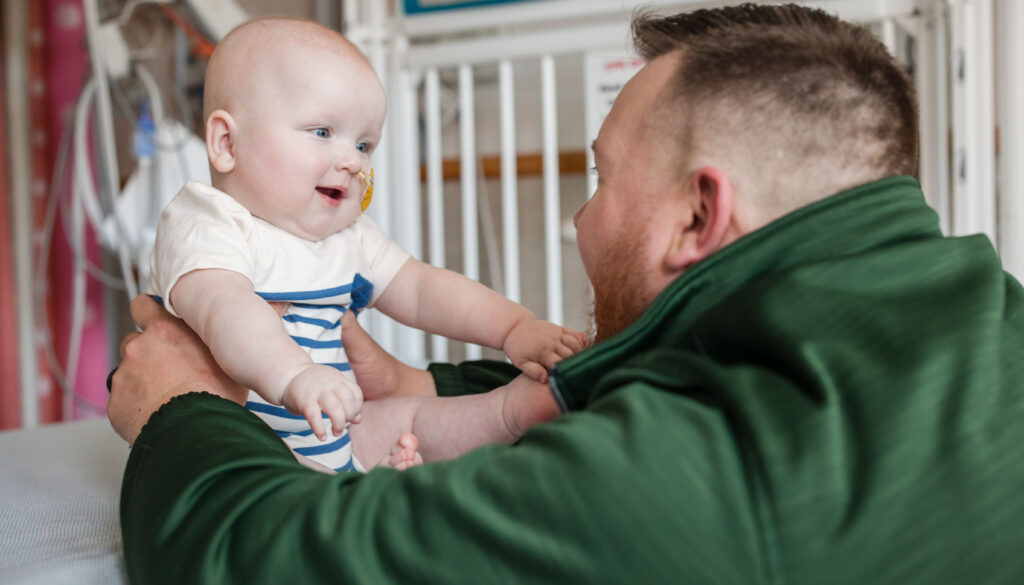
That future arrived in early 2025, when a 9-month-old named KJ became the first person to receive a personalized CRISPR treatment for a fatal liver disorder. Within weeks of the treatment, he was home and thriving. It was a milestone that proved the technology could be customized to save even the rarest of patients.
For Victoria Gray, CRISPR did so much more than change her health. It gave her a new purpose: helping other patients imagine a different future.
A sickle cell warrior
Victoria hasn't had a sickle cell crisis since her one-time CRISPR treatment seven years ago. She's now a full-time patient advocate and public speaker, traveling around the world and sharing her story at biotech companies, patient organizations and medical conferences.

Courtesy of Victoria Gray
"I think it's important to share my story, the good parts and the bad parts, the joys and the pain, to bring a human side to the experience, because we're more than just patients," she says. "We're real people with real lives. We're mothers, fathers, sisters, brothers, friends.
When she speaks to insurance company reps, they tell her that after hearing her story, they feel more confident covering the $2 million product knowing it's a one-time treatment that changes lives and benefits society's workforce.
Victoria's son Jamarius is in college now and her twins are in high school. Victoria's mom used to call her daughter all the time worried, but now her mom is the one asking for favors.
When a new patient comes to Dr. Frangoul with questions about what the treatment process is like, he sends them to Victoria. She talks with them one-on-one about what to expect and gets updates about how their lives have improved receiving the therapy.
"That brings me so much joy, to see that other people are not just believing, they're really getting the opportunity to live," she says.