Institute of Science Tokyo (Science Tokyo) launched the Visionary Initiatives(VIs) - a cross-disciplinary, integrated research framework -in the 2025 academic year to co-create new value with society while advancing science and human wellbeing. As of 2026, eight VIs are tackling the challenge of shaping the future, with each developing distinct shared visions for societal transformation based on three pillars: "Better Life," "Better Society," and "Better Planet."
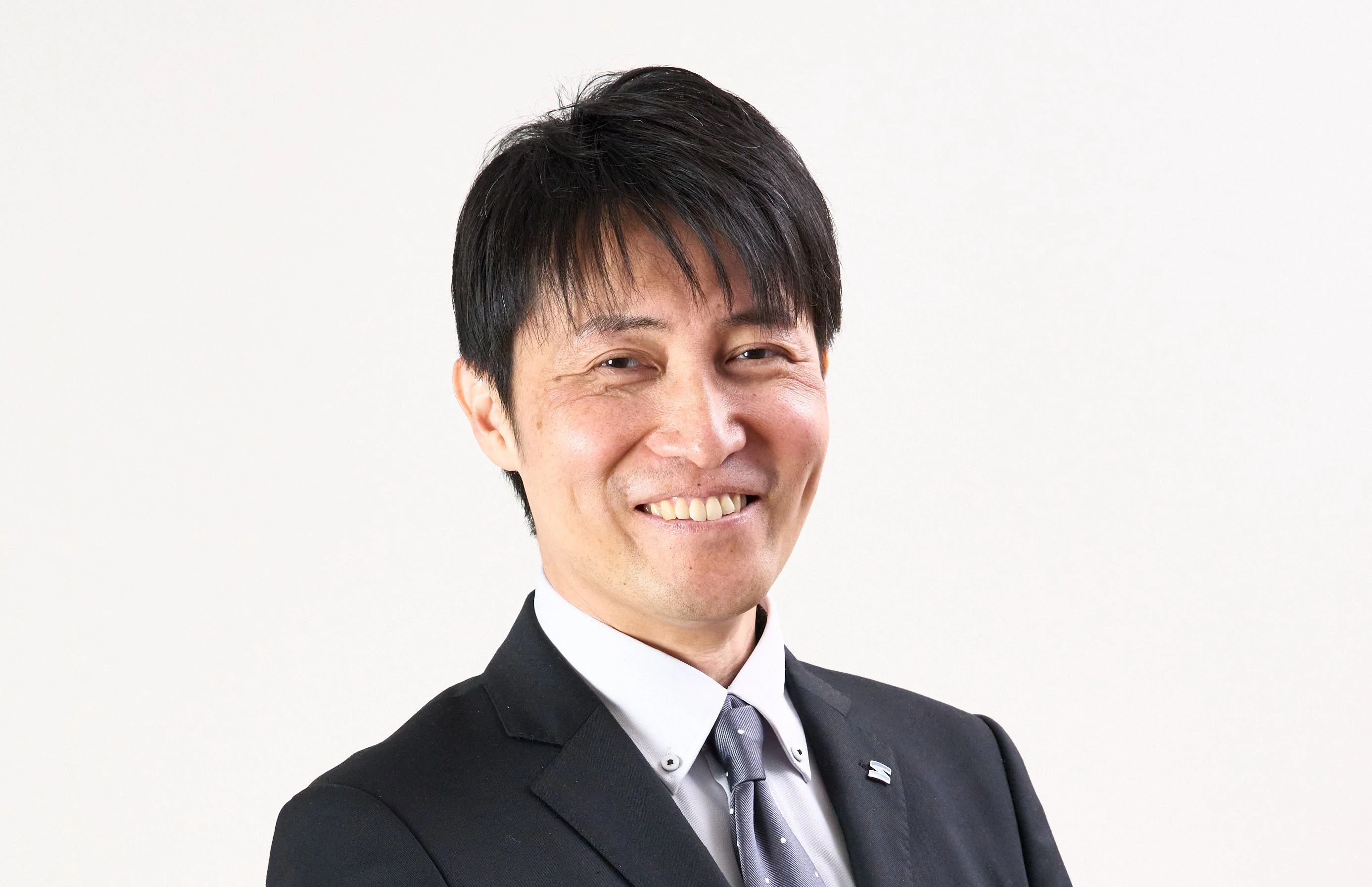
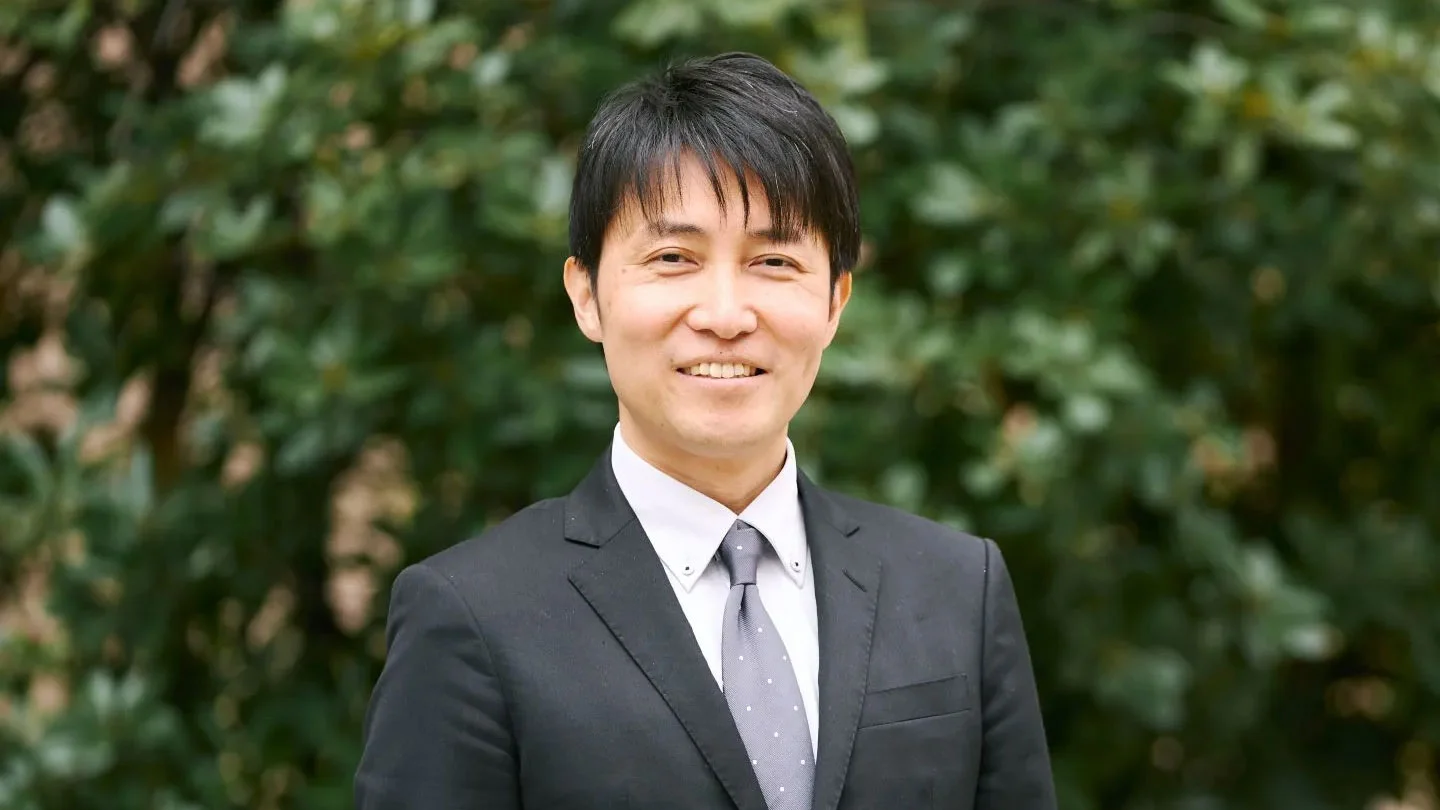
One of these initiatives is Materials-Positive Society - Evolving "Things," empowering a positive society, a new research organization established in April 2026. Professor Masanao Inokoshi, Program Director (PD) and faculty member in the Graduate School of Medical and Dental Sciences, discusses how his experiences in clinical dentistry shaped his research perspective-and how materials science could redefine the relationship between people, technology, and the environment.
A question born in clinical dentistry: how can materials and living systems truly coexist?
Could you tell us about your research background and how you became involved in this VI?
Inokoshi My research began with a very practical question that emerged from clinical dentistry: How do materials affect the human body, and how does the body respond to those materials?
Even when the same material is used, patients can respond very differently. These differences cannot be explained simply in terms of performance or durability. They arise from complex interactions between biological systems and materials. That realization became the starting point for my research into the relationship between materials, devices, and living organisms.
Today, in the field of Oral Device and Materials Science, my work spans the development and evaluation of dental and biomaterials as well as medical devices, while also considering their eventual implementation in society. The importance of "harmony" between materials and biological systems-something I first recognized in clinical settings-remains at the core of my research philosophy and continues to shape the direction of this VI.
From "reducing harm" to "creating positive value"
What does the term "Materials-Positive" mean?
Inokoshi "Materials-Positive" is a concept inspired by the idea of Nature Positive-the global movement aimed at halting biodiversity loss by 2030 and restoring nature by 2050. But we want to go one step further and think beyond 2050.
Traditional manufacturing has often relied on large-scale production and consumption with significant environmental burdens. More recently, the focus has shifted toward minimizing negative impacts or bringing them as close to zero as possible. What we envision, however, is something different: materials that continue generating positive value the more they are used-materials that enrich people's lives, society, and the environment while functioning within regenerative cycles. In that sense, we believe this approach could fundamentally reshape the very philosophy of manufacturing.
For example, in dentistry, devices such as dentures and other restorative tools have improved dramatically in terms of comfort and functionality thanks to advances in technology. Yet materials still deteriorate over time, and challenges remain in adapting them to each patient's biological environment and individual characteristics. This is partly because materials have traditionally been designed as "finished products"-static objects expected not to change after fabrication.
But what if materials could biologically learn from their interactions with the body and adapt to differences in environment and physiology? In that case, the very process of using a material could continuously update and improve its function, eventually creating a uniquely optimized material for each individual. That is the kind of possibility we are beginning to envision.
What we ultimately seek are materials that increase in value through use. This is not simply a new direction in materials development-it is an attempt to rethink the relationship between people and things themselves. In other words, materials may evolve from being passive objects we merely "use" into entities that change and grow together with us. We call such materials "evolving materials".
Three key visions for realizing the future
What kinds of research and development will the initiative pursue to achieve this vision?
Inokoshi Materials-Positive Society is built around three major visions. The first is "materials that make life and society better through continued use". Rather than simply supporting conventional circular economies, we aim to explore materials capable of continuously renewing their value while in use. Materials informatics-which combines data science with experimental science-will play a critical role in discovering such materials.
The second is "Eco-positive manufacturing". We are exploring distributed and on-demand manufacturing systems, as well as ultra-precise fabrication processes and upcycling technologies. Our goal is not only to reduce environmental impact, but also to generate new forms of social and cultural value through manufacturing.
The third is "design of materials for orchestration with living systems". This area is closely connected to my own expertise. Rather than merely improving performance, we seek to understand and control interactions between materials and biological substances-such as proteins and ions-at the atomic level. By integrating next-generation intelligent technologies, we hope to accelerate the clinical application and social implementation of devices that can truly harmonize with the human body.
Materials-Positive Society: Evolving "Things," Empowering a Positive Society
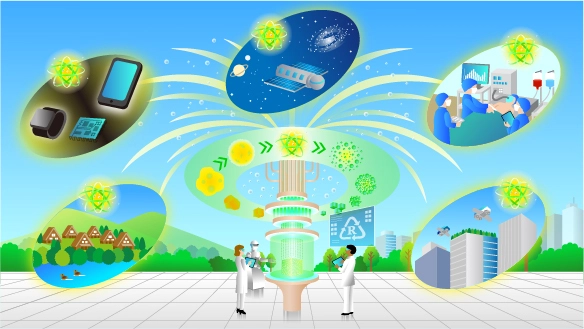
Materials-Positive Society aims to realize a future way of life shaped by a rich harmony between people and the environment through the evolution of "Things"
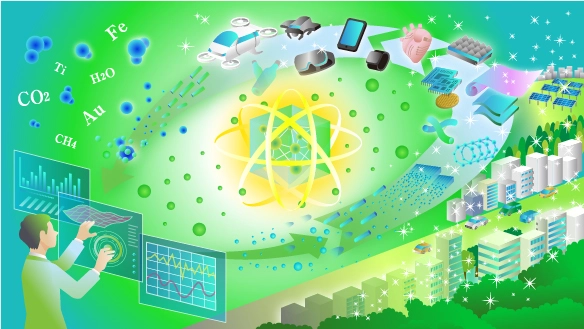
・Creating materials for a positive impact on people and the Earth
・Harnessing new chemical reactions and principles to create self-evolving materials beyond recycling and regeneration
・Revolutionizing material functions and properties through the integration of informatics, computation, and experiment
・Developing materials and devices as the foundation for next-generation social systems
・Developing next-generation on-demand manufacturing: the right amount, at the right place, at the right time
・Realizing ultra-precision manufacturing processes for a better environment with minimal resource use
・Connecting design, manufacturing, and circulation through upcycling-driven "Monozukuri"
・Designing a new society through the evolution of "Monozukuri" driven by diverse perspectives
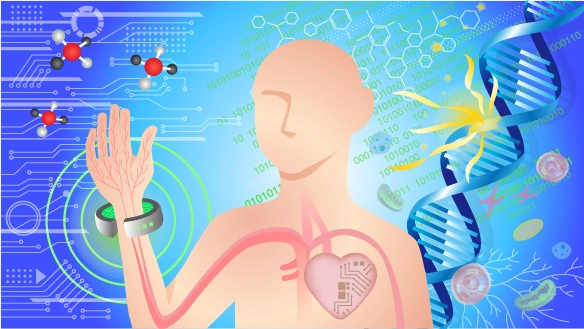
・Advancing medicine and life sciences through understanding and controlling interactions between materials and living systems
・Designing materials and devices from the atomic to the microscale for harmony with living systems
・Advancing the innovation and implementation of self-evolving medical materials, enabled by next-generation intelligent technologies, beyond recycling and regeneration
・Enhancing biological functions through materials and devices that evolve and adapt to the physiological environment
Carrying forward a legacy of medical-engineering collaboration
As Program Director, what kind of organization do you hope this VI will become?
Inokoshi One of our greatest strengths is the long history of collaboration in materials research cultivated by the former Tokyo Medical and Dental University and Tokyo Institute of Technology. Today, researchers in medical and dental sciences are already visiting engineering laboratories, while engineering researchers are engaging directly with hospitals and clinical training environments. These close, on-the-ground exchanges are beginning to create new forms of collaboration.
One important goal as PD is to accelerate these interactions and nurture researchers who can view the entire lifecycle of materials and identify opportunities for creating positive value. Deep expertise in one's own field remains essential, but equally important is the ability to cross disciplinary boundaries, identify new challenges, and design solutions from multiple perspectives.
This VI is also a place where young researchers and early-career faculty members can help shape the frontier of a new field. By taking on the ambitious challenge of "evolving materials"-a goal that goes beyond conventional optimization-we hope they will become leaders who integrate research, education, and social implementation into a unified vision.
Building a future where science creates positive value for society
Finally, what message would you like to share with researchers, companies, and society?
Inokoshi Realizing a "Materials-Positive" society will require more than expertise in materials, devices, or engineering. We will also need insights from the humanities and social sciences, because new forms of value cannot emerge through technology alone-they must also be accepted culturally and socially. Now that Science Tokyo has begun a new chapter as an internationally distinguished research university, we are entering an environment that enables research on an entirely different scale. Personally, I find it deeply exciting to be able to pursue research that can genuinely benefit people and society.
Starting from the strengths of each discipline, we hope to create positive value for daily life, society, the global environment, and human health through materials and manufacturing. We warmly invite many people to join us in this challenge-and we look forward to building a future in which people and materials evolve in harmony together.
Interview date: March 17, 2026
Profile
Masanao Inokoshi
Professor
Department of Oral Devices and Materials
Graduate School of Medical and Dental Sciences
Science Tokyo