The Tromm Massif in the Odenwald Range meets the geological requirements for an underground geothermal research laboratory. This is the conclusion of an in-depth survey of the subsurface conducted by researchers from the Karlsruhe Institute of Technology (KIT), the GFZ Helmholtz Centre for Geosciences, and the Helmholtz Centre for Environmental Research (UFZ) as part of the GeoLaB project. Now the actual planning and the permitting phase for the underground laboratory can begin. Its aim is to investigate how deep geothermal resources can be harnessed as a reliable source of energy.
As a domestic and low-carbon energy source, geothermal heat could make a significant contribution to ensuring a renewable and secure energy supply for Germany in the future. Crystalline rock found deep underground has by far the greatest energy potential. With an underground rock laboratory, researchers from the Helmholtz Association aim to investigate how geothermal energy can be harnessed safely and efficiently. A key requirement for the construction of this laboratory, which is part of the GeoLaB (Geothermal Laboratory in the Crystalline Basement) research project, has now been met as the project partners KIT, GFZ, and UFZ have confirmed the suitability of the subsurface in the Tromm Massif. "The Odenwald offers ideal geological conditions for our project," said project manager Dr. Bastian Rudolph from KIT's Institute of Applied Geosciences (AGW). "This is an important milestone for GeoLaB."
Favorable Subsurface Conditions
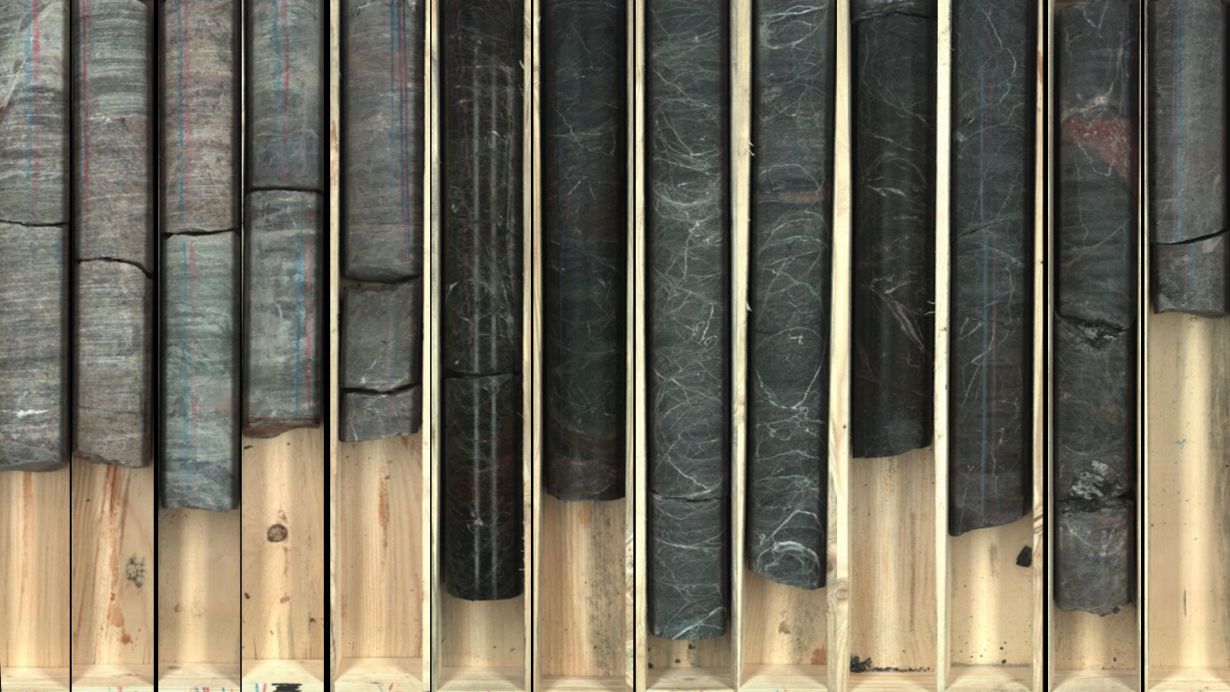
The assessment was based on extensive research during the exploratory phase, which has now been completed. It involved two exploratory boreholes, core sampling, and accompanying measurement programs; two seismic campaigns led by the GFZ using a vibrator truck; and a digital twin developed by the UFZ to map the subsurface in three dimensions and provide data for analysis and planning.
The results show that the subsurface in the Odenwald offers favorable conditions for geothermal research. "In broad terms, there are three different zones. The granite in the upper section has a fairly uniform structure, but also has sufficient fissures and variations. Next is a transition zone, and under that is a zone with metamorphic rock such as gneiss," said Professor Thomas Kohl from the AGW, who coordinates the GeoLaB project. "Here we find clearly defined geological conditions, but also a degree of complexity typical of crystalline reservoirs in Europe." A rock laboratory at the site thus allows the investigation of reservoir technology issues under controlled conditions in a relevant environment. The insights gained can be applied to other sites with geothermal potential across Europe.

methods and two boreholes. They consolidated the data in a digital twin.
(Photos and illustration: GeoLaB)
Planning for Underground Laboratory Starts Now
The completion of the exploratory phase marks the beginning of the underground laboratory's planning phase, which will be followed by an extensive permitting process. After identifying a suitable location for the access tunnel, the project partners will plan the surface and subsurface infrastructure, taking local conditions into account. In this context, they will carry out additional exploratory drilling and geophysical surveys. The research team will plan all construction activity to minimize the human and environmental impact and will continue the ongoing large-scale monitoring for the protection of drinking water and groundwater.
About GeoLaB
GeoLaB is a key research project focusing on the future use of geothermal heat to ensure a secure energy supply in Europe. Much of the heat is found in deep, hot, crystalline rock representing an energy resource with a strategic value that has been largely untapped so far. As part of GeoLaB, an underground research laboratory will be constructed to explore in situ how this heat source can be sustainably harnessed. Another goal of GeoLaB is to offer early-career researchers a wide range of opportunities to sharpen their skills. There are no plans for the local exploitation of geothermal energy. GeoLaB is a strategic expansion investment by the Helmholtz Association.