
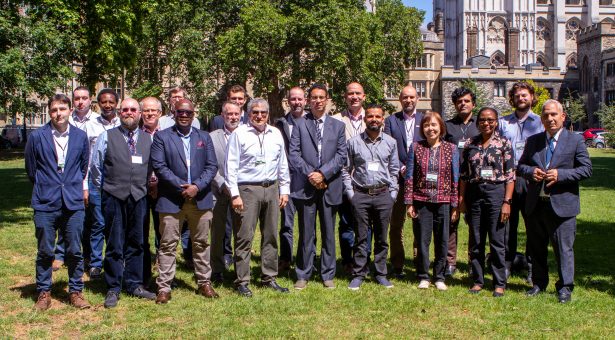
Policymakers and scientists from Egypt, Kenya, Morocco, Pakistan and the UK gathered in London for a mutual policy learning exercise on the regulation of biotechnology with potential to improve hunger and food security.
The UK-CGIAR Centre hosted a policy learning exercise bringing together senior policy officials and leading researchers from eight countries to share evidence, experience and best practice on how to regulate precision-bred crops. The meeting on 9 June 2026 in London, fed into international discussions on how to align on management of gene editing (GE) technologies to deliver societal and environmental benefits.
Regulation of GE crops is changing globally, with many countries introducing policies on the use and exchange of GE crop products referred to in England's agricultural policy as 'precision-bred crops'. These products only contain changes that could have happened by conventional breeding approaches. GE is a more precise crop improvement technology with the potential to offer huge gains in agricultural productivity, climate resilience, and nutritional quality, while reducing farmer input use.
Professor Cristóbal Uauy director of the John Innes Centre said: "Gene editing is a vital tool in helping to solve some of the challenges facing agriculture worldwide. The CGIAR is critical in facilitating the adoption of this technology in a way that is relevant at regional level where breeders and farmers can best apply it with the benefit of local knowledge."
Precision breeding is being applied in a UK-CGIAR Centre project that aims to deliver disease resistant, high iron wheat varieties. These products provide farmers with more reliable harvests, reduced need for fungicides and provide consumers with increased consumption of dietary iron without the need for changing diets. Such innovations promise great potential benefits for the project's focus countries of Egypt, Kenya and Pakistan, where farmers struggle with wheat disease pressures and high rates of anaemia in the population.
However, the impacts of crop innovations, such as these improved wheat lines, are likely to be limited unless they are combined with enabling regulatory frameworks to support widespread adoption. Such policies control which technologies are permitted for use and the resources required to bring a new products to market. This not only influences which crops and markets are commercially viable but also affects the international exchange of products.
Christopher Darby of the Norwich Institute for Sustainable Development said: "Bioscience has driven the development of precision breeding technologies but transdisciplinary collaboration involving social scientists and a wide variety of stakeholders will be needed to deploy these technologies in ways which are responsive to the needs of consumers, farmers and economies. To that end, this meeting enabled in-depth discussions between policy makers, regulators and researchers. I would like to thank all participants for their engagement and openness to dialogue. I greatly look forward to the next steps we have agreed"
The mutual policy learning event brought together experts from countries and regions at different stages of designing and implementing regulation for precision-bred crops. This event in London is the second in a two-part approach. The first event in Morocco brought together researchers, while in London the focus was on policymakers and regulators.
Bringing the represented countries together offered opportunities for regulators to compare approaches and consider how their regulations might align with those from other jurisdictions. The meeting provided a chance for these experts to form links to feed into ongoing discourse on the international regulation and trade of GE products.
A dialogue report will be released from this event sharing understanding of successful policy approaches in this area, evidence of effective practice in different national contexts, and connections to a new community of policy practice. This dialogue report will be used to feed into future plans to maximise societal benefits from GE crop innovations.
Dr Dick Shaw, UK-CGIAR Centre Project Director, CABI, said: "The UK-CGIAR Centre is very excited by the progress the project has made and pleased to be able to support efforts to bridge the gaps between science and policy."
The event was organised by the John Innes Centre in partnership with the Norwich Institute for Sustainable Development. Observers from the African Union and the CGIAR Gene Editing Initiative also attended. The event was funded by UK International Development from the UK government; however, the views expressed do not necessarily reflect the UK government's official policies.
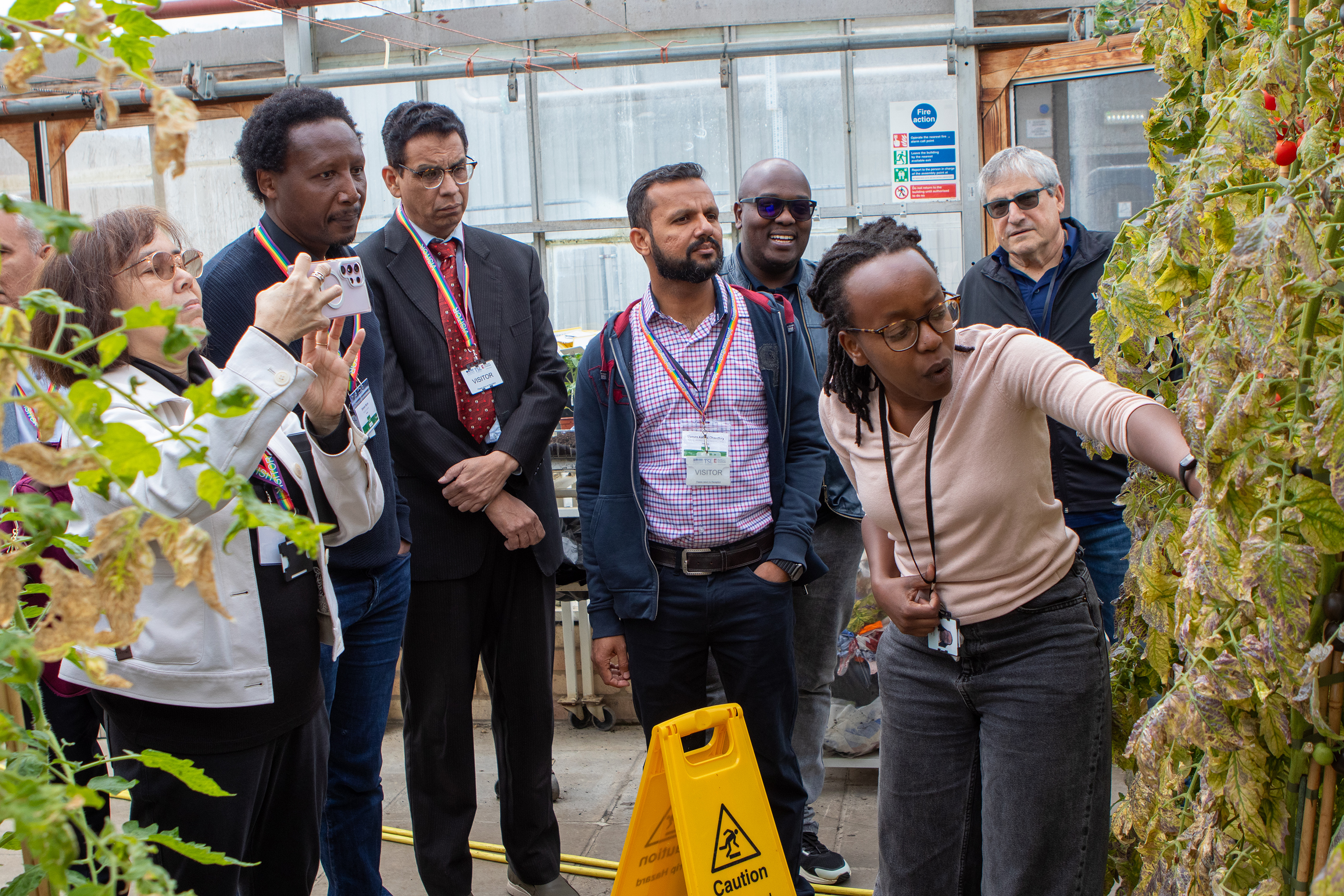
As part of this trip, policy delegates also visited the John Innes Centre, based at Norwich Research Park, to learn about the use of precision breeding approaches in creating more nutritious crops.
About the CGIAR: The CGIAR – Consortium of International Agricultural Research Centers (CGIAR) is a global research partnership for a food-secure future dedicated to transforming food, land, and water systems in a climate crisis.
About the UK-CGIAR Centre: The UK-CGIAR Centre aims to support global food security by bringing together scientists from the UK and the CGIAR to form impact-focused research collaborations. The UK-CGIAR Centre is managed by CABI and funded by the UK Foreign, Commonwealth and Development Office.
About precision breeding: Precision breeding uses gene editing technologies to make targeted, precise changes to a crop's own genome, without introducing genetic material from other species. It differs from conventional transgenic genetic modification and, in many cases, from traditional breeding in the speed and specificity of improvement it can deliver.
Participating countries: Egypt, Kenya, Pakistan and the United Kingdom. Observers from the African Union and CGIAR Gene Editing Initiative will also be present.
Main Image Caption – Policymakers and scientists from Egypt, Kenya, Morocco, Pakistan and the UK gathered in Westminster, London, for the policy learning exercise
Image Credit – Matt Heaton


