
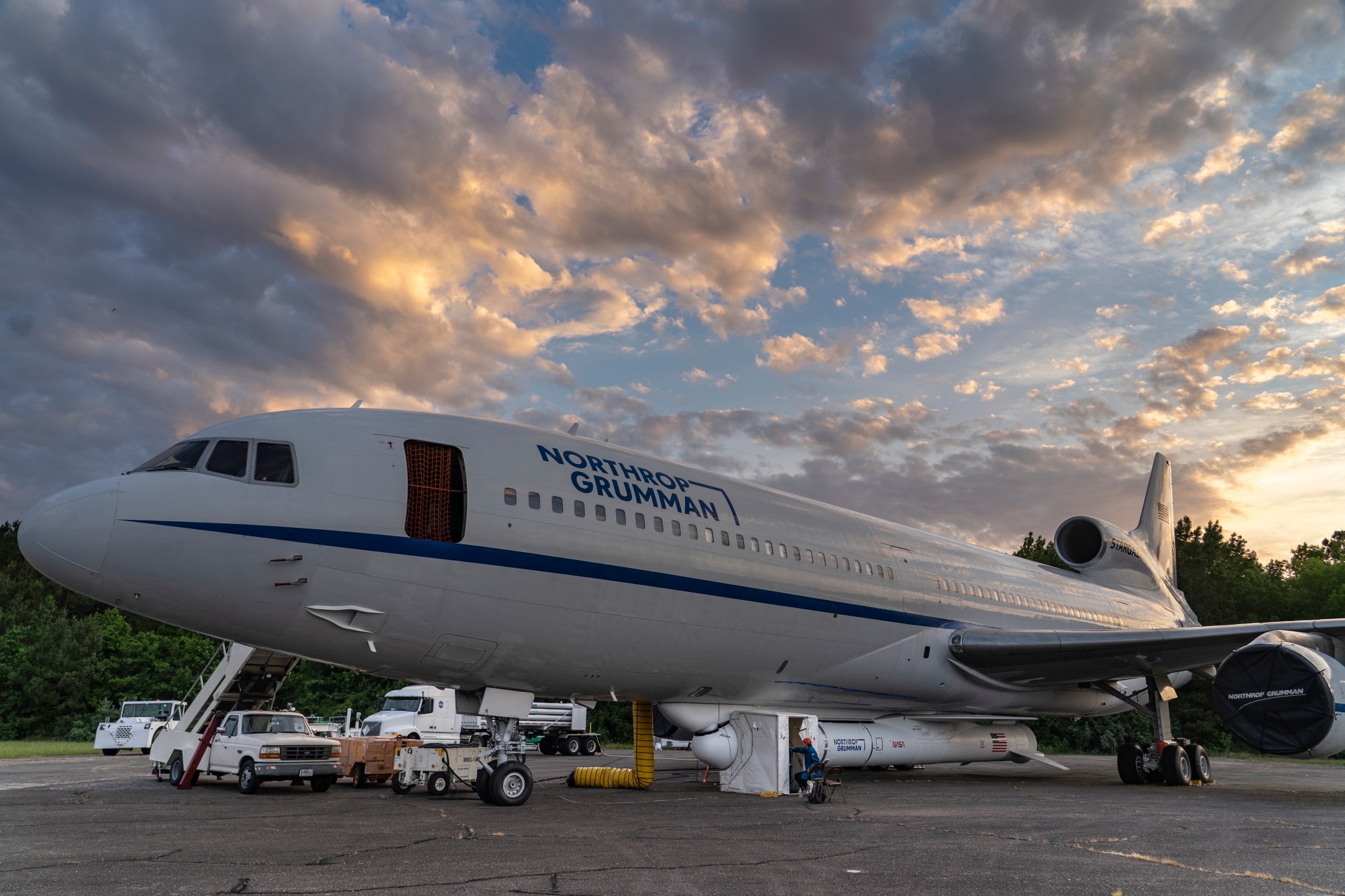
A first-of-its-kind mission to raise the orbit of NASA's Neil Gehrels Swift Observatory is poised for launch no earlier than Thursday, July 2, 5:09 a.m. EDT (9:09 p.m. UTC+12), from Kwajalein Atoll, part of the Republic of the Marshall Islands in the South Pacific Ocean. A robotic servicing spacecraft called LINK, built by Katalyst Space, will blast into orbit on a Northrop Grumman Pegasus XL rocket attached to the belly of the company's Stargazer aircraft, shown here in this photograph from the evening of Tuesday, June 16, 2026.
After launch, LINK will attempt to rendezvous with, grapple, and slowly raise Swift's altitude over several months, preventing it from re-entering Earth's atmosphere later this year. If this daring mission is successful, it will be the first time a commercial robotic mission has captured a NASA spacecraft that is both uncrewed and not originally designed to be serviced in space.


