
A new tool to help scientists and reef managers consider the ecological risks of different coral reef interventions around the world has been developed by researchers from the Australian Institute of Marine Science (AIMS).
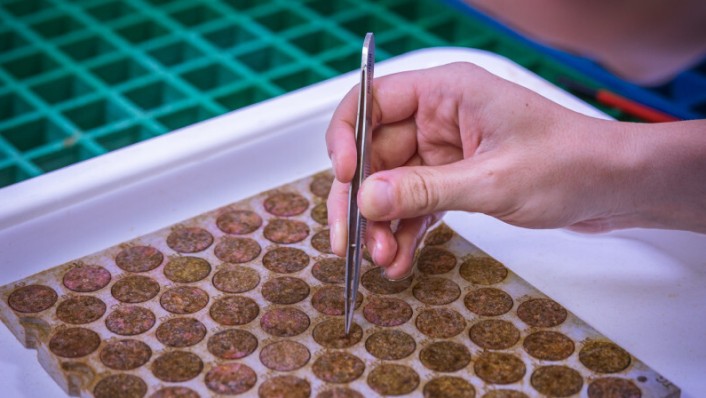
The resulting database enables users to identify and explore the risks of a range of interventions from small-scale coral gardening to more advanced approaches like assisted evolution, where corals and their life-giving symbiont algae are made more heat tolerant by accelerating evolutionary processes.
In a new paper , scientists categorised and defined the ecological risks associated with active coral reef interventions, finding that what might be acceptable in one region could pose higher risks in another.
"Our findings reinforce the need for a context-specific approach to intervention risk management," senior author Dr Rachel Pears, from AIMS, said.
"The database provides a tool for identifying and managing ecological risks and can assist managers in evaluating interventions within their specific environmental and regulatory frameworks.
"Understanding the potential for ecological risks will ultimately support the responsible fast-tracked development of coral reef interventions."
The ecological risks associated with implementing or researching interventions are highly context-specific and vary across regions.
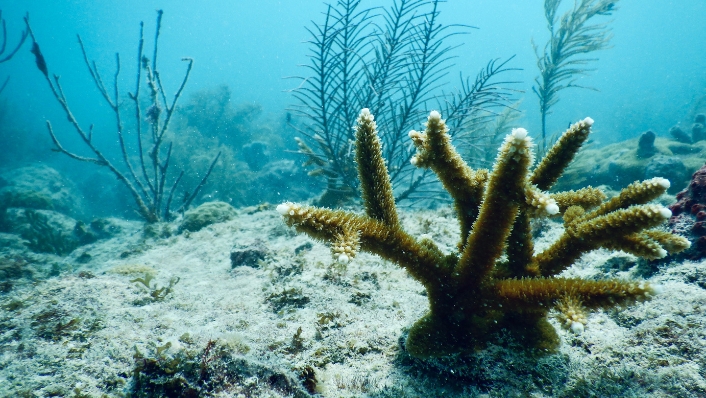
In the Caribbean, for example, coral gardening can be seen as relatively high risk due to existing genetic bottlenecks and limited diversity within reef populations. At the same time, assisted evolution approaches may be viewed as less risky, given the urgent threat of complete coral loss in some areas.
In Australia, however, the situation is different. Reefs generally have higher genetic diversity, making coral gardening less contentious. Instead, greater scrutiny is placed on assisted evolution, where many uncertainties remain about how these approaches will perform outside controlled settings. As a result, careful and comprehensive risk assessment is needed before such interventions are deployed at scale.
Dr Nicholas Hammerman, lead author on the paper who worked on the database while employed by AIMS, said it was important for those working on interventions to take a leading role in improving our understanding of any associated risks.
"AIMS and collaborators are at the forefront of coral adaptation science and reef conservation, so it follows that we are also supporting responsible innovation," he said.
"Risk assessments have been done on interventions before, but our approach facilitates more comprehensive assessments and helps guide users to the relevant scientific literature."
A paper on this research has been published in the journal Restoration Science and involved co-authors from AIMS, the Centre for Environment, Fisheries and Aquaculture Science in the UK, The University of Melbourne, Aestra Consultants and the Kenya Marine and Fisheries Research Institute.
The research was supported by funding from CORDAP (the global Coral Research and Development Accelerator Platform) and AIMS.


