Alberto García Piquer, researcher at the Department of Prehistory, is autor and co-editor of the book The Archaeology of Seafaring in Small-Scale Societies. The book explores through numerous examples the development of maritime technology and how the availability of canoes and small boats became a key element of livelihood and social transformation in many parts of the world. Published by the University Press of Florida, it is available in an open access edition with the support of Lund University, Sweden.
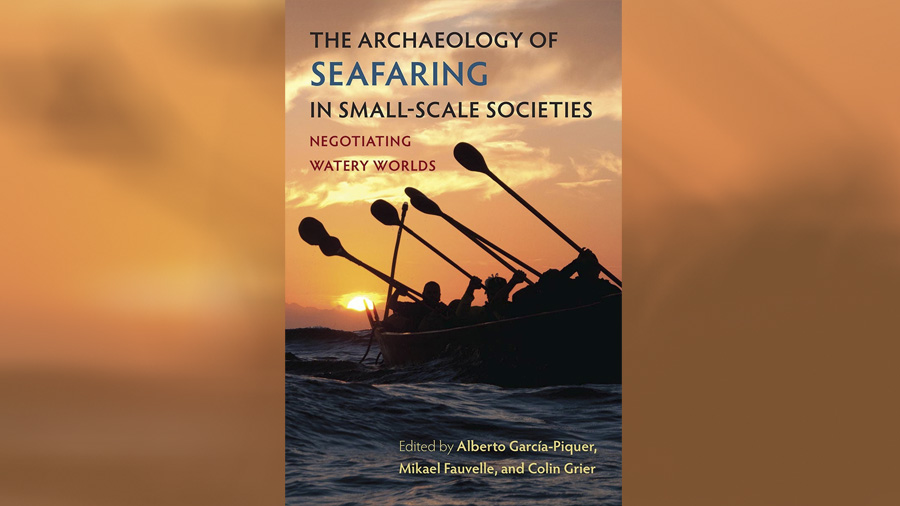
The development of maritime technology throughout history expanded geographical and social horizons, promoted human mobility and interaction, structured social contexts, shaped the worldview of communities, and even, in some cases, became a key agent for political centralisation. The book now published examines how water vessels have served as revolutionary innovations throughout human history and focuses on small-scale maritime societies, that is, societies that lived in small communities and relied primarily on fishing, hunting marine and land mammals, gathering, and, in some cases, horticulture.
Alberto García-Piquer, postdoctoral researcher at the UAB, has co-edited the book together with Mikael Fauvelle, professor in archaeology and ancient history at Lund University; and Colin Grier, professor of anthropology at Washington State University. The book includes the collaboration of fifteen experts in the discipline from all over the world.
Drawing on archaeological, historical, and ethnographic evidence, archaeologists address topics such as the nautical capabilities of vessels and the humans who powered them, the role of vessels in resource production and consumption, the impact of the length or difficulty of voyages on social closeness or distance in communities, and the phenomenological experience of navigation. And they do so through case studies such as settlement patterns in the southern tip of South America, whaling by megalithic societies in Brittany, maritime mobility in Baja California, canoes as active agents that transformed the bodies of fishermen in Peru, the duration of voyages of Salish communities on the coast of North America, and Inuit connections with kayaks, umiaks, and the sea in the eastern Arctic.
The co-authors conclude that the archaeology of navigation in small-scale societies illuminates the complex interactions that underpinned the marine worlds of the past and highlights the need to study the topic with a holistic and comparative approach at a global level.