How does origami-like DNA affect brain development? How do cancer-immune cell interactions prevent immune cell activity in tumors?
Two breakthrough discoveries by UC San Francisco scientists answer these questions and could open new paths to preventing and treating conditions such as autism and Alzheimer's, as well as developing new targeted cancer therapies.
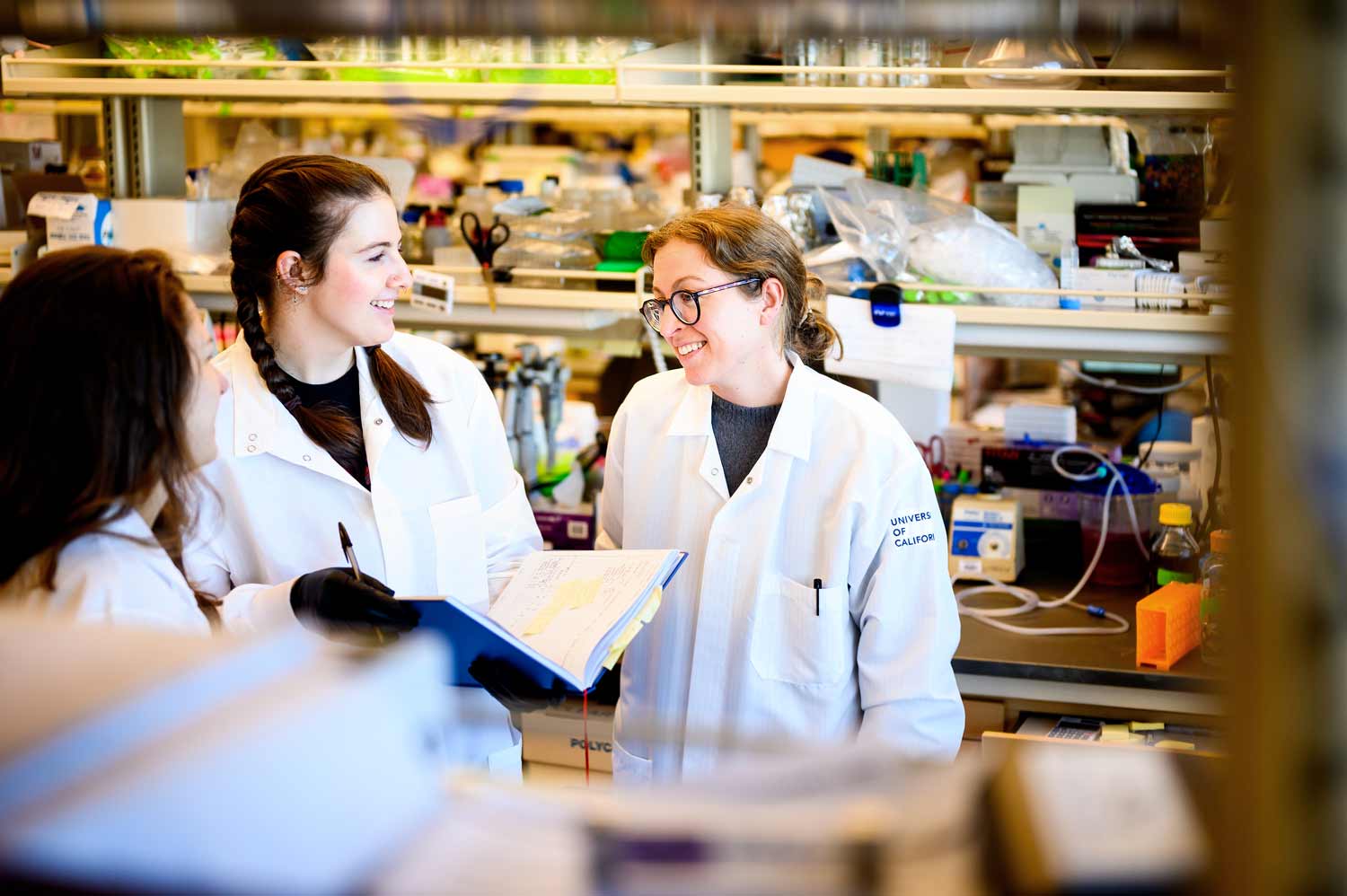
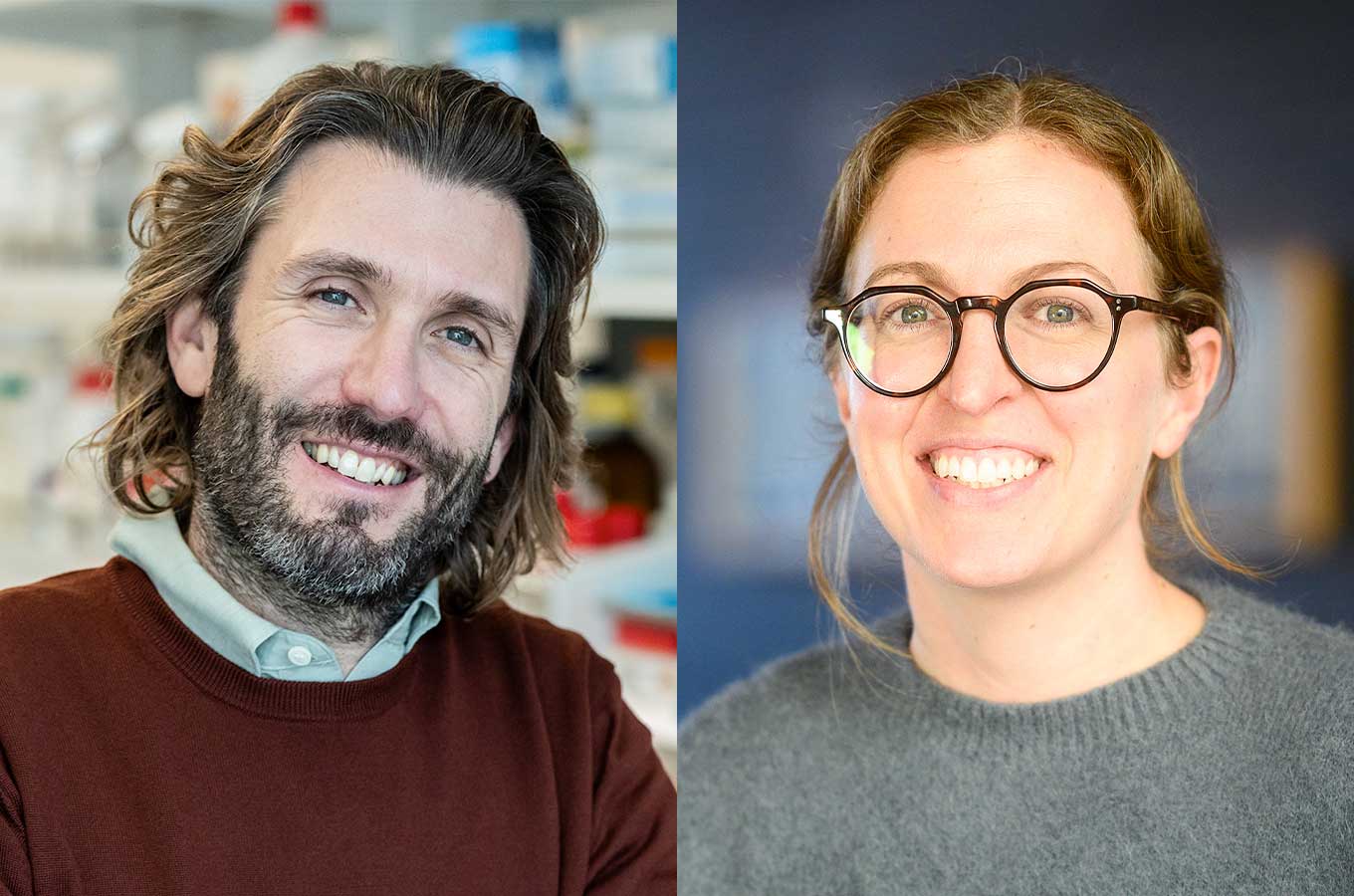
Meet Daniele Canzio , PhD, an associate professor of neurology in the UCSF Weill Institute for Neurosciences, who studies the role of cell surface diversity that helps neurons communicate. Balyn Zaro , PhD, is an associate professor of pharmaceutical chemistry in the School of Pharmacy, studies immunology and cancer biology. They've been named winners of the 2026 Bowes Biomedical Investigator Award.
The award is made possible by the William K. Bowes Jr. Foundation and supports scientists who take novel approaches and have the potential to make significant contributions to biomedicine. Recipients receive $1.25 million over five years.
Unique as snowflakes
During mammalian brain development, neurons extend branches to defined areas, or territories, allowing them to receive and transmit signals efficiently and without wasted duplication.
To ensure that each neuron's branches cover the right area and avoid overlaps, it has a kind of built-in barcode so it can distinguish itself from other neurons and their branches. But the brain has billions of neurons and every neuron has the exact same genetic instructions, or genome. "So how can billions of barcodes be generated when every cell has the same genetic information?" Canzio wanted to know.
Understanding this and other foundational principles is critical to understanding what goes wrong in neurological disorders such as autism, schizophrenia, and Alzheimer's. Using animal models and a combination of genetics and biochemical and biophysical approaches, Canzio and his team discovered that the DNA housing the barcodes doesn't have a fixed shape.
"It can fold like origami in different ways in different cells, so that these folding patterns act like a key, allowing it to control the DNA-level interactions," Canzio says of the breakthrough discovery.
Each DNA fold is as unique as a snowflake, and this mechanism generates billions of diverse barcoding identities. Folding is constantly occurring and breaking and forming again during the life of a cell.
Is folding DNA the secret to neurodisease prevention and treatment?
What distinguishes a neuron from other cells is that neurons live as long as we live. "This means that these barcodes have to be maintained for decades. If the folding constantly occurs and breaks and forms again, the next burning question is how are these barcode identities recorded for years?" Canzio asks.
If we understand what goes wrong in neurological disorders, we may one day be able to rewire connections that have gone wrong during development and mutated during a lifetime. "Maybe by harnessing the ability of this DNA folding, we can rewrite the identities of neurons to generate new circuits that can restore the ones that are lost," Canzio says.
An Italian-born chemical biologist by training, Canzio switched to neuroscience in his postdoc work at Columbia University. The combination is what empowers him to think differently and to infuse his research with his polymathic training, he says. "I have created a multidisciplinary team," Canzio says. "It's positioned us to be unique on this front, to look at neuroscience questions with the lenses of chemistry, biochemistry, biophysics, and genetics - and I value this a lot."
How immune cells learn
If the human body were a disco, macrophages - a type of white blood cell - would be the bouncers and cleanup crew; deciding who gets in, taking out the trash (pathogens or damaged cells), and calling for back-up (other immune cells) when something's wrong.
Imagine a salmonella bacteria enters the body through tainted food. A type of immune cell, called a macrophage, responds and "eats" the salmonella, digests it, and sticks a piece of the digested bacteria's protein on its own surface as a kind of sign. Other immune cells then see the sign and train themselves to respond the next time the same bacteria enters the system - a perfect example of learned immunity.
This process, called phagocytosis , is regulated with "eat me" and "don't eat me" signals. Ideally, healthy cells have "don't eat me" signals and disease cells and pathogens have "eat me" signals. Unfortunately, in cancer this process becomes dysregulated.
Tumor-associated macrophages (TAMs) lose their ability to "eat," or clear out, cancer cells, and also suppress other responding immune macrophage cells, keeping them from doing their job. No one understands why, but it is clear that too many TAMs are detrimental to patient outcomes.
When "good" macrophages go "bad"
"How do these cells become so dysregulated in cancer?" Zaro wanted to know. What her team discovered surprised her. During interactions with the cancer cells, macrophages were caught stealing proteins from the cancer cell's surface, placing them on their own surface during the process of "eating." This hurt the macrophage in two ways: First, it reprogrammed the macrophage, pushing them toward behaviors that promote tumor growth, like high nutrient uptake. Second, it blocked the macrophages from doing their cleanup work.
The upshot was that by doing what they're supposed to do, eating cancer cells, the macrophages were actually becoming dysregulated and losing their ability to eat again.
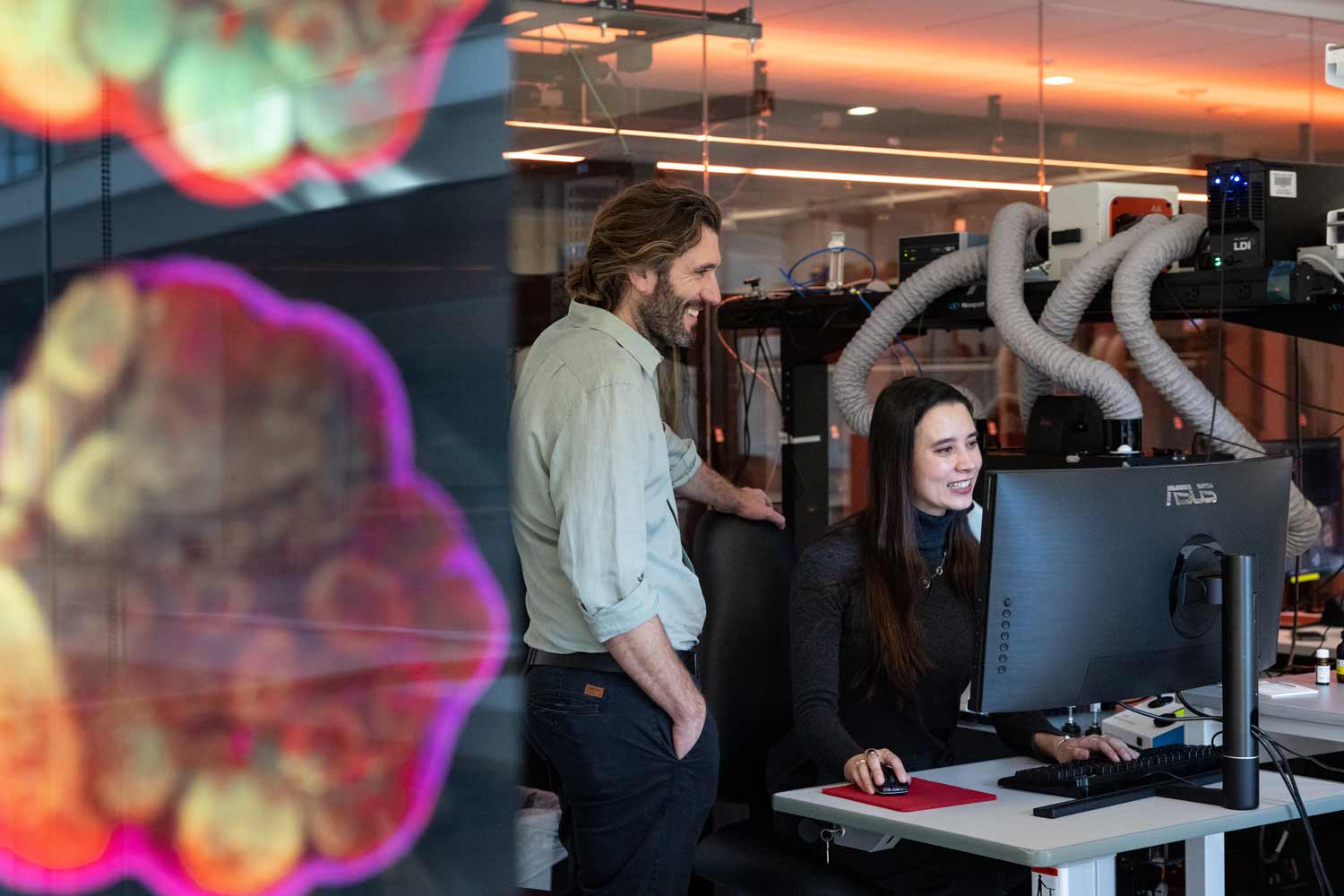
To capture this high-stakes protein theft in progress, Zaro's lab developed a new method of mass spectrometry, a highly sensitive molecular scale, to reveal the cancer proteins on the macrophage's surface for the first time. Talk about a "gotcha moment."
Now, Zaro's team is working with Jim Wells' lab to develop a drug targeting these cells. "Our hope is to selectively deliver drugs to cells that have both of these proteins on their surface," Zaro says. "We are working toward being able to selectively kill macrophages that have so many cancer proteins on their surface that they start to promote cancer growth."
Let the macrophages eat
Using mass spectrometry not only allowed Zaro's team to separate "bad" macrophages from "good," but led to another breakthrough when they discovered that pathogens, like those causing Lyme disease, can hijack "don't eat me" pathways. The prevailing view has been that pathogens relied on their own distinct mechanisms to evade the immune system and did not use human "don't eat me" signals. However, in related research using mass spectrometry, Zaro's lab discovered that pathogens use "don't eat me" signals typically used by healthy cells in our bodies to avoid being eaten.
The next step is to make an antibody that can hide the "don't eat me" signal so macrophages can clear the pathogen. "There are other parts of those bacteria that are recognized by the immune system that macrophages want to eat, but then they see that "don't eat me" signal and it blocks them," Zaro says. "So if we hide that, the macrophages will eat."
With training in both chemical biology and immunology, Zaro is grateful her lab's unique approach has been embraced by UCSF and the award committee, she says. "When you're a scientist, you're so driven by your ideas and not necessarily expecting external validation from others. For people - especially people within the UCSF community that I'm so appreciative to be part of - to affirm that these are fantastic ideas feels really good. The award gives us this huge financial runway to keep going with the projects."
Canzio says it's an honor to be among previous recipients of the award and an honor to be nominated and chosen by his colleagues. "This is your own family that essentially selects you, so it's more special than any award from the outside," he says, adding that his mentors - from high school in Italy through his scientific training in the U.S. - were instrumental in charting his path. "I look up to my mentors Geeta Narlikar, Stavros Lomvardas, and Tom Maniatis with the hope that I can be as good as them, or at least as close as possible as a mentor to my own people."