
A pioneering experiment led by the Universitat Autònoma de Barcelona (UAB) and the Institute of Space Studies of Catalonia (IEEC) will investigate the behaviour of spirulina in microgravity conditions on the International Space Station and will study how it can be integrated into future bioregenerative life-support systems. The project called Limnospira on ISS is closely related to MELiSSA project, which aims to develop a system capable of generating oxygen, producing water and providing food for astronauts in a sustainable way and independent of supplies from Earth.
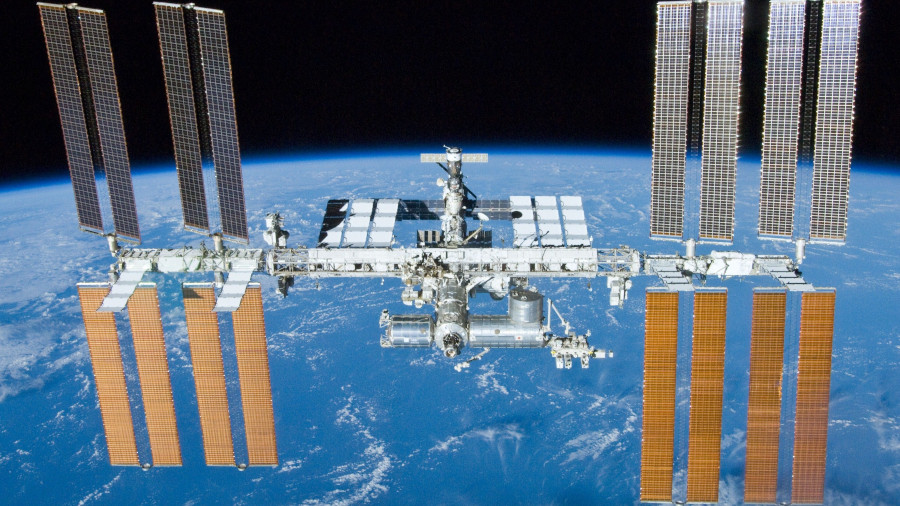
Europe takes another step towards human space exploration with the project called Limnospira on ISS, a pioneering experiment to be carried out on the International Space Station (ISS) and featuring a microscopic yet indispensable organism: the cyanobacterium Limnospira indica, popularly known as spirulina.
The project, led by the Universitat Autònoma de Barcelona (UAB) and the Institute of Space Studies of Catalonia (IEEC), with the collaboration of Sener and the Barcelona Microelectronics Institute (IMB-CNM, CSIC), seeks to understand how this microorganism behaves in microgravity and how it can be integrated into future bioregenerative life-support systems.
For decades, Limnospira indica has been part of life support system studies promoted by the European Space Agency (ESA), specifically the MELiSSA (Micro Ecological Life Support System Alternative) project, which has its pilot plant at the Universitat Autonoma de Barcelona. The Limnospira on ISS experiment is closely related to this project, which aims to develop a system capable of generating oxygen, producing water and providing food for astronauts in a sustainable way and independent of supplies from Earth, proposing the use of the astronauts' own waste as a resource. A circular system like this represents a significant scientific and technological challenge, which must be overcome to tackle future long-duration missions, such as lunar and Martian exploration.
Why is Limnospira indica so important?
The cyanobacterium Limnospira indica has three characteristics that make it a high-value biological resource both on Earth and in space: carbon dioxide capture, oxygen production and food generation.
"This microorganism can transform the carbon dioxide exhaled by the crew into edible biomass and oxygen, which it continuously releases through photosynthesis," explains Francesc Gòdia, an IEEC researcher and full professor of Chemical Engineering at the UAB who leads this project. He adds: "Moreover, its high protein concentration makes it suitable as a nutritional supplement."
It is already widely cultivated on Earth, but we still need to know more about how it responds in microgravity conditions. Orbital conditions alter the way fluids move and how cells perceive light. Understanding whether they grow in the same way, more slowly or more quickly is essential for the planning of space bioreactors. The experiment will also measure the fluorescence of specific pigments to detect possible changes in the photosynthetic efficiency of this microorganism.
On the other hand, it is also unclear whether Limnospira can withstand long periods of darkness before being activated in orbit. Knowing whether the cyanobacterial culture recovers properly is key to future deep-space missions. The project will also validate compact monitoring technology (lighting and sensors) designed for future automated biological experiments.
How will the experiment be carried out?
The project uses innovative space equipment: the 'Limnospira on ISS Boxes', an evolution of the FixBox, a device that has already flown successfully in previous plant biology experiments on the ISS.
Each unit incorporates five miniaturised culture cassettes (transparent, sealed chambers where the cells will grow). They are equipped with ports for culture medium entry and air exit, integrated photonic sensors, individual LED lighting and miniaturised electronic systems for monitoring and data recording. In addition, each cassette also measures optical parameters and automatically captures images of the culture.
The project requires adapting hardware already certified for the ISS, designing fully hermetic and sterile cassettes, developing an integrated and robust electronic system, and passing vibration, operational and ergonomic tests. Sener has coordinated the structural adaptations and safety requirements, while IMB-CNM-CSIC has designed and manufactured the optical sensors and microcomponents for each cassette.
The team from the UAB and the IEEC will carry out several subcultures over 12 days to achieve the appropriate cell concentration. The samples will be loaded into sterile bags and inserted into the equipment: this is how the Limnospira Boxes will be created, which will travel as scientific cargo and be kept in controlled thermal conditions with the cultures in the dark until they reach the ISS.
There, the astronaut will screw the equipment up to the correct operation indicator, mount the interface plate (KIP) on the ISS's Kubik module—which will act as an incubator—and connect the power supply and sensors to activate the system. For about two weeks, the cells will grow in microgravity at 36 °C with constant lighting and monitoring cycles.
Finally, the samples will be transferred to a refrigerator at 4 °C, where they will be kept until their return to Earth in a spacecraft. It will only remain to analyse them in the laboratory to compare them with the terrestrial reference (control) samples.
Towards a future with feeding systems to live beyond Earth
Limnospira on ISS is a large-scale European project. It is part of ESA's PRODEX programme, funded by the Spanish Space Agency (AEE), and has a total budget of €598,000 and a duration of at least 18 months.
The consortium is made up of the following entities: the UAB and the IEEC, which hold the scientific leadership and handle the biology and operations aspects; the IMB-CNM-CSIC, which is responsible for the development of sensors and optofluidic technology, and Sener, which handles engineering, verification and safety issues.


