
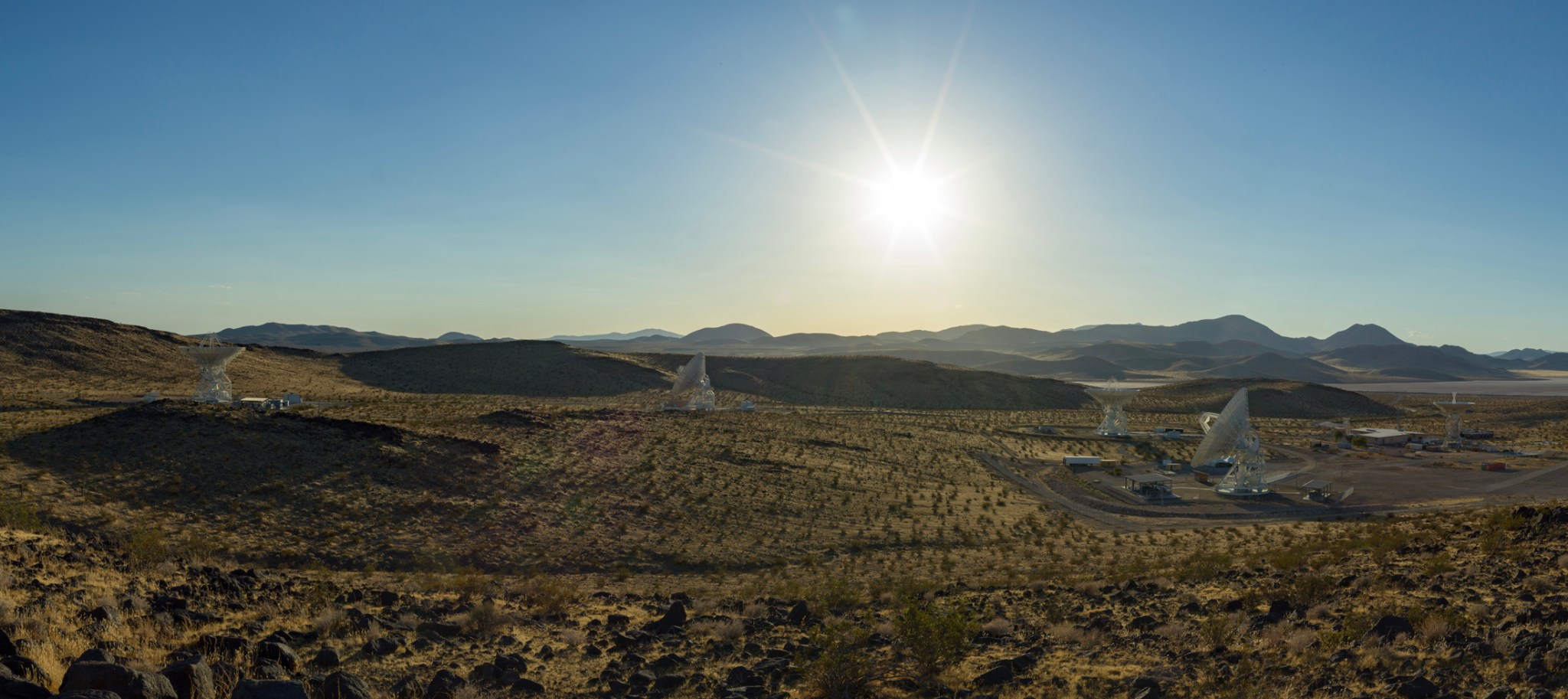
NASA's Deep Space Network facility in California is marking the addition of a brand new 34-meter-wide (114-foot-wide) radio frequency antenna to the agency's deep space communications and navigation system. The network uses giant dish antennas located at three global facilities to support more than 40 spacecraft exploring the solar system and interstellar space.
The new Deep Space Station 23 (DSS-23) is located at the Goldstone Deep Space Communications Complex, near Barstow, and is managed by NASA's Jet Propulsion Laboratory in Southern California.
NASA leadership and personnel as well as dignitaries gathered at the complete DSS-23 antenna for a ceremonial ribbon cutting. It's the latest to be added as part of the Deep Space Network's Aperture Enhancement Project, which began in 2009 to upgrade and expand the network by adding six new 34-meter multifrequency beam-waveguide antennas. These versatile dishes can enhance many missions operating over different radio frequencies.
"By expanding the Deep Space Network, we are strengthening the communications foundation NASA needs for the bold missions ahead - from exploring more of the Moon than ever before to peering deeper into the solar system," said James Kenyon, associate administrator of the Research and Technology Mission Directorate at NASA Headquarters in Washington. "This new antenna will help us deliver on our national goals for space exploration and push beyond the limits of what once seemed impossible."
After completing a testing campaign from May through July to demonstrate its capabilities, the new DSS-23 began operations on Aug. 3, tracking NASA's Chandra X-ray Observatory. Since then, it has been communicating with dozens of missions such as NASA's Mars Reconnaissance Orbiter, Psyche, Juno, Voyager 1, and other robotic spacecraft in deep space.


