
For communities across the Pacific, food security is increasingly intertwined with climate change.
In Kiribati, rising sea levels, saltwater intrusion and scarce freshwater are placing mounting pressure on traditional food production. In the Solomon Islands, rapid population growth and coral bleaching are affecting the coastal ecosystems that underpin fisheries and local diets. Global shocks such as the COVID-19 pandemic, and dietary trends towards unhealthy imported foods exacerbate these challenges.
In recent months, these long-term pressures have been compounded by a series of acute shocks in Solomon Islands. Severe weather and flooding in early 2026 affected nearly 200,000 people, damaging crops, contaminating water sources and disrupting essential services.
Shortly after, a category 5 severe Tropical Cyclone Maila brought destructive winds, heavy rainfall and coastal inundation, leading to widespread damage to homes and food gardens, with around 150,000 people affected.
These challenges raise difficult questions for communities that depend on coastal food systems: What will their food systems look like in 10, 20 or even 30 years? And how can they prepare for a future that is increasingly uncertain?
These questions underpinned a recently concluded A$1.9 million project, led by Cawthron Institute New Zealand and delivered in partnership with CSIRO, University of Technology Sydney, WWF Solomon Islands, Pacific Community (SPC), Live & Learn Kiribati and regional partners.
The project worked alongside communities in Ijo Maringi and Sairagi in Solomon Islands and Abaiang Island in Kiribati to explore pathways towards more resilient and sustainable food systems.
A broader approach to food systems
Project leader Dr James Butler said the project adopted a holistic approach to food security while working alongside both communities.
Rather than focusing solely on increasing production, the project recognised the interconnected nature of food systems linking fisheries, agriculture, nutrition, waste, governance, livelihoods and culture.
Dr James Butler, Project Leader
Cawthron Institute
'We wanted to integrate different forms of knowledge to anticipate complex challenges, identify solutions and enable communities to drive the changes they want. Climate change is forcing communities to confront difficult trade-offs, but it also creates an opportunity to rethink how food systems can be more resilient and locally driven,' he said.
Through participatory workshops and ongoing engagement, researchers combined local knowledge with climate science and systems thinking to explore future scenarios and identify opportunities for adaptation.
Knowledge brokers driving community change
One of the most significant outcomes of the project was the emergence of local knowledge brokers. Rather than relying solely on external expertise, the project invested in building local leadership, ensuring that communities themselves lead conversations about climate change and food systems. Dr Butler said the capacity building was important to maintain the adaptation process after the project ends.
'Local knowledge is very important, it gives communities stronger tools to anticipate change and act early,' he said.
'Investing in local leadership ensures that these pathways are not only understood but owned and sustained by the communities themselves. Knowledge brokers support community discussions and help ensure that locally identified priorities remain central to wider decision-making processes.
The approach has also created new pathways for women and young people to take on leadership roles within their communities.'
Kiribati: strengthening community resilience
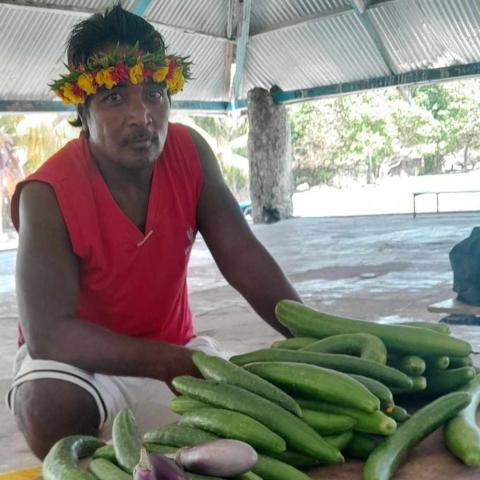
In Abaiang, Kiribati, knowledge broker Mr Terereniti Tiiman played a practical, hands-on role in strengthening local food systems through climate-resilient approaches. He took responsibility for the agriculture adaptation pathway, building on experience gained from the Atoll Food Futures program, which was supported by the Australian Department of Foreign Affairs and Trade, and Live & Learn Kiribati.
Working with his family and wider community, Mr Tiiman helped trial and promote water-efficient food production methods. They adopted improved gardening techniques, including growing food closer to homes and using less water. As a result, households were able to increase food production while reducing pressure on fragile groundwater resources.
Increased harvests enabled families to generate income from surplus produce, while reducing reliance on imported foods that are often less nutritious and more expensive.
As a knowledge broker, Mr Tiiman supported peer-to-peer learning, helping other community members understand and adopt new approaches through demonstration and shared experience.
'By trying these methods ourselves first, we can show others what works and what doesn't. People are more confident to adopt new ideas when they see the results in their own community,' he said.
'Improving how we grow food is not just about survival, it also gives us more time to focus on our culture, our families and our community.'
Solomon Islands: women leading resource management
In Ijo Maringi, Solomon Islands, knowledge broker Ms Nerolyn Loni helped lead community-based approaches to sustainable fisheries management.
A community facilitator and member of a local fisheries management committee, Ms Loni works closely with women and families who depend on coastal resources such as sea grapes for food and income.
Her experience highlights both the importance of local leadership and the connection between ecosystems and livelihoods.
'Sea grapes really help my family. I harvest and sell them to pay for school fees and support our household needs.'
'I also learned from this project that sea grapes are one of several food resources that will thrive under future climatic conditions. It has opened our eyes to the importance of managing our resources properly.'
Through her role, Nerolyn helped bring women into decision-making spaces, supporting more inclusive approaches to managing fisheries and marine resources.
Locally driven pathways for change
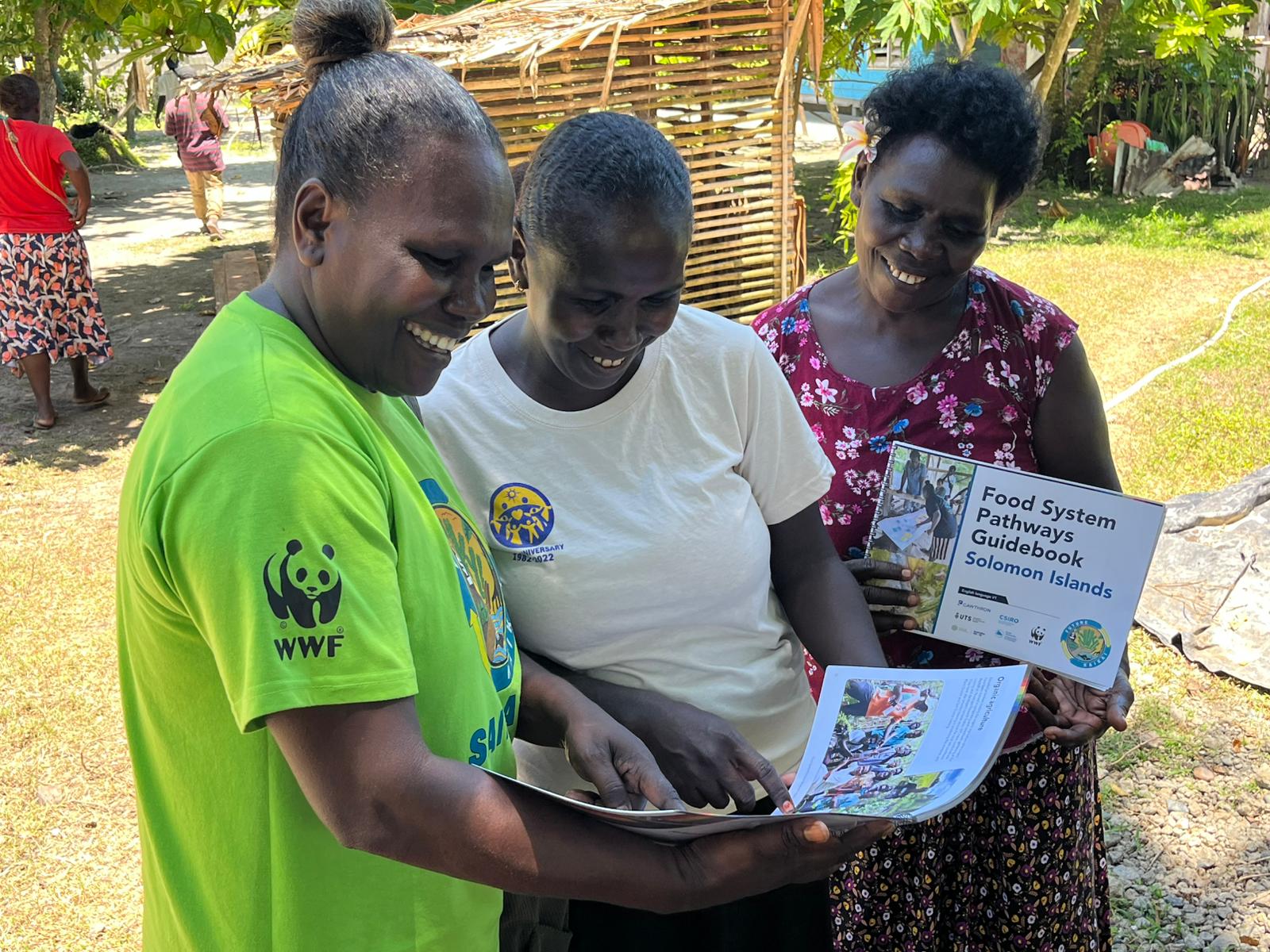
Another key outcome of the project was the development of Food System Pathways Guidebooks for both countries.
Developed through community-led discussions, the guidebooks provide roadmaps for strengthening food security. They enable communities to identify priorities and risks, explore future scenarios, guide long-term decision-making and plan how food systems can adapt over time.
Mr Slade Ririmae, Central Seascape Programme Manager with WWF Solomon Islands, said the guidebooks translate complex ideas into practical tools.
'They make it easier for communities to understand and apply food systems thinking and have become valuable resources for local planning and decision-making.'
For Ms Salome Topo, Western Seascape Programme Manager with WWF Solomon Islands, the project built on broader efforts to support community-based fisheries management and conservation.
'A key focus of our work is community-based fisheries management, which we integrate with financial inclusion initiatives,' she said.
'The project strengthened local capacity to respond to shocks and long-term change. This was evident following severe Tropical Cyclone Maila, when communities continued implementing their adaptation pathways despite the disruption.'
Learning from local contexts
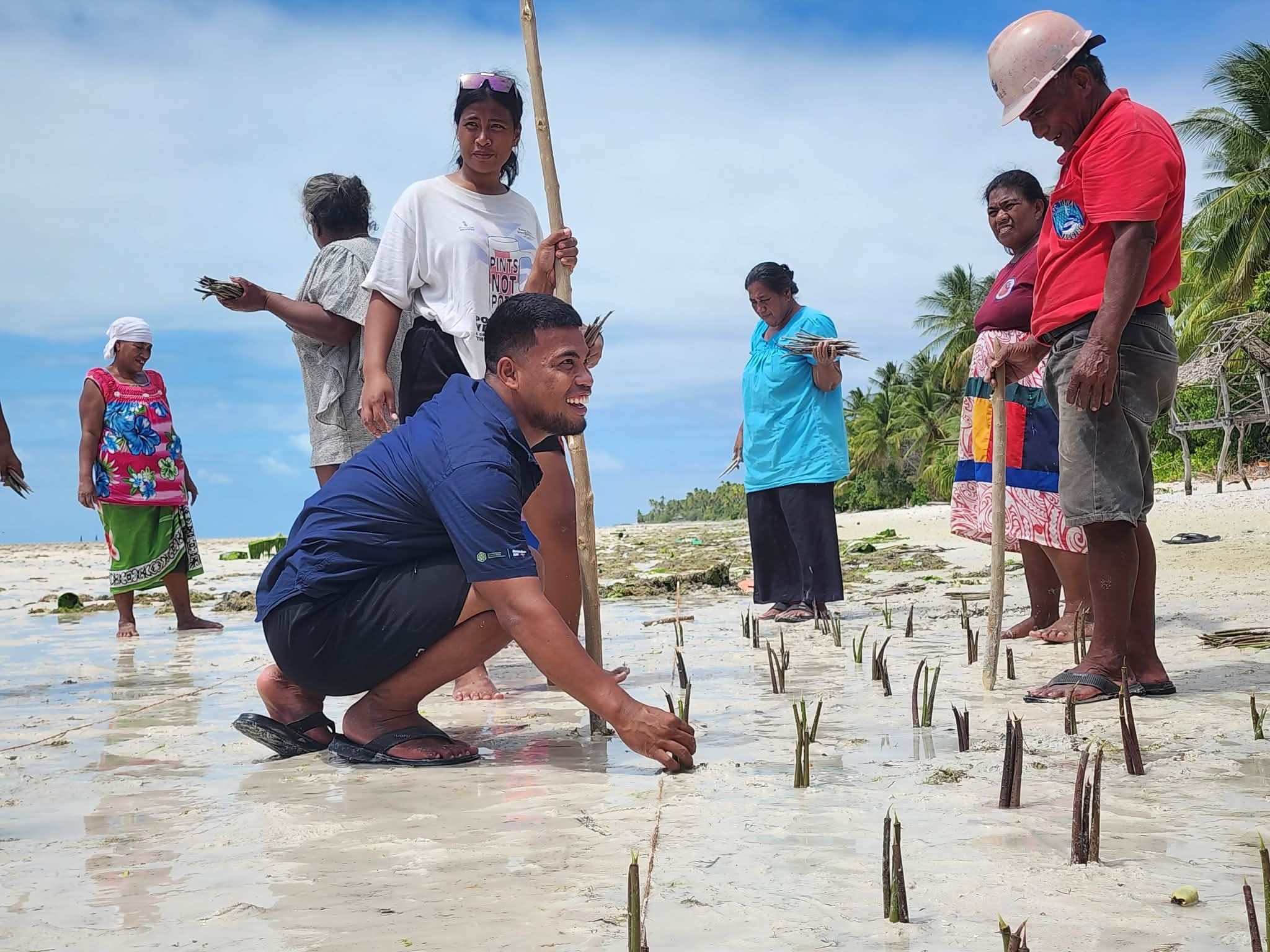
In Abaiang Island, Live & Learn Kiribati played a key role in supporting community engagement.
Project coordinator for Live & Learn's Food Security Programme in Kiribati, Ms Teera Eriuta said the project helped deepen understanding of the link between healthy ecosystems and food security.
'We've supported communities to explore future challenges and identify actions that can strengthen and safeguard food systems. The project also provided opportunities for communities to learn more about marine ecosystems and the important role they play in sustaining local food systems. The strong participation from communities in Abaiang has been encouraging, and their engagement has been critical in shaping locally relevant solutions and pathways for change,' said Ms Eriuta.
Looking beyond the pilot sites
While focusing on two communities, the project generated tools, methods and lessons that can be applied across the Pacific.
Dr Todd Sanderson, ACIAR Research Program Manager, Social Systems, Policy and Economics, said the project demonstrates the value of combining scientific research with local knowledge to address complex food security challenges in the region.
'Climate change is reshaping food systems throughout the Pacific, and there is no single solution to these challenges. What this project shows is that when communities are supported to lead the process, combining their knowledge and experience with research, they are better equipped to identify practical pathways for strengthening food security and resilience.'
'The knowledge broker approach is particularly encouraging because it builds local leadership and capacity that will continue long after the project has ended. These are the kinds of partnerships that ACIAR seeks to support through its research investments in the region.'
At its end of project review meeting this year, Mr Ririmae shared that it was the knowledge broker model that inspired him.
'The model encourages communities to entrust young people with greater responsibility and leadership opportunities. During the recent project phase-out ceremony, it was inspiring to see how much the knowledge brokers had grown. Many, who were once shy and hesitant to speak in public, were confidently presenting and sharing their experiences.'
'One example is Mr Alofa, a knowledge broker from Sairagi, who has since joined WWF's biological survey team and now leads the fisheries sector under a community governance structure established through the project. His journey highlights how investing in local leadership can create lasting benefits that extend well beyond the life of a project.'
Learn more about the project: 'Transformation pathways for Pacific coastal food systems' (CLIM/2020/178).


