
Bladder cancer might be caused by our cell's response to a common virus which infects nearly everyone in childhood, according to new research led by scientists at the University of York.
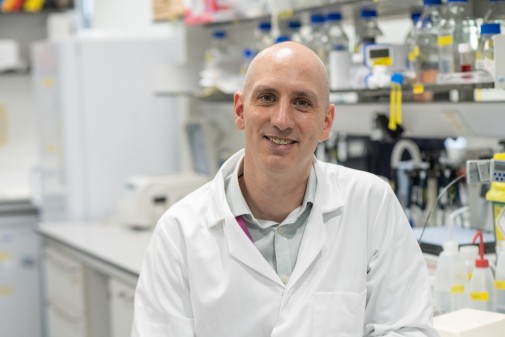 Dr Simon Baker. Image credit: Kidney Research UK.
BK virus establishes a persistent and lifelong infection by hiding in the body, most commonly in the kidney. The dormant infection can reactivate during periods when the immune system is weakened, for example as we age.
The new evidence published in the journal Science Advances looked at BK infections of the "urothelium" – tissue that lines the bladder and upper urinary tract.
Highest rates
For the study, funded by Kidney Research UK and York Against Cancer – Yorkshire has some of the highest rates of bladder cancer in England – the research team used cutting-edge DNA sequencing methods to look at the patterns of DNA damage that formed in human tissues when they were infected with BK virus in the laboratory. The patterns of DNA damage were then used like fingerprints would be at a crime scene, to identify the "culprit" or process that originally damaged the DNA.
The researchers found that when the urothelium fights a BK infection over a period of weeks and months in the laboratory, it uses a family of antiviral enzymes in an attempt to damage the virus and stop it replicating. Unfortunately, in this fight against BK virus "friendly fire" from the enzymes can cause collateral damage in the cells' own DNA. The team at York found the cells' DNA was damaged in a pattern reminiscent of the damage seen in bladder cancer DNA.
"Bystander effect"
Surprisingly, the enzymes and the DNA damage was not only found in cells infected with BK virus but also in their uninfected neighbours. This "bystander effect" of potentially cancer-causing DNA mutations forming in cells witnessing an infection in their neighbours is very important because it might explain why bladder cancers have no sign of the virus in them when they are diagnosed many years later.
Lead author of the study, Dr Simon Baker from the department of Biology at the University of York, said "We think this research is incredibly exciting because it suggests that bladder cancer might be preventable. In the same way that we have tackled HPV (Human Papilloma Virus) to prevent cervical cancers, in the future we may be able to treat BK virus infections early and stop bladder cancers from ever developing.
"Cancer prevention receives very little research funding, but it is far better for the individual to never get cancer and it is much more cost effective for the NHS to prevent than to treat an established cancer."
Greater risk
While an estimated 95% of adults are infected with BK in childhood, bladder cancer is relatively rare with 10,000 people diagnosed every year, making it the 11th most common cancer in the UK. The condition is more common in older adults, with most new cases diagnosed in people aged 60 and above.
Kidney transplant recipients are at a three times greater risk of bladder cancer. In transplant recipients, BK virus is well known for reactivating and causing damage to the different cells that line the urinary tract from the kidneys, through the ureters (the connecting pipes) and into the bladder.
Mystery
"We know that BK virus can cause bladder cancer in renal transplant recipients, but the virus itself is missing from bladder cancers in the rest of the population" Dr Baker said. "This mystery led to us asking the question of whether BK could in fact be the culprit behind nearly all bladder cancers but by a mechanism where the virus doesn't need to be present in the cancer cells."
After showing that BK can indirectly cause the damage that initiates bladder cancer in the lab, the researchers will now be involved in designing clinical studies to confirm that there is a causal link between BK virus and bladder cancer. They are looking at data from longitudinal cohort studies and applying for funding to carry out research looking at how the viral infection interacts with other known risk factors, such as smoking, in their tissue models.
Huge shift
Dr Baker added: "While more research is needed to confirm a causal link, this research marks a huge shift in our understanding. While we've long known that things like smoking increase cancer risk, this breakthrough means we can now envision a future where we might actually eradicate bladder cancers by stopping the initial virally triggered damage."
Dr David Crosby, chief research officer at Kidney Research UK, commented: "Dr Baker's work is a clear example of how our research funding can drive discoveries with the potential to benefit huge numbers of people. These findings move us closer to understanding why some people develop bladder cancer and show how tackling BK virus early could one day stop these cancers from developing at all. For transplant patients, that could mean protecting both their kidney and their long-term health. That's exactly the kind of impact we're working to deliver."
Professor Stephen Leveson, Board Member of York Against Cancer and Emeritus Professor of Surgery, added, "York Against Cancer are proud to be associated with research from the Jack Birch Unit at the University of York. There has, in the past, been a lack of investment in bladder cancer research which is prevalent and has worse outcomes in Yorkshire than the rest of the country. This new research implicating the BK virus is very important in enhancing our knowledge of the oncogenic process and is potentially a way forward in diagnosis and treatment. We are grateful for the support of Kidney Research UK."


