Penny Wagnon walks into a San Francisco conference room. Outside, a February cold snap sharpens the breeze off the Bay. Wagnon weaves through tables arranged before a small stage and finds a seat.
"Hi, I'm Penny," she says cheerily. "I have lung cancer."
Her tablemates introduce themselves: name their diagnosis. A young woman takes her turn. "I have colorectal cancer," the 31-year-old replies quietly. A heavy silence follows.
It is a meeting of accidental kin - each possesses a mutation in a protein known as KRAS. KRAS mutations drive about 30% of cancer cases, especially cancers of the lung, colon, and, overwhelmingly, the pancreas.
Terri Conneran was diagnosed with KRAS-positive lung cancer in 2017. Finding no patient support groups and scant information, she formed her own: The KRAS Kickers.
Armed with what she jokes is a business degree from a "third-rate college," Conneran taught herself the science behind KRAS and connected with experts like UC San Francisco Cellular and Molecular Pharmacology Professor Kevan Shokat , PhD, and Frank McCormick , PhD, FRS, professor and former director of the UCSF Helen Diller Comprehensive Cancer Center . Streaming from her North Carolina living room, Conneran invited Shokat regularly to patient webinars.
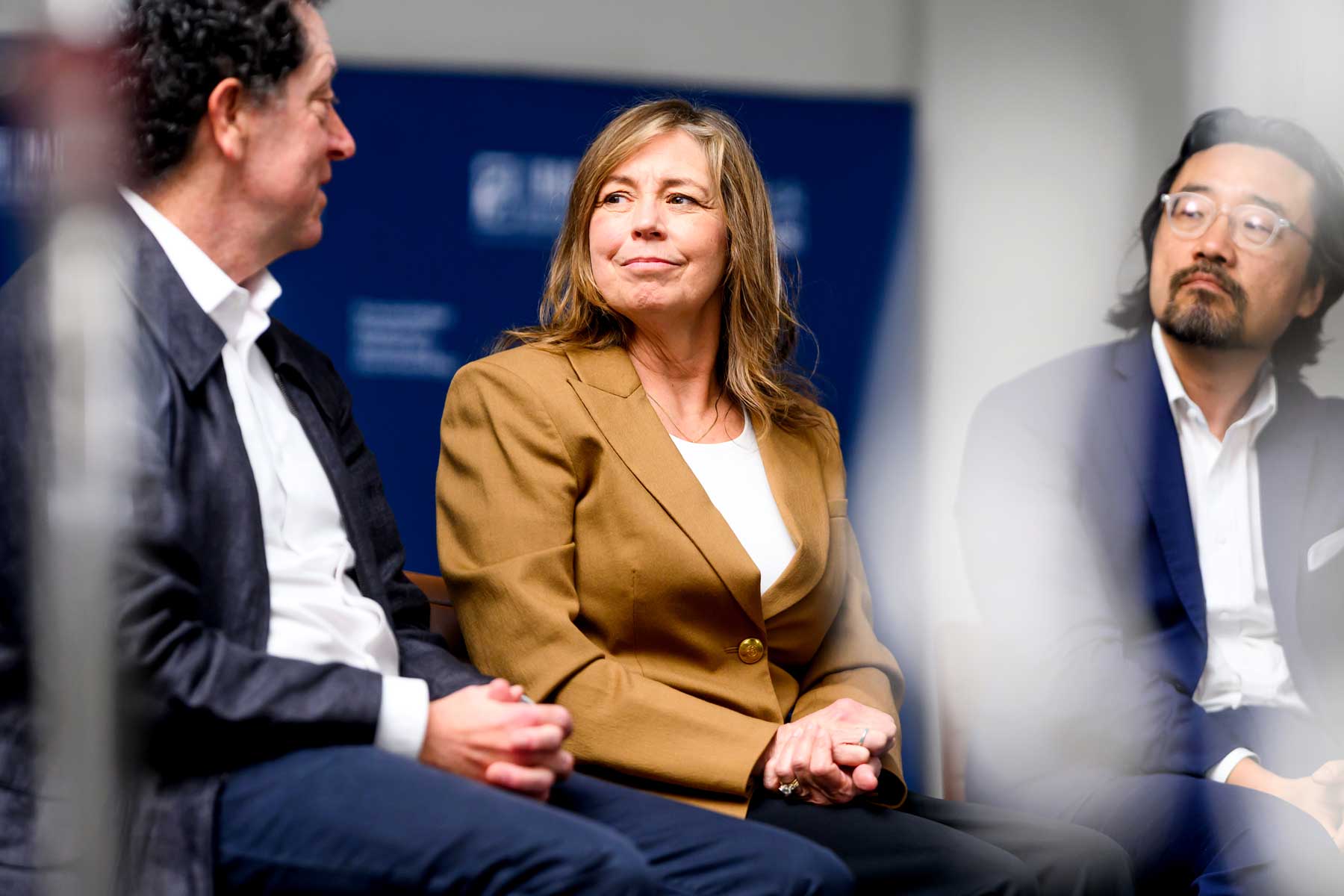
Today, "Kickers" from Arizona to Massachusetts have traveled to UCSF. Conneran takes the stage. Seated in front, Shokat snaps a photo. Behind him is the young woman with colorectal cancer who hopes to find a clinical trial and access experimental treatments unthinkable just a decade ago. As the crowd quiets, Wagnon leans toward her and whispers: "This is why I am so excited to be here - this is where they found the pocket."
The 'Mount Everest' of cancer drug targets
In the factories of our cells, proteins are the workers carrying out essential tasks. In healthy cells, the KRAS protein helps control cell growth, toggling "on" and "off" like a switch. But some mutations cause KRAS to get stuck in the "on" position, promoting unchecked growth that can lead to cancer. Many medicines work by binding to pockets on wayward proteins - like a key to a lock - but KRAS's slippery, shape-shifting surface was impervious for more than 30 years.
"It was the Mount Everest of all drug targets in cancer," Shokat remembers.
KRAS was deemed "undruggable" - and young scientists were warned that pursuing it was career suicide. Pharmaceutical companies largely abandoned the quest, while researchers instead tried, with limited success, to block its downstream cancer-driving signals.
But a small group of UCSF scientists persevered, and in 2013, Shokat discovered KRAS' first druggable pocket - building on federally funded insights and technologies developed by McCormick, Pharmaceutical Chemistry Professor Jim Wells, PhD, and others at UCSF. Their dogged pursuit gave rise to a new class of cancer drugs. The first treatment for KRAS-positive lung cancer followed in 2021. This year, the Food and Drug Administration approved the first medicine shown to substantially extend life expectancy for pancreatic cancer patients with KRAS .
"Kevan used all the tools of modern chemistry and biology to crack open a discovery that has profoundly impacted human health," says UCSF Chancellor Sam Hawgood , MBBS. "His success shows how support for fundamental science leads to big breakthroughs."
Today, more than 60 other drugs targeting KRAS and closely related genes are in development.
And they all trace back, in one way or another, to that pocket first glimpsed on a cold, December night.
Nearly 200 miles northeast of San Francisco, roughly six feet of snow had fallen on Lake Tahoe on Dec. 20, 2010. In their car, Shokat and his family wound through mountain roads flanked by dark, towering snow-crested pines. Severe weather had stretched what should have been a three-hour drive into the evening.
His phone pinged. A glance revealed only a portion of an email from postdoctoral student Ulf Peters, PhD: "I think you'll like this file."
Desperate for snow chains, Shokat turned his attention back to the road.
An agonizing trade-off
McCormick helped recruit Shokat to UCSF in 1999. McCormick's work showed how KRAS mutations disrupted normal cell-growth regulation and kept cancer-driving signals switched on. But one challenge remained: stopping it.
"Kevan stood out as being in a class of his own, for his originality and creativity," remembers McCormick, who also holds the David A. Wood Distinguished Professorship of Tumor Biology and Cancer Research. "We discussed targeting KRAS as soon as he arrived because the clinical need was enormous - and so was the intellectual challenge."
Wells had patented a technology known as "tethering." The approach lets scientists probe hotspots in undruggable proteins, testing thousands of small molecules from a first-of-its-kind library with astounding precision. Shokat focused the technology on a common lung cancer KRAS mutation called G12C. Unlike other mutations, G12C featured a sticky cysteine on its surface, a type of protein building block. The cysteine, Shokat mused, might be able to grab a drug.
Still, it was an agonizing trade-off: G12C did not appear in pancreatic cancer.
"We knew we wanted to go after pancreatic cancer because the prognosis for patients was so poor," Shokat explains. "But the cystine was the bigger opportunity, chemically, that we could leverage."
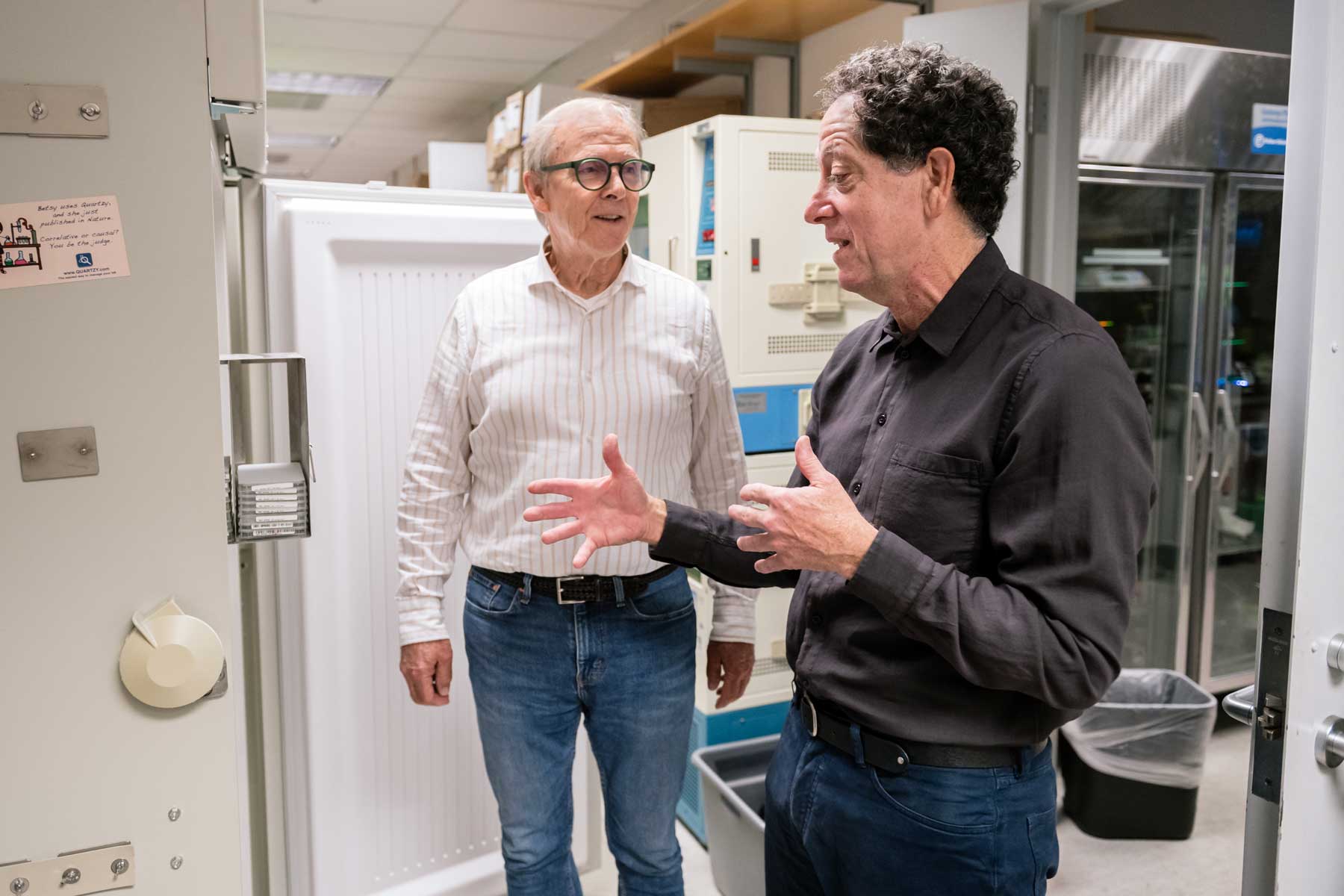
Shokat and his then-graduate student and former UCSF Associate Professor of Medicine Jonathan Ostrem , MD, PhD, partnered with Wells to use the tethering technology. Ostrem leaped at the chance to run the screening tests.
"UCSF is historically known for collaborations at all levels," Wells adds, "and that really starts with the students because they flow between labs."
A big leap, followed by a slow march
Shokat's hunch was right; the cysteine did grab one of their test molecules when KRAS was in its "off" state. Now, to make the bond hold. For nine months, the group kept improving their test molecule, hoping to craft the perfect "key," and in December 2010, they did.
Nearly 200 miles north of San Francisco, Shokat and his family finally arrived at their holiday destination. It was nearly 1 a.m. As his family settled in, Shokat opened his laptop and downloaded Peters' emailed attachment.
"Deborah, you guys," Shokat called to his family. "This is what Jon and Ulf have been working on for three years, and I think it's so cool, you have to see this."
Ulf Peters' model showed that the compound had prompted KRAS to change shape, morphing to envelop the drug candidate as if in an embrace.
"In KRAS' 'on' state, it looks almost like a fist and the pocket is really hidden," Shokat explains. "In the 'off' state, it's moving so there's only a moment that the pocket is there, so it's as if the pocket was fluttering."
The cysteine had changed everything.
"When it attached to the cysteine on KRAS, it stayed in place long enough for the protein to fold around it and form a stable pocket," he continues. "If we didn't have that cysteine, it would have never bound, and we would never have seen the pocket - it was the magic secret sauce."
"That's the moment I knew this could be a drug."
The RAS revolution
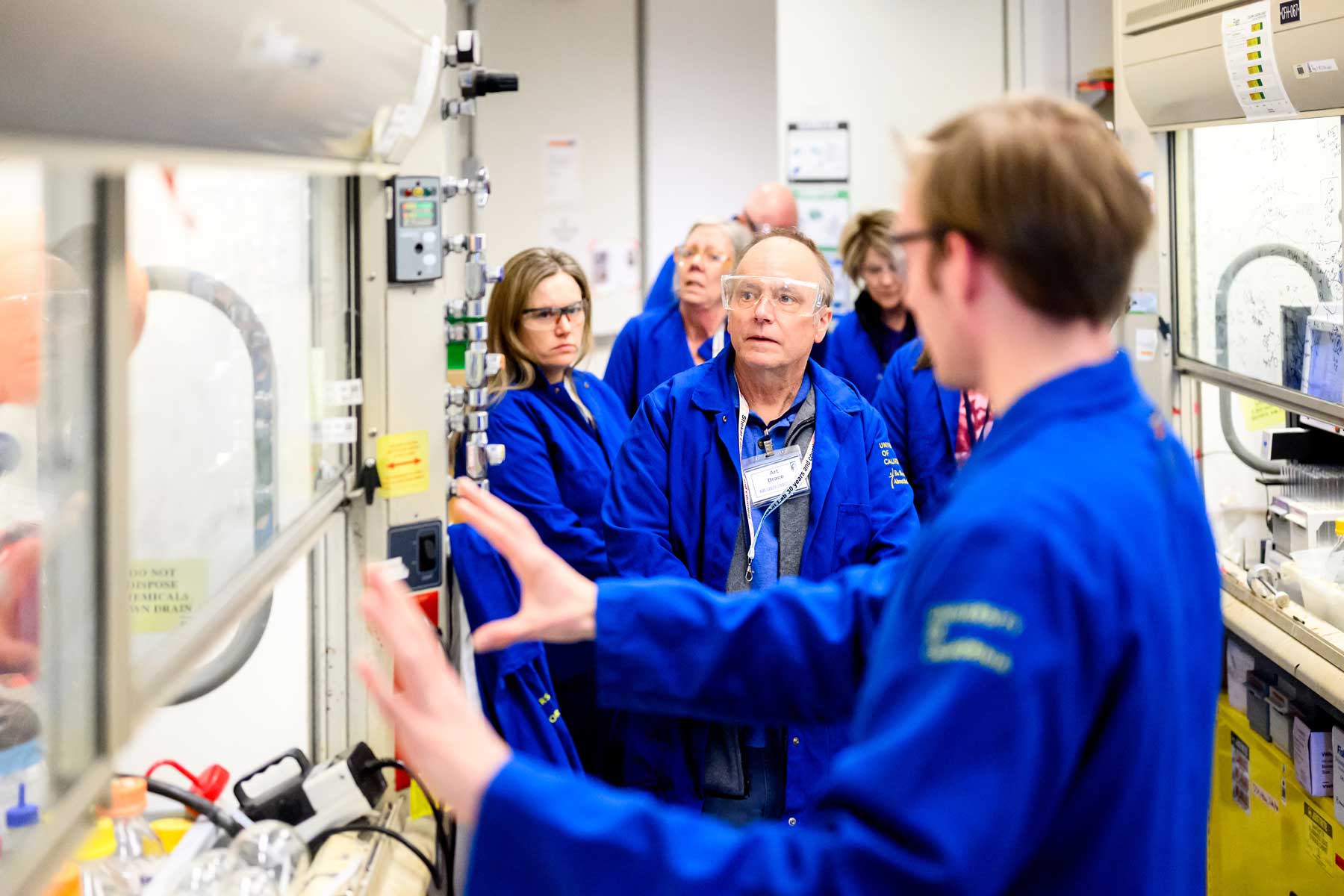
After their conference, in San Francisco, Conneran and the Kickers visit Shokat's lab. Young graduate students and postdoctoral scholars take turns leading members of the Kickers through the lab, explaining equipment and current research projects. Many are alive today because of the research that started right here.
"Their questions rival any we have in the lab meeting or any seminar at UCSF," says Shokat, smiling. "It's been amazing to see how engaged they've been with the science."
Shokat's 2013 discovery not only led to the first approved drugs for KRAS-positive cancers, it supercharged the field: Dozens of groups worldwide were inspired to find and exploit other vulnerabilities in KRAS that could be targeted across its many cancer-causing mutations.
In between the research talks and tours, Conneran grabs a moment with Shokat. She pulls out a small, fist-sized KRAS model Shokat had specially made for her. Hand-painted, its bulbous surface is colored in shades of grey and, in bright red, the pocket. "KRAS is not undruggable. From K Shokat to the KRAS Kickers," a small plaque at its base reads.
"My lung cancer tumor was almost exactly this size," she says. Shokat's eyes widen slightly in disbelief.
"It's one of the most meaningful things that I have because it makes the KRAS tangible and understandable," Conneran continues.
"I'm glad you told me what it meant to you," Shokat replies, his eyes welling up. "I really think in science that visualizing something is so key to understanding it - and then solving it."