
An EPFL spin-off is developing a patch-like medical device that reads sweat biomarkers. Its first application will be keeping a close watch on high-risk pregnancies.
In Switzerland, nearly half of pregnancies are classified as high-risk. The reasons for this elevated number are twofold: the definition of "high-risk" has expanded with the addition of new criteria, and the profile of expectant mothers has changed, with women having children later in life, assisted conception becoming more common, and chronic conditions becoming more widespread. These pregnancies require close monitoring and more frequent check-ups. Yet anxiety and uncertainty remain a daily struggle for parents-to-be, who are alert to even the slightest change. To help attenuate the uncertainty, EPFL spin-off MoleSense is developing a needle-free patch that continuously monitors pregnancies - without disrupting the user's daily activities - by tracking the concentrations of specific compounds in sweat. "This shift toward preventive medicine could improve clinical outcomes while also reducing unnecessary hospital stays and easing the burden on healthcare systems," says Gian Luca Barbruni, the startup's CEO.
The body leaves clues in sweat
Continuously tracking molecular signals allows us to detect important biological changes that conventional spot tests simply miss.
Sweat, long dismissed as a minor bodily fluid, actually carries a wealth of molecular information about our physiological state. Only recently have researchers begun to explore its potential. MoleSense's device channels the sweat on the wearer's skin through microscopic pathways to DNA-based molecular biosensors, which are capable of precisely recognizing complex compounds such as hormones and inflammatory proteins, even when present in extremely low concentrations. These biological indicators are converted into measurable signals that can be analyzed. The core of the technology was first developed by Ata Golpavar, the startup's co-founder, during his PhD.
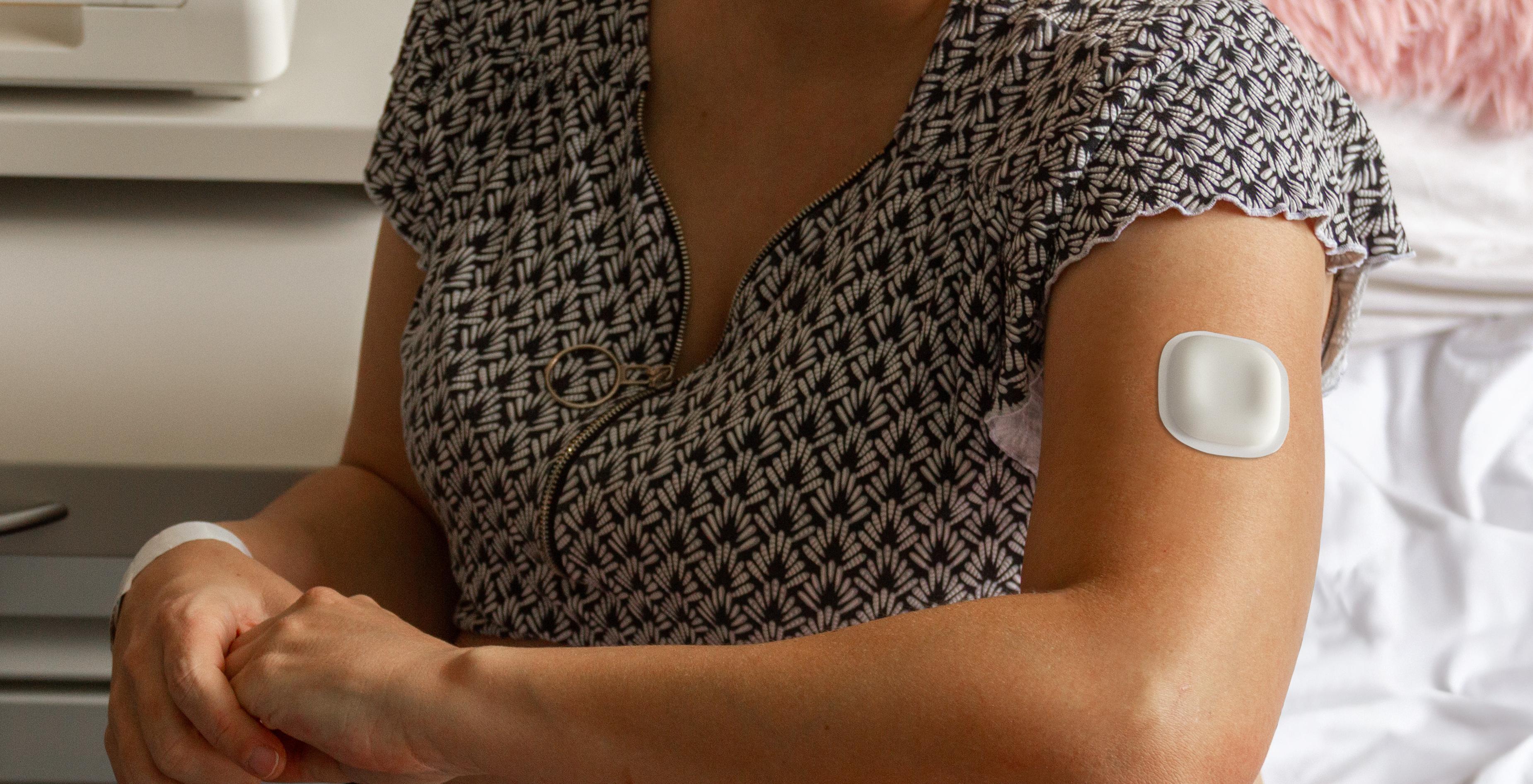
The data collected by the patches are processed using predictive algorithms, which combine the different signals to produce actionable information and uncover patterns that would be invisible to even an expert human eye. "Continuously tracking molecular signals allows doctors to detect important biological changes that conventional spot tests simply miss," says Barbruni. "For now, our technology isn't artificial intelligence in the strict sense. Rather, it's a set of models designed to spot trends and raise the alarm when something looks abnormal." As more clinical data are gathered, the system should become more precise and allow for increasingly personalized monitoring.
Early patient trials
MoleSense is already working with obstetrics specialists in Lausanne, where early patient trials have evaluated how comfortable and practical the device is to use. The next phase will focus on confirming the reliability of the patch's biomarker detection and demonstrating its clinical value. The founders ultimately hope to obtain approval from the US Food and Drug Administration, with a view to bringing the device to market in 2029.
The CEO among the "30 Under 30"

MoleSense's technology has potential applications beyond pregnancy monitoring. The same approach is also considered in a wide range of other fields where urgency and market needs are clear, including assisted reproductive technologies and reproductive healthcare, both of which are steadily increasing in relevance. The technology could also find an outlet in ovulation tracking and wellness, giving users easier access to biochemical data that has, until now, largely remained confined to clinical environments. MoleSense has already raised around CHF 1.5 million in grants, non-dilutive funding, and convertible loans, and was the winner of the 2025 Swiss Innovation Challenge. And in late 2025, Forbes Switzerland named Barbruni in its "30 Under 30" list of promising entrepreneurs.


