
Three Oxford University researchers have been selected from over 400 nominations to receive one of the 2026 Philip Leverhulme Prizes . These awards recognise and celebrate the achievements of outstanding researchers whose work has already attracted international recognition and whose future careers are exceptionally promising.

The Philip Leverhulme Prizes commemorate the contribution to the work of the Leverhulme Trust made by Philip, Third Viscount Leverhulme and grandson of William Lever, the founder of the Trust. This year, the Leverhulme Trust awarded thirty prizes, five in each of the following subject areas: Biological Sciences, History, Law, Mathematics and Statistics, Philosophy and Theology, and Sociology and Social Policy.
Each prize is worth £100,000 and may be used for any purpose that advances the prize winner's research.
About the Oxford winners:
Dr Anjali Hinch , William Dunn School of Pathology. Awarded a Biological Sciences Prize for her work on genome biology and genetics: meiotic recombination, mutation, and genome stability in ageing and reproduction using integrated genomic and experimental approaches.
Dr Anjali's research has advanced our understanding of meiosis, the specialised process by which eggs and sperm are formed. Her work has uncovered fundamental mechanisms governing where genetic recombination occurs, how DNA breaks are repaired, and how these processes shape genetic variation. In a study published in Science in 2023 , her laboratory demonstrated that meiotic DNA repair is far more mutagenic than previously thought, revealing an important source of new mutations in human eggs and sperm.
A distinctive feature of her research is the integration of large-scale human genomics with experimental biology. This combination has enabled discoveries about molecular processes that are otherwise exceptionally difficult to observe directly, with implications for understanding genome stability, mutation and evolution.
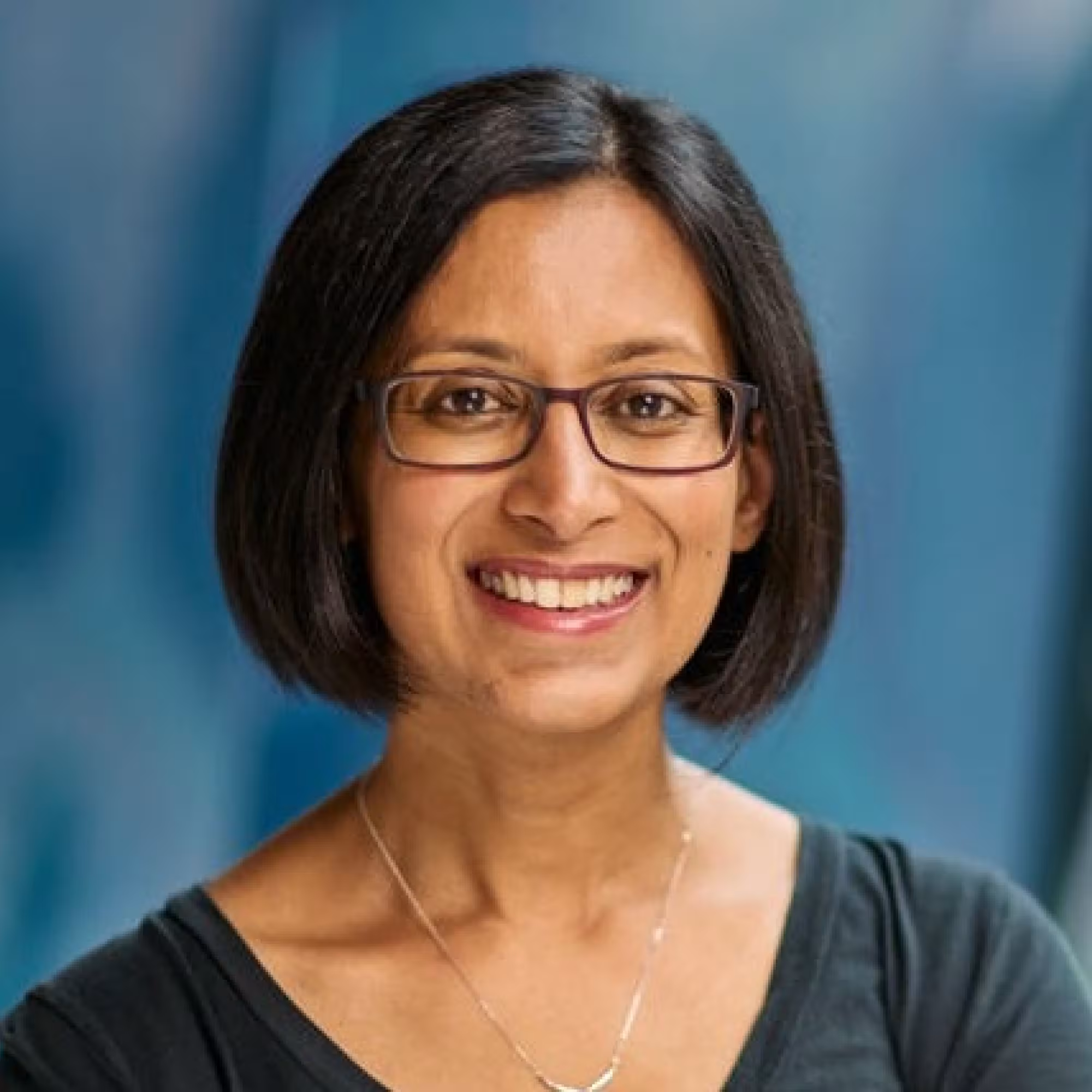
"I am delighted and honoured to receive a Philip Leverhulme Prize. It is wonderful recognition of my team's work and that of our many colleagues and collaborators. What makes this prize particularly exciting is the freedom it offers to explore new ideas and pursue fundamental scientific questions."
Dr Kaibo Hu , Mathematical Institute. Awarded a Mathematics and Statistics Prize for his work on numerical analysis, structure-preserving discretisation, Finite Element Exterior Calculus, discrete geometry and discrete topology, computational topological hydrodynamics, and numerical relativity.
Dr Hu's research focuses on developing accurate and reliable computer simulations to better understand complex physical phenomena, such as how materials bend and deform, and how conducting fluids (plasmas) interact with magnetic fields. A key challenge is ensuring that these simulations preserve the essential structures and properties of the physical systems they represent, so that their predictions remain accurate and stable over time. To achieve this, Dr Hu develops new mathematical methods that bring together computer modelling and the study of shapes, structures and their connections.
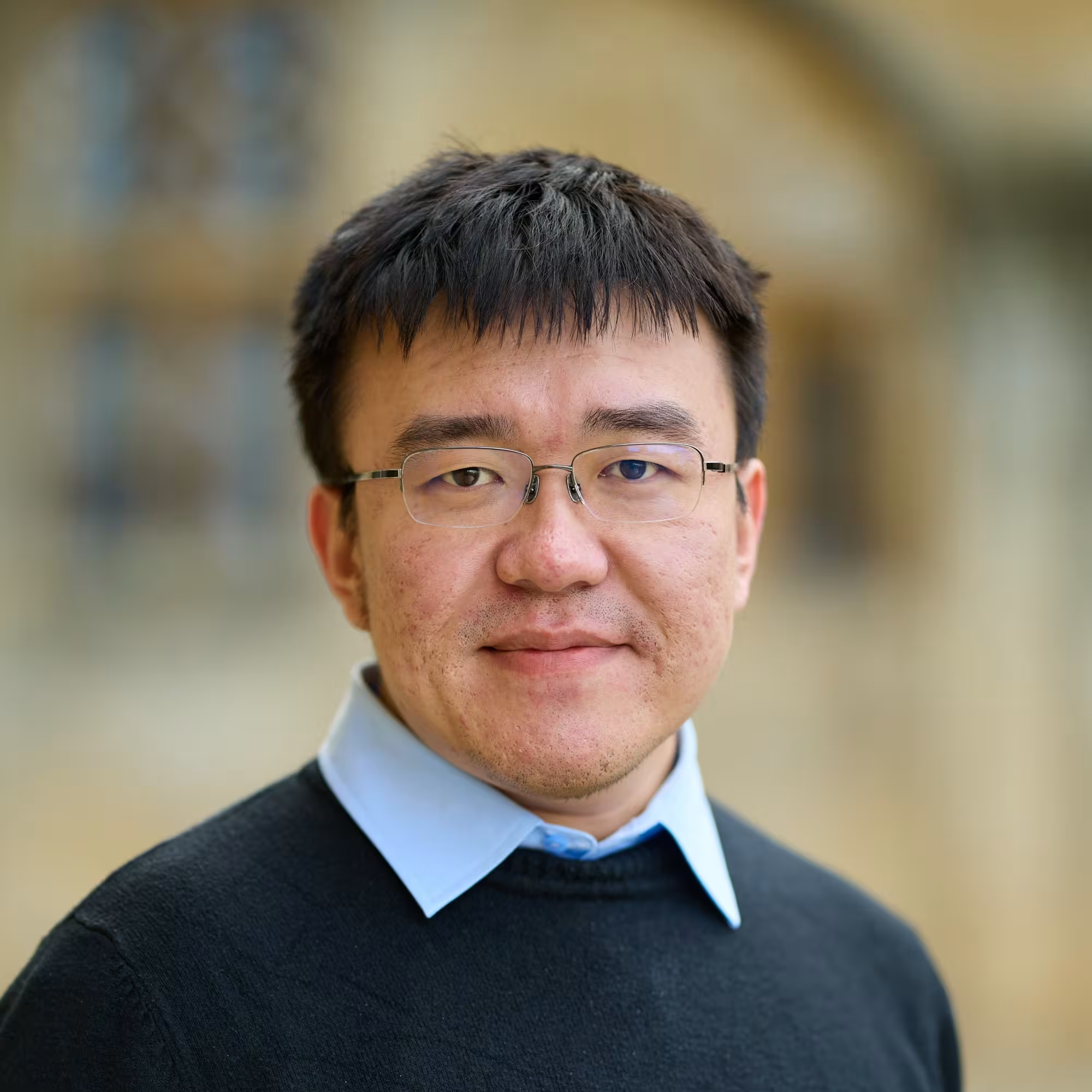
"The Philip Leverhulme Prize will help me develop finite element tensor calculus and bring researchers together through collaborative visits and lectures. The flexibility of the funding also allows me to explore how AI can help us investigate new questions in computational mathematics. I am very grateful to my colleagues and students for their collaboration and the many stimulating discussions."
Professor James Read , Faculty of Philosophy. Awarded a Philosophy and Theology Prize for his work on the philosophy of physics.
Professor Read works in the philosophy of physics, which investigates what the best theories of modern physics can tell us about the nature of the world and the limits of our knowledge of the world. A key focus of his previous work has investigated how we must update our understanding of the nature of space and of time in light of modern physics (both Einstein's theories of relativity, and more recent work on quantum gravity).
Using the Leverhulme Prize, he will investigate the nature of 'fermionic' quantum fields. These are our best mathematical description of all matter in the Universe, however various aspects of the mathematics and physics of these fields remain poorly understood.
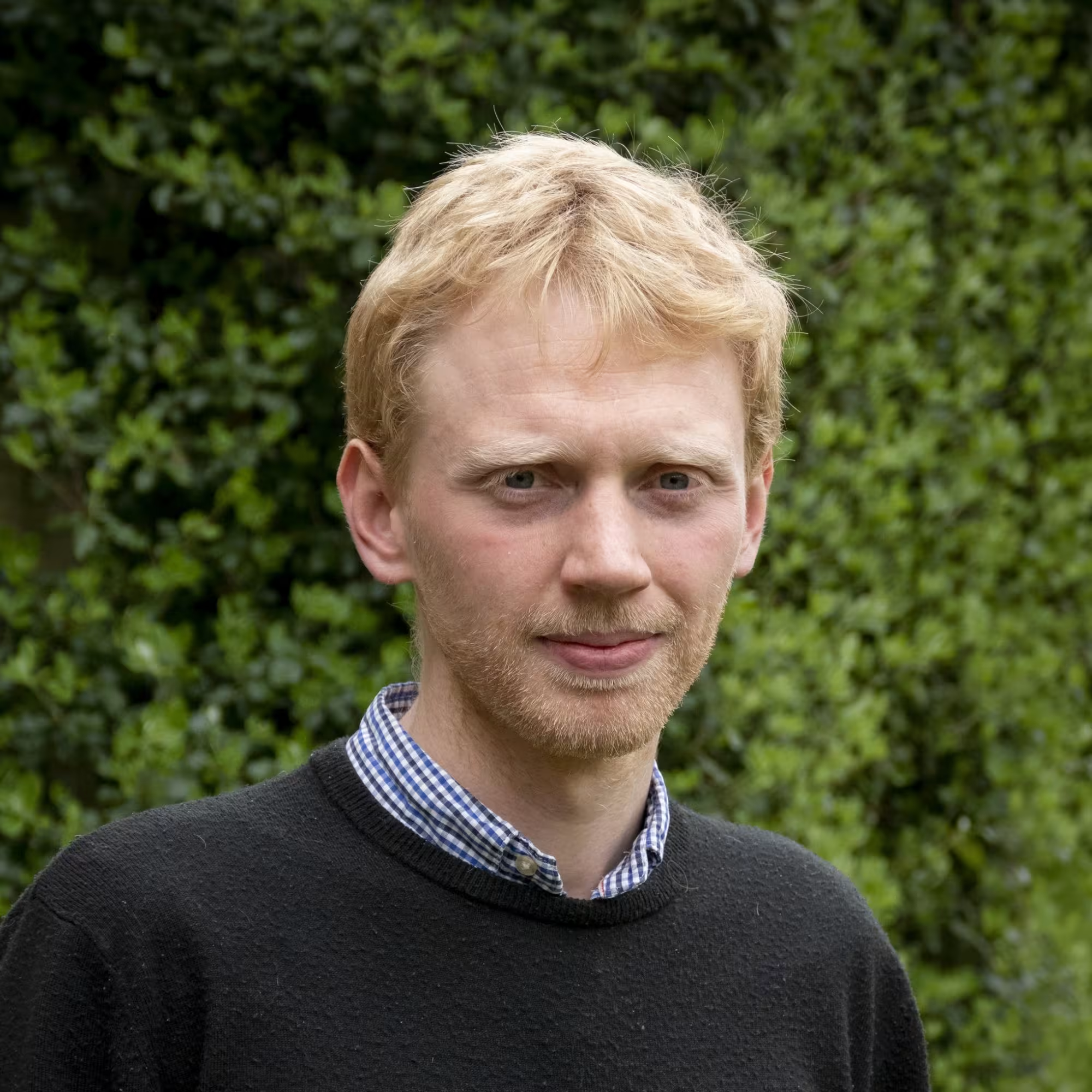
"I regard the fact that we lack a good metaphysical model for all matter in the Universe as little short of a philosophical scandal. I am incredibly grateful that the Leverhulme Prize will give me the opportunity to focus exclusively on this issue for such an extended period of time."
Further information about the Philip Leverhulme Prizes can be found on the Leverhulme Trust website .


