
In Brief
- WashU's MycoTranscend Initiative joins experts in medicine, chemistry and public health to tackle dangerous mycobacterial infections.
- Missouri experiences five times the national average of non-tuberculosis mycobacteria infections, which lack a standard medical care plan.
- The initiative aims to build critical infrastructure and pioneer breakthrough antibiotic strategies.
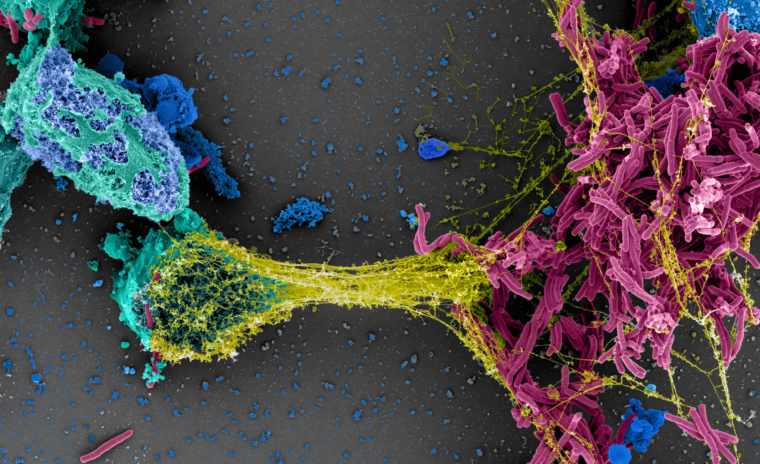
Mycobacteria are tiny, tough to kill and can pose serious public health risks. Perhaps the best-known — and certainly most widespread — is Mycobacterium tuberculosis. It causes severe lung damage and kills more than 1 million people worldwide each year. While M. tuberculosis is notoriously stubborn and takes a long time to treat, related strains called non-tuberculosis mycobacteria, or NTMs, also can cause serious lung problems. Far less is known about these bacteria, and patients with weakened immune systems who become infected face extremely poor prognoses and limited treatment options.
A new Transcend Initiative, MycoTranscend, is focused on better understanding, diagnosing, treating and preventing both M. tuberculosis and NTM infections through collaborations across schools and departments at WashU.
MycoTranscend is led by three WashU researchers, who each bring unique perspectives and expertise to the challenge: Christina Stallings, the Theodore and Bertha Bryan Professor of Environmental Medicine at WashU Medicine; Timothy Wencewicz, a professor of chemistry in Arts & Sciences; and Virginia (Ginger) McKay, an assistant professor at Bursky Public Health. Stallings said that while both types of mycobacteria present large public health challenges, NTMs are particularly vexing to local researchers and healthcare providers. They are found in both soil and water, and Missouri has five times the national average of NTM infections, owing in part to the state's recurring flood events.
"These non-tuberculous mycobacteria live in the environment against the harshest conditions you could imagine, so they are already armored to be incredibly difficult to kill," Stallings said. "And we know so much less about them that we don't actually have a standard of care for NTMs. It's just you kind of throw everything at it you can. These patients can be on antibiotics for years, and they often don't work."
Adopting a multidisciplinary, universitywide approach is central to all Transcend Initiatives, including MycoTranscend. By leveraging WashU's depth and scope of research expertise, the group is working to stimulate new lines of collaborative research on TB and NTMs through three separate programs. First, they plan to partner with preexisting WashU centers exploring areas that intersect with or are adjacent to mycobacteria research to develop new collaborations. Also, the initiative will establish resources and infrastructure that connect environmental biology, clinical microbiology and public health to further investigate NTMs and antibiotic resistance in the community. Lastly, the group aims to spur new diagnostics, treatments and prevention methods for TB.
"We've got to lead the way at WashU in generating breakthrough ideas and technologies that show people we can respond to any infectious disease," Wencewicz said. "To translate these technologies into clinical solutions, we need strategic partnerships with nonprofit organizations and the private sector. It takes a team approach. I personally like the challenge of the idea of going up against the toughest pathogen out there and trying to come up with new molecular strategies to address something like this. It's like a grand challenge for someone who makes antibiotics."
While mycobacterial infections are widely considered a global public health crisis, their vast environmental presence and antibiotic resistance make them difficult to address on a wide scale. The MycoTranscend leaders hope their efforts can start to change that for the better.
"Right now, we don't know how to intervene from a public health standpoint," McKay said. "The hope is that we can develop those interventions that we just simply don't have right now."
To learn more about MycoTranscend, visit the group's website. A full list of current Transcend Initiatives, supported by WashU's Research Development Office in the Office of the Vice Chancellor for Research, is available here.


