
Wildfire smoke is becoming an increasingly common part of life globally. Studies estimate that the number of people exposed to at least one day of extreme wildfire smoke each year has increased 27-fold over the past decade. As these exposures become more frequent, important questions remain about the short- and long-term effects of wildfire smoke on human health.
To better understand, mitigate and prevent the health impacts of wildfire smoke exposure, a team of investigators from UC Davis launched a multidisciplinary program. It's called WE-CAIR (Wildfire Exposure: Cardiovascular and Airway Inflammation Research).
The initiative is supported by a five-year Program Project Grant (P01) from the National Heart, Lung, and Blood Institute of the National Institutes of Health. The award is expected to total $14.05 million.
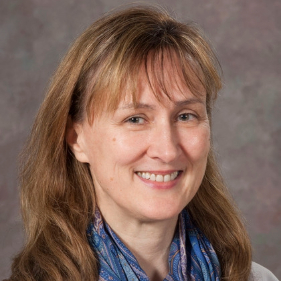
"Wildfire smoke is becoming a recurring environmental health threat for millions of people," said Angela Haczku, director of the UC Davis Lung Center and contact program director of the WE-CAIR study. "We want to understand why some individuals are more susceptible than others and what mechanisms are responsible for health decline after long-term exposure. Ultimately, we hope to identify biomarkers of risk and biological pathways that could lead to better prevention strategies and new treatments."
Comprehensive research and systems level integration
Wildfire smoke exposure acutely worsens cardiovascular and pulmonary disease but the long-term health effects are poorly understood.
The WE-CAIR team designed four closely integrated projects supported by bioinformatics, epigenetics, clinical and mouse exposure-simulator cores to investigate how immune and epigenetic pathways psychosocial stress and social vulnerability drive health decline over time.
- Project 1: Focuses on a novel subgroup of immune cells (group 2 innate lymphoid cells, ILC2s) that were shown by the Haczku Lab to abnormally produce the highly inflammatory cytokines IL-13 and IL-17 when triggered by wildfire smoke.
- Project 2: Studies the role of the environmental sensor aryl hydrocarbon receptor (AhR) in mediating wildfire smoke-induced cardiovascular inflammation.
- Project 3: Investigates how the epigenetic regulator TET1 may protect against airway and cardiovascular inflammation.
- Project 4: Explores how psychosocial stress and social vulnerability influence the health effects of wildfire smoke exposure.
The program will combine a human clinical studies core with controlled wildfire smoke exposure models core, and molecular and epigenetic core. All collected data will undergo systems-level data integration.
"This unique program allows us to connect the entire chain: from what is in wildfire smoke to how the immune system and epigenome respond, and ultimately to what we see in patients. We need a coordinated scientific effort that examines every aspect."-Angela Haczku
Bringing together experts from multiple disciplines
The WE-CAIR program brings together 22 investigators from across UC Davis, including the UC Davis School of Medicine, Center for Health and the Environment, College of Agricultural and Environmental Sciences, UC Davis Weill School of Veterinary Medicine, College of Engineering, Air Quality Research Center and National Biomedical Research Institute, as well as collaborators at the UC San Diego School of Medicine.
"This unique program allows us to connect the entire chain: from what is in wildfire smoke to how the immune system and epigenome respond, and ultimately to what we see in patients. We need a coordinated scientific effort that examines every aspect," Haczku said. "By bringing together experts from multiple disciplines, we will leave no stone unturned, from understanding exposure and biological mechanisms to identifying ways to prevent, mitigate and treat the health effects."
Hackzu, an internationally known expert in pulmonary immunology, added that research on this scale is unprecedented in the field of wildfire smoke. This study's level of interdisciplinary collaboration, she noted, is essential for generating the data and insights needed.
Additional UC Davis co-investigators include Keith Bein, Clare Cannon, Hong Ji, Janine LaSalle, Miriam Nuño, Jill Silverman, Christoph Volker, Barton Wise and Amir Zeki. UC San Diego collaborators include Praveen Akuthota and Rajat Suri.
WE-CAIR is supported by the National Heart, Lung, and Blood Institute of the National Institutes of Health under award P01 HL179398. The five-year grant totals $14,050,840, including $8,993,941 in direct costs.
From Labs to Lives
This work was supported by federal research funding, which helps transform promising discoveries into real-world breakthroughs that save lives and improve quality of life.
Learn more about how public investment in UC Davis research powers innovation, strengthens the economy and advances human health in From Labs to Lives.


