
As misinformation spreads faster than ever across digital platforms, new research highlights growing risks to public understanding of planetary defense, an area of science that deals with the threat from asteroid and comet impacts, with potentially global consequences.
A new study led by a researcher at The University of New Mexico examines how misinformation emerges, spreads and persists in planetary science, particularly in discussions surrounding asteroids and comets, and the impact risk they pose. These topics often capture widespread public attention, making them especially vulnerable to misinterpretation and sensationalized coverage.
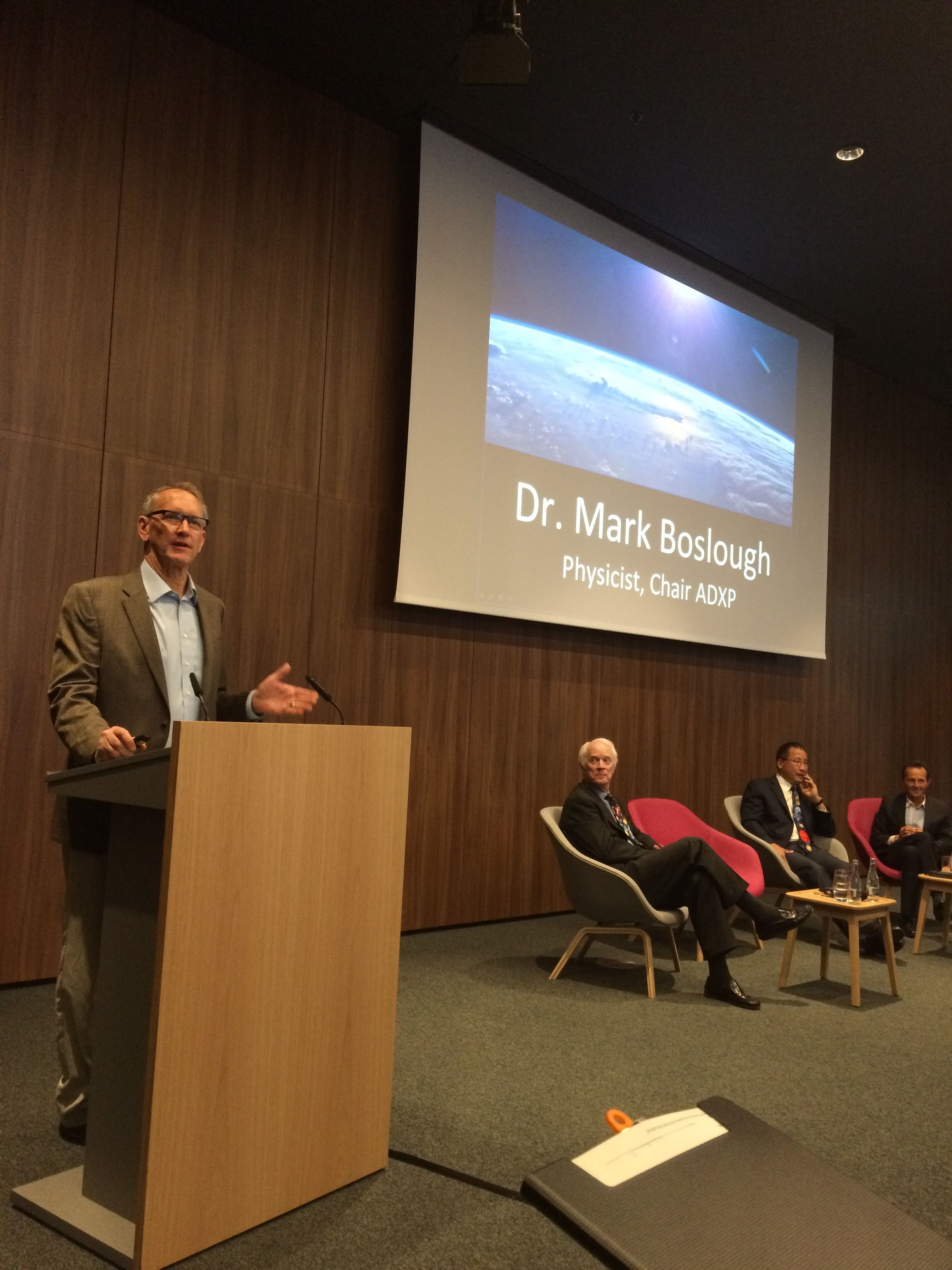
UNM Research Professor Mark Boslough has been at the forefront for actively correcting misinformation about threats from space such as Near-Earth Objects (NEOs), airbursts, and planetary defense. He led the research along with co-authors from 12 institutions. The paper titled, "Preventing and Correcting Spread of Misinformation about Near Earth Objects, Impacts, Airbursts, and Planetary Defense: Case Studies" is published in Meteoritics and Planetary Science.
"Science is a rigorous endeavor that requires logic, evidence, reproducibility, transparency, and honesty. These high standards must be upheld and must guide everything we do as scientists," said Boslough.
The research identifies a rapidly evolving media environment shaped by open-access publishing models, social media amplification, artificial intelligence and the rise of nontraditional science communicators. While these platforms expand access to information, they also create new pathways for the spread of inaccurate or misleading claims.
Because planetary defense relies on public trust and coordinated global response, researchers argue that misinformation is more than a communication challenge—it is a potential risk to effective decision-making.
"Planetary defense is about protecting lives, livelihoods, and property. Misinformation undermines public trust and endangers people by reducing confidence in scientific assessments and emergency response plans."
Misinformation is created and propagated on all time scales, from rumors that spread within times as short as hours in the modern news cycle, to myths that can persist for decades or even centuries and passed from generation to generation. Scientists must be prepared to deal with falsehoods over this entire range of time scales. When events are taking place rapidly, quick communication is essential. When dealing with persistent misconceptions, perseverance is key.
Through a series of case studies, the researchers demonstrate how misinformation can originate from multiple sources, including weak peer-review processes, overstated press releases, limited scientific literacy and the amplification of false narratives through emerging technologies like artificial intelligence.
"Interstellar comets are not alien spaceships. Sodom and Gomorrah were not destroyed by a cosmic airburst. Ancient advanced civilizations were not wiped out by a comet swarm 12,900 years ago. These might be fun science fiction plots, but they have no scientific support," explained Boslough.
The paper also offers practical strategies for addressing misinformation, emphasizing the need for proactive communication, improved scientific literacy and stronger collaboration between scientists and media professionals.
Rather than treating misinformation as an external issue, the authors stress that scientists must take an active role in shaping how their work is communicated and understood.
"Scientists must remain engaged in the public square and not retreat to our offices and labs or ignore the growing plague of TV pseudodocumentaries, fake academic journals, internet clickbait, and AI slop. We have a professional obligation to call out misinformation for what it is, in a compelling way that everyone can understand," concluded Boslough.
As public interest in space and planetary threats continues to grow, the study underscores the importance of clear, accurate and responsible communication to ensure that science serves both policymakers and the public effectively. Boslough will be addressing this problem and its relevance to New Mexico at this week's Geological Society of America section meeting in Albuquerque.


