
Most of the microlitter present in the South Atlantic Ocean originates from the West African coast and is particularly concentrated in areas near the equator and off the coast of Brazil. This is demonstrated by a study conducted by ICTA-UAB, Spain, which has successfully identified in detail the main geographical sources of these microparticles, their large-scale distribution, and the processes that drive their accumulation in the ocean.
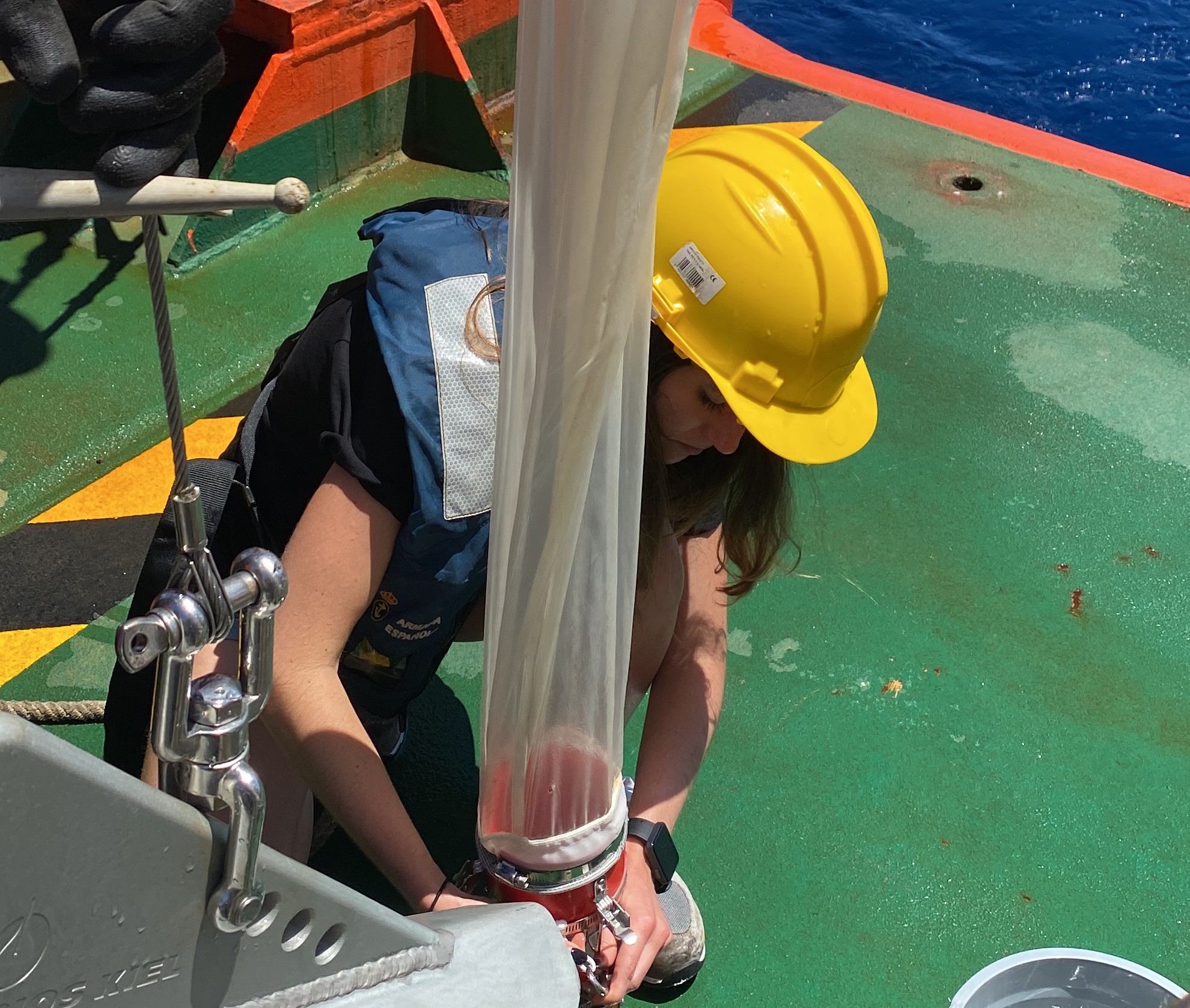
The study is based on seawater sampling carried out along a transect of almost 8,000 kilometres, from Salvador, Brazil, to the Strait of Gibraltar, covering both the South and North Atlantic. In addition, researchers used an oceanic dispersion model that allows particle origins to be traced based on the velocity and direction of marine currents.
It is estimated that approximately 11 million tonnes of plastic waste enter the ocean each year, resulting in the presence of around 5.25 trillion plastic pieces floating in the sea. These materials are commonly classified into megaplastics (>1 m), macroplastics (25 mm – 1 m), mesoplastics (5 – 25 mm), microplastics (<5 mm), and nanoplastics (<1 µm). Microplastics enter the environment directly as microparticles—such as cosmetic microbeads, glitter, or fibres from synthetic textiles like polyester and nylon—or are generated through the fragmentation of larger items, such as bottles or toys. Together with other human-made particles smaller than 5 mm, including rubber, animal or cellulosic fibres, glass, metal or tar, they are collectively referred to as microlitter.
The study shows that equatorial currents transport these particles from the West African coast towards Brazil and across remote areas of the Atlantic Ocean. The research also identifies secondary inputs from northern Brazil towards regions close to northwest Africa, and from the Iberian Peninsula towards the Canary Islands, highlighting the complexity of dispersal pathways and the interconnection between regions. "Our results show that these particles can accumulate even in remote areas, such as the centre of the Atlantic Ocean, and travel long distances far from their sources", explains Stéphanie Birnstiel, researcher at ICTA-UAB and lead author of the study.
Samples reveal that microlitter is widely distributed across the ocean, from tropical to temperate regions of the Atlantic, with higher concentrations near the equator, off Brazil, and around 10°N along the transect. "Dispersion processes involve factors such as wind, waves, ocean currents and biological interactions, which determine the transport and accumulation of these particles in both the North and South Atlantic Oceans", adds Michaël Grelaud, ICTA-UAB scientist and co-author of the study.
Regarding their characteristics, the research shows that particles of different types, sizes and chemical compositions coexist below the ocean surface. Smaller particles (10–315 µm) are the most abundant and are dominated by fragments, while larger particles (≥315 µm) are less numerous and are mainly composed of fibres.
One of the most relevant findings is the predominance of cellulosic fibres (90%) in the larger fraction. These fibres mainly enter the marine environment through domestic washing of textiles such as cotton, which releases more microfibres than synthetic materials. Despite their natural origin, these fibres show low biodegradability due to the chemical treatments, dyes and industrial additives used in their production.
"The study also shows that the northern hemisphere contains higher amounts of microlitter, particularly cellulosic fibres, which is associated with higher population density, a greater level of industrialisation, and the accumulation dynamics of the North Atlantic", adds Patrizia Ziveri, ICTA-UAB ICREA professor and co-author of the study.
Overall, these results provide new evidence on the origin, distribution and fate of marine microlitter, and underline the need to address this issue from a global perspective, given its transboundary impacts across ecosystems.
Reference: Birnstiel, S., Grelaud, M., Teixeira, C. E. P., Guilherme, A., Lorenz, C., Vollertsen, J., Sobral, P., Langer, G., & Ziveri, P. (2026). Sources and distribution of microlitter in the tropical and temperate Atlantic Ocean. Environmental Pollution, 397, 127941. https://doi.org/10.1016/j.envpol.2026.127941


